Sit ups
Also called sit-up, situps, bodyweight sit-up.
What is a sit-ups?
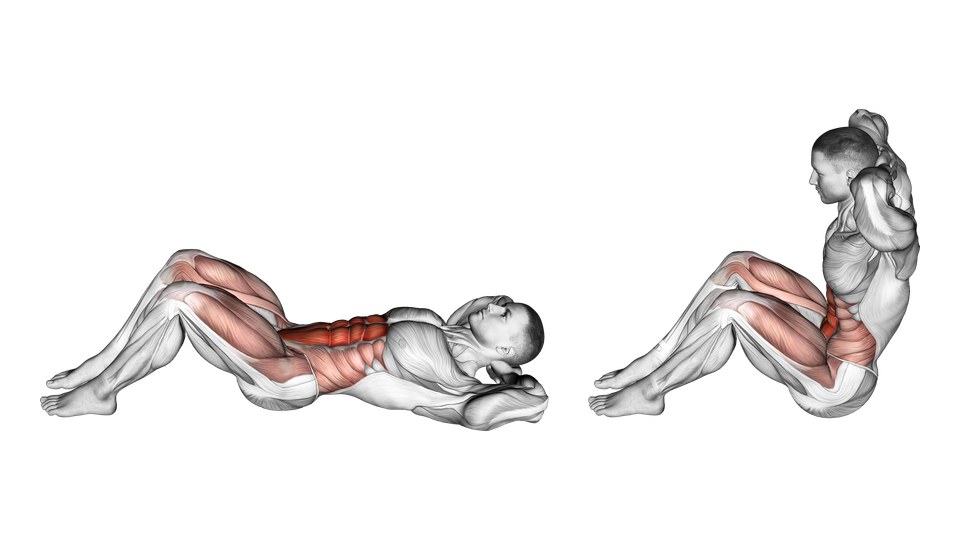
A sit-up is a bodyweight exercise that lifts the torso from the floor to an upright position. The abdominal muscles begin the curl, and the hip flexors contribute as the torso continues toward the thighs.
How do you perform a sit-ups?
Set up
- Lie on your back with your knees bent, feet flat and about hip width apart.
- Rest your fingertips lightly behind your head without pulling on your neck, or cross your arms over your chest.
Execution
- Curl your ribs toward your pelvis and continue lifting the torso toward your thighs.
- Stop upright without jerking the head or throwing the arms forward.
- Lower under control until your back and shoulders return to the floor.
Common mistakes
Pulling on the head
The hands should provide only light support; tugging the head does not help the trunk flex.
Launching with the arms
Swinging creates momentum and makes each repetition less consistent.
Dropping back to the floor
A controlled return keeps the torso muscles working and avoids a hard landing on the back.
Where it fits in a session
Usually placed with other trunk work after the main exercises.
Use a repetition range that lets you rise without arm swing and lower without dropping.
Muscles worked
Primary
Secondary
Schematic surface view. Some muscles are partly visible or not shown.
A full sit-up combines spinal flexion from the abdominal muscles with hip flexion as the torso rises farther from the floor.
Variations
- Decline sit-up — Uses a decline bench to increase the range and resistance.
- Weighted sit-up — Holds a plate or dumbbell after the bodyweight version is controlled.
Frequently asked questions
What muscles do sit-ups work?
Sit-ups use the rectus abdominis and obliques to flex the trunk, while the hip flexors contribute as the torso rises farther from the floor.
What is the difference between a sit-up and a crunch?
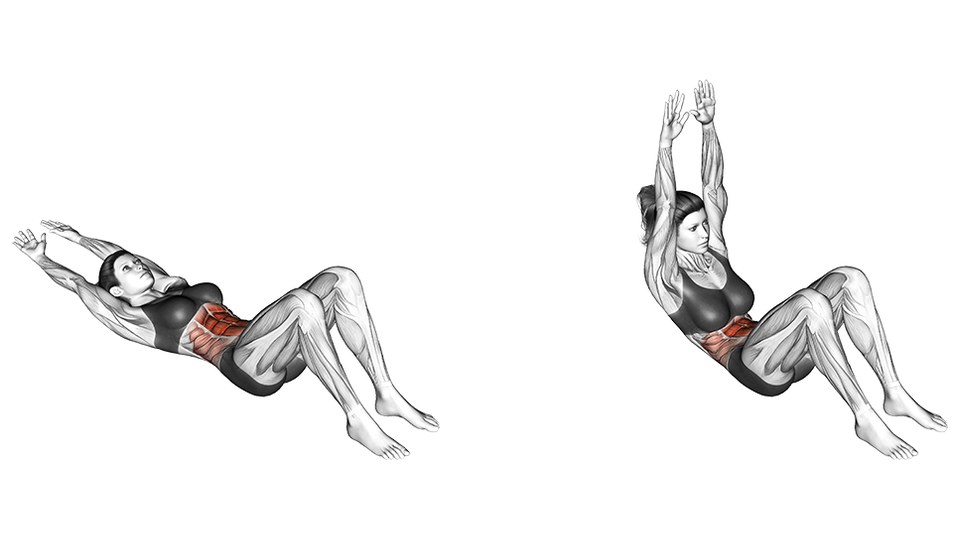
A crunch lifts the shoulder blades while the lower back largely stays down. A sit-up continues until the torso approaches the thighs, adding more hip flexion.
Should someone hold your feet during sit-ups?
It is not required for the feet-planted version shown here. Anchoring the feet can make the movement easier to complete by giving the hip flexors a firmer base.
Where should your hands go?
Rest them lightly behind the head without pulling, or cross the arms over the chest if that is easier to control.
Sources
- Flynn W, Vickerton P. Anatomy, Abdomen and Pelvis: Abdominal Wall. StatPearls. https://www.ncbi.nlm.nih.gov/books/NBK551649/
- Bordoni B, Varacallo MA. Anatomy, Bony Pelvis and Lower Limb: Iliopsoas Muscle. StatPearls. https://www.ncbi.nlm.nih.gov/books/NBK531508/