
Glute-ham raise
Also called glute ham raise, GHR.
What is a glute-ham raise?
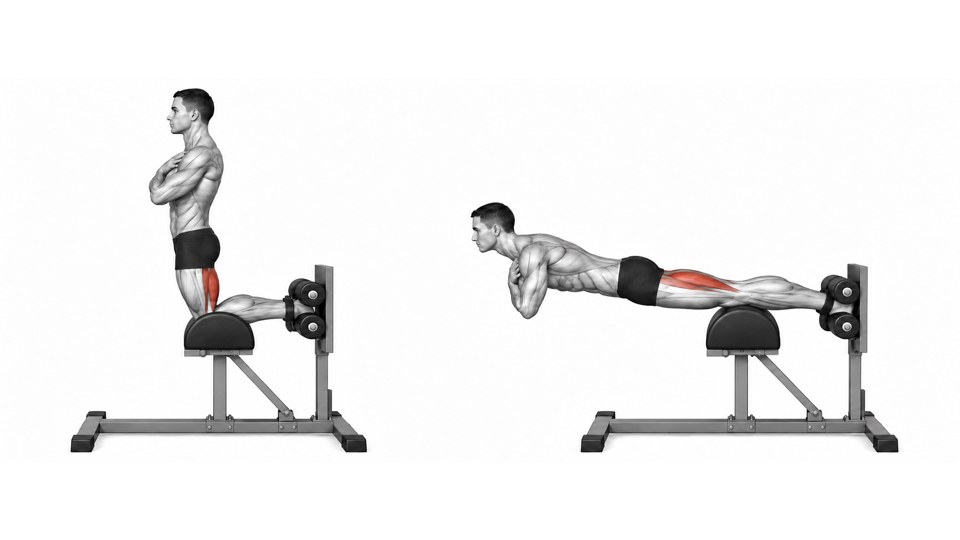
A glute-ham raise is a bodyweight hamstring exercise performed on a glute-ham developer, with the feet secured behind a rounded pad. Lower your body forward and return by bending the knees. This guide teaches the version with the hips held straight, without adding a back extension at the bottom.
How do you perform a glute-ham raise?
Set up
- Adjust the footplate so your feet are supported against it, your ankles fit securely between the rollers, and your knees rest near the upper edge of the rounded pad. Check that the adjustments are locked.
- Begin upright with the knees bent and your thighs beneath your torso. Fold your arms across your chest and hold your hips straight.
Execution
- Gradually straighten your knees to lower your body forward, moving the shoulders and hips together.
- Lower toward horizontal, stopping earlier if you cannot control the movement or keep your hips from folding.
- Bend the knees to bring your body upright again. Settle into the starting position before the next repetition.
Common mistakes
Folding at the hips to finish
Use a shorter controlled range or appropriate assistance rather than turning the return into a hip bend.
Dropping into the last part of the lowering
End the repetition sooner if the final section becomes a fall. Keep enough control to reverse the movement.
Where it fits in a session
Include this exercise where it fits your planned lower-body session.
Record the range and any assistance so the next session uses a comparable repetition.
Muscles worked
Primary
Secondary
- None listed in this guide
Schematic surface view. Some muscles are partly visible or not shown.
The hamstrings are the main target of the knee-bending repetition taught here.
Variations
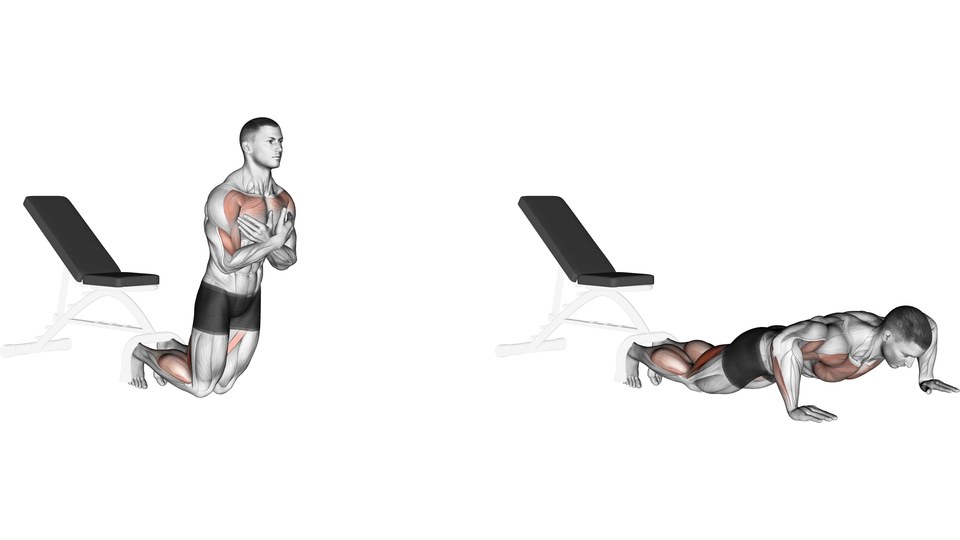
- Nordic curlUses an anchored kneeling position on the floor instead of rolling over the rounded GHD pad.
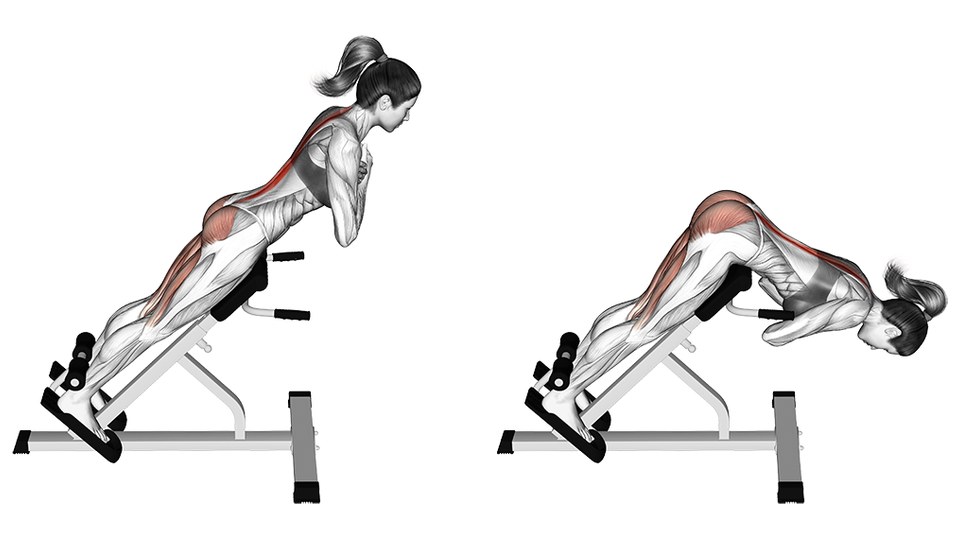
- Back extensionKeeps the legs supported while the torso moves at the hips, rather than raising the body by bending the knees.
Frequently asked questions
Is a glute-ham raise the same as a Nordic curl?
They are separate exercises. A glute-ham developer supports the thighs on a rounded pad; a Nordic curl keeps the knees on a floor pad with the ankles anchored.
Should I bend at the hips at the bottom?
Some glute-ham raises include an additional hip bend. The version taught here keeps the hips straight and ends near horizontal. Keep the version you log consistent.