
Hamstring walkout
Also called glute-ham bridge walkout.
What is a hamstring walkout?
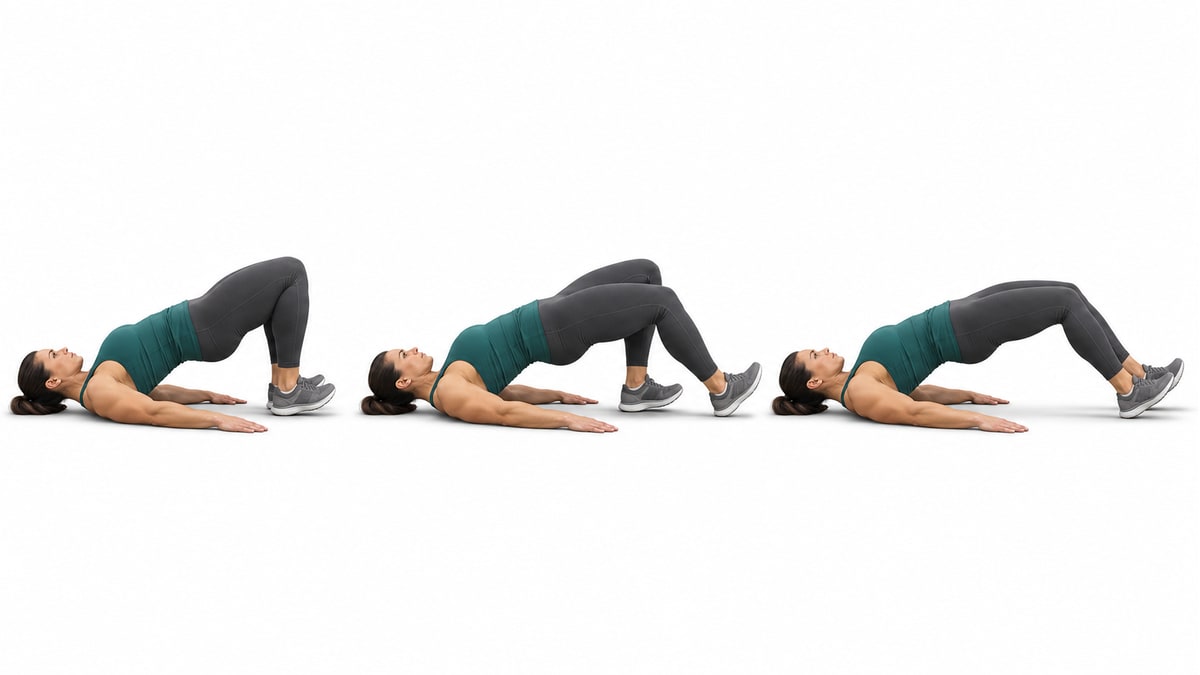
A hamstring walkout is a bodyweight exercise that starts in a raised glute bridge. You take small, alternating heel steps away from your hips, then step back in while keeping the hips off the floor. It works the hamstrings and glutes without a machine or sliders.
How do you perform a hamstring walkout?
Set up
- Choose a floor where your heels grip. Lie on your back with your knees bent, feet about hip width and arms resting beside you, palms down.
- Brace your midsection and lift your hips until your trunk and thighs line up. Keep your head and shoulders resting on the floor.
Execution
- Lift your toes and take small steps away from your hips, moving one heel at a time. Keep the hips raised and your pelvis level.
- Turn back before your hips sag or you lose control of the next step. You do not need to straighten your knees fully.
- Walk your heels back toward you until both knees are bent and you have returned to the starting bridge. That trip out and back is one repetition.
- Repeat from the bridge, then lower your hips gently to the floor when the set is finished.
Common mistakes
Taking a bigger step than you can return from
A walkout includes the trip back. Turn around sooner rather than reaching a position where you must drop your hips to get back in.
Twisting from side to side
Keep the front of your pelvis facing up as each heel moves. Shorten the steps if lifting a heel makes one hip drop.
Arching the back to hold the bridge
Keep the ribs settled instead of lifting the chest for extra height. Lower and reset if you cannot keep the hips raised without arching.
Where it fits in a session
Use it as bodyweight hamstring accessory work when you want a floor exercise without a curl machine.
Begin with a short walkout. Add distance only when the outward steps and the return are equally controlled.
Muscles worked
Primary
Secondary
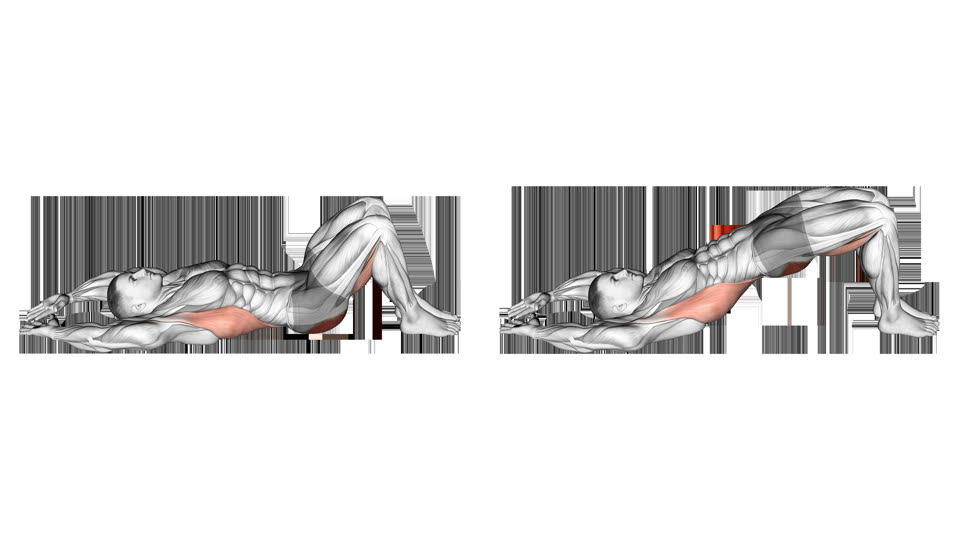
Schematic surface view. Some muscles are partly visible or not shown.
The hamstrings work as the knees straighten and bend. The gluteus maximus helps keep the hips raised.
Variations
- Glute bridgeKeeps the feet in place while you lift and lower the hips. Use it to practise the starting position before adding heel steps.
- Short-range hamstring walkout — Take fewer steps out and return sooner. Keep the same bridge and alternating heel steps.
Frequently asked questions
What muscles do hamstring walkouts work?
They work the hamstrings at the back of the thighs, with the gluteus maximus helping keep the hips raised.
How far should I walk my feet out?
Only as far as you can keep your hips off the floor and still take controlled steps back in. A nearly straight knee is not a requirement. Start with a shorter distance and build from there.
What counts as one hamstring walkout repetition?
One trip from the bent-knee bridge out to your chosen distance and back to the bridge counts as one repetition. Each heel step is part of that repetition.
How can I make hamstring walkouts easier?
Turn around after fewer heel steps. If you cannot hold the bridge while moving a foot, practise a regular glute bridge first. Lower your hips and reset whenever you lose control.
Sources
- Hu Y, Raja A. Anatomy, Bony Pelvis and Lower Limb, Hamstring Muscle. StatPearls. Updated January 31, 2026. https://www.ncbi.nlm.nih.gov/books/NBK546688/
- Elzanie A, Borger J. Anatomy, Bony Pelvis and Lower Limb, Gluteus Maximus Muscle. StatPearls. Updated April 1, 2023. https://www.ncbi.nlm.nih.gov/books/NBK538193/