
Handstand walk
What is a handstand walk?
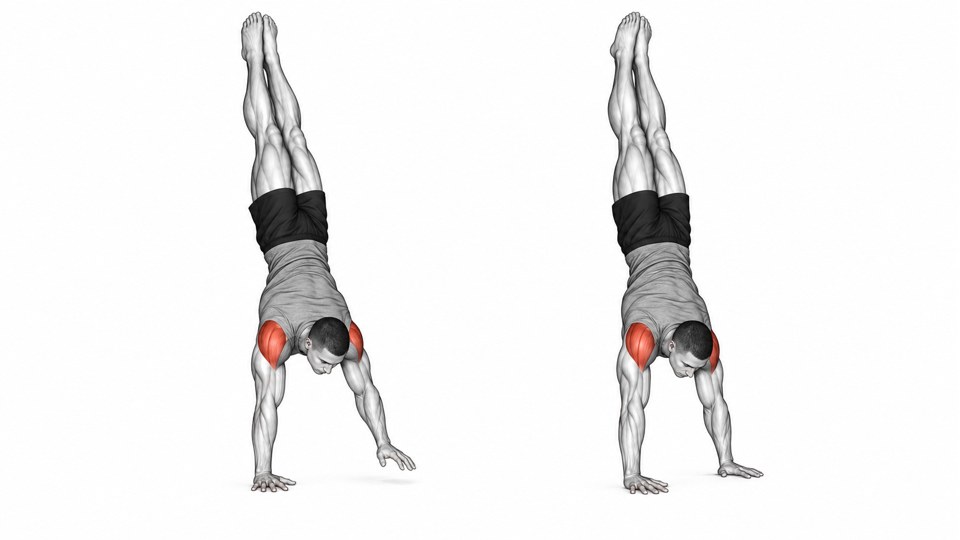
A handstand walk travels across the floor while balancing on the hands. Each step briefly shifts support toward one arm, then places the other hand ahead. Learn a deliberate exit before attempting distance.
How do you perform a handstand walk?
Set up
- Choose a clear, level area with room beside you for a practised exit. Learn a side exit or other controlled bailout with a coach before moving away from support.
- Start from a standing lunge, place the hands around shoulder width and kick into a handstand with control. Begin with short attempts.
Execution
- Find balance with straight elbows, an engaged torso and the legs kept close enough to control.
- Shift weight over one hand, then lift the other just enough to place it a short distance forward.
- Transfer onto that hand and take the next small step. Use the fingertips and body position to keep the balance over your hands.
- Before control runs out, return one foot and then the other to the floor or use the exit you have practised.
Common mistakes
Walking before you can exit safely
Return to supported balance and practise leaving the position with a coach.
Taking a large first step
Use small hand movements and brief attempts before adding distance.
Where it fits in a session
Practice this movement while you can control the required positions and finish each repetition deliberately.
Use brief skill attempts with space to exit. End the attempt while you can still choose how to land rather than waiting for the arms to give way.
Muscles worked
Primary
Secondary
- None listed in this guide
Schematic surface view. Some muscles are partly visible or not shown.
Variations
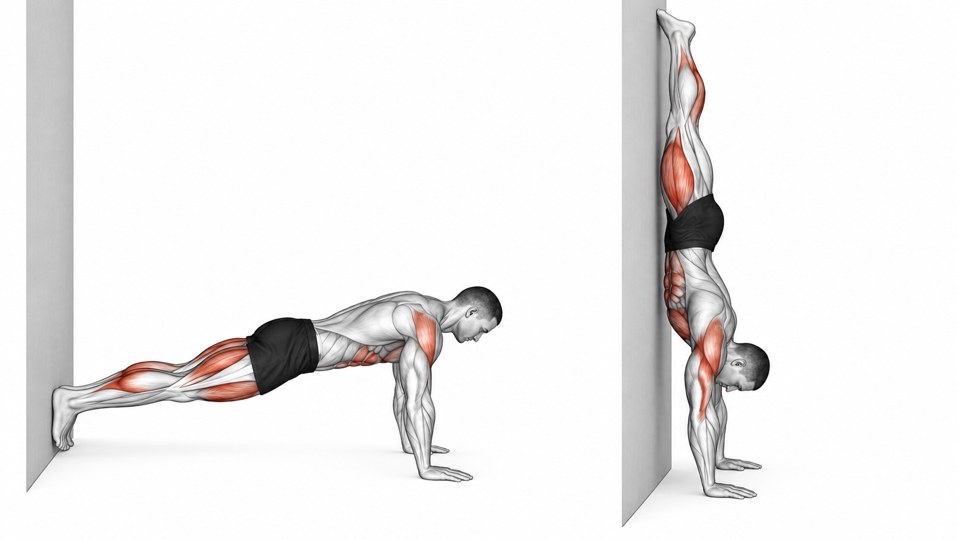
- Wall-supported handstand weight shift — Practises transferring weight between the hands while the wall supports balance.
Frequently asked questions
How do I begin learning handstand walking?
Learn an exit, a stable supported handstand and small weight shifts first. Practise with a coach before attempting unsupported steps across the floor.
How should I track handstand walks?
Record distance or controlled steps using the same floor and start convention. Keep supported drills separate from unsupported travel.
Sources
- Betts et al. Anatomy and Physiology 2e. OpenStax, 2022. https://openstax.org/books/anatomy-and-physiology-2e/pages/11-5-muscles-of-the-pectoral-girdle-and-upper-limbs