
Heel-elevated goblet squat
Also called heels elevated goblet squat.
What is a heel-elevated goblet squat?
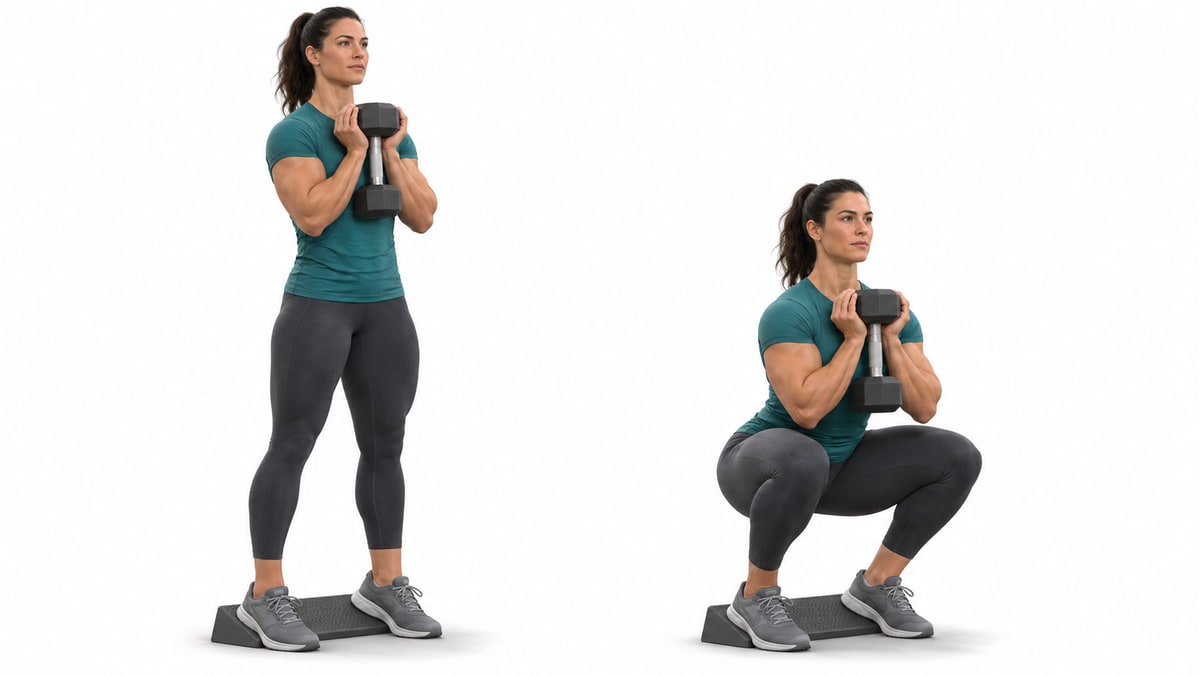
A heel-elevated goblet squat is a squat with one dumbbell held at your chest and both heels resting on a stable wedge. The balls of your feet stay on the floor. It works the quadriceps, with help from the gluteus maximus and adductor magnus at the hips.
How to do a heel-elevated goblet squat
Set up
- Set a squat wedge on a level, non-slip surface. Place both heels securely on it with your feet about shoulder width apart and the balls of your feet on the floor. Check that the wedge stays still.
- Hold a dumbbell upright at your chest with both palms supporting its upper head and your elbows pointing down. Start with a weight you can hold steadily.
Execution
- Brace your torso and bend your hips and knees to lower slowly between your feet. Keep the dumbbell close and guide your knees in the direction your toes point.
- Stop at a depth you can reverse smoothly while keeping your heels on the wedge, your forefeet down and your torso braced.
- Press against the wedge and floor to stand, straightening your knees and hips together. Settle your balance before the next rep.
Common mistakes
Using a support that rocks or slides
Test the wedge before picking up the weight. If it shifts, put the dumbbell down and use a firm support that stays in place.
Rolling forward onto the toes
Keep the heels resting on the wedge throughout the rep. Reduce the weight or shorten the descent if you cannot maintain both heel and forefoot contact.
Dropping farther after losing the brace
Choose the bottom position before your torso folds or the dumbbell drifts away from your chest. The wedge does not set the depth for you.
Where it fits in a session
Use it for squat work in a dumbbell session or as additional leg work after your main lift.
Keep the wedge height and your chosen depth consistent when comparing sessions. Add weight only while the foot support, dumbbell hold and controlled range stay repeatable.
Muscles worked
Primary
Secondary
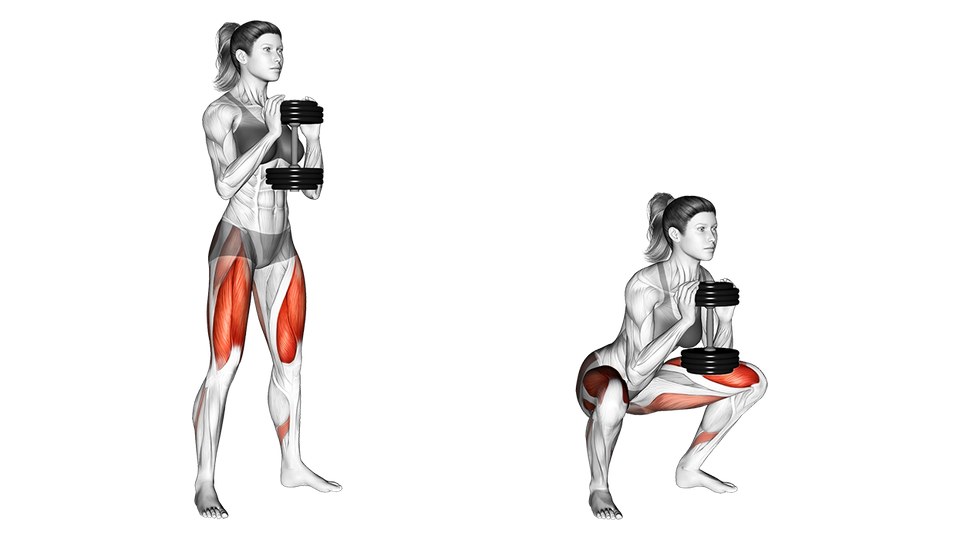
Schematic surface view. Some muscles are partly visible or not shown.
The quadriceps straighten the knees. The gluteus maximus and adductor magnus help straighten the hips as you stand.
Variations
- Heel-elevated kettlebell goblet squat — Uses a kettlebell held by the horns at the chest with the same supported heels and planted forefeet. The implement is a choice within this goblet setup.
- Paused heel-elevated goblet squat — Adds a brief pause at your chosen bottom position while you keep the weight close and your torso braced.
Related tools
Frequently asked questions
What muscles does the heel-elevated goblet squat work?
The quadriceps straighten the knees, while the gluteus maximus and adductor magnus help straighten the hips. The heel support does not turn it into a movement for just one muscle.
What part of the foot should be elevated?
Support both heels while keeping the balls of your feet on the floor. Raising the entire foot on a platform is a different setup.
How high should the wedge be?
Start with a low, stable wedge and a light dumbbell. Choose a height that lets you keep your heels supported and forefeet planted through a controlled rep. A taller wedge is not a reason to force a deeper squat.
How deep should you squat?
Lower only as far as you can keep the dumbbell close, your torso braced and both foot contacts steady. Reverse there without dropping or bouncing into a deeper position.
Can you use a kettlebell instead of a dumbbell?
Yes. Hold the kettlebell by its horns at your chest and keep the same heel support and forefoot contact. Pick the implement you can hold securely.
Sources
- Betts JG et al. Anatomy and Physiology 2e. Section 11.6: Appendicular muscles of the pelvic girdle and lower limbs. OpenStax; 2022. https://openstax.org/books/anatomy-and-physiology-2e/pages/11-6-appendicular-muscles-of-the-pelvic-girdle-and-lower-limbs