Incline cable fly
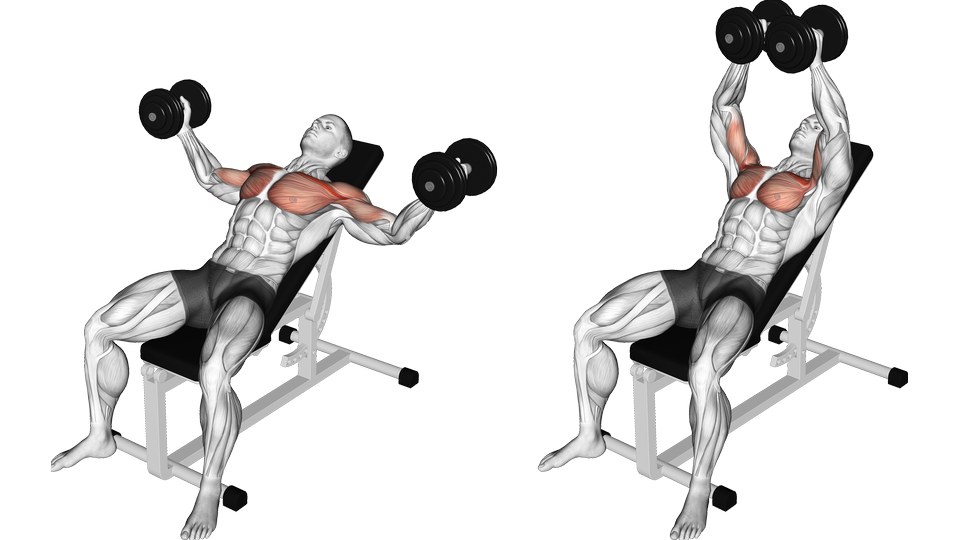
Variation of Incline dumbbell fly
Also called incline cable chest fly, incline bench cable fly, incline cable flye.
What is an incline cable fly?
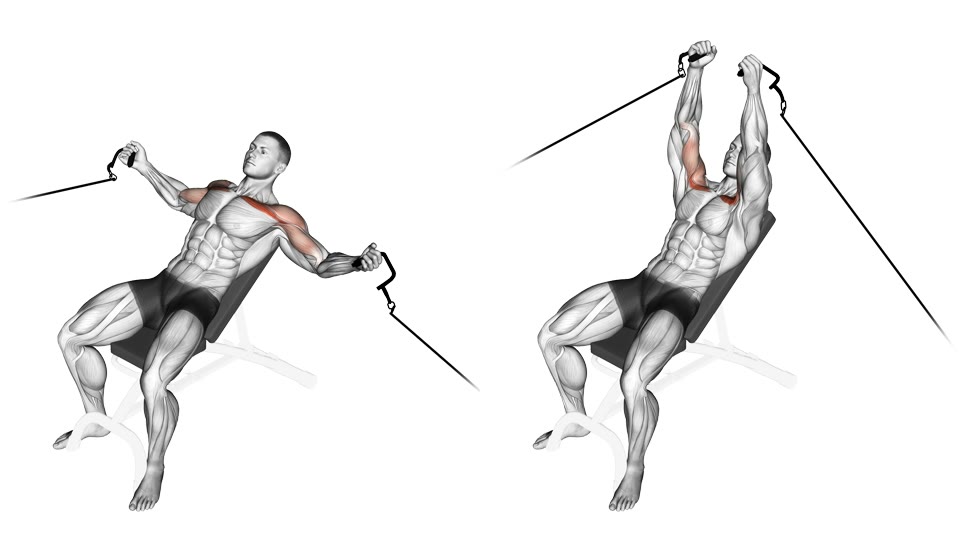
The incline cable fly is a chest isolation exercise performed on an inclined bench between two low pulleys. With a small, fixed bend in the elbows, you open the arms in a wide arc and bring the handles together above the upper chest while the cables keep pulling through the closing phase.
How do you perform an incline cable fly?
Set up
- Place an incline bench centrally between two low pulleys and attach a single handle to each cable.
- Take the handles, sit back against the bench and plant your feet with the arms open beside the upper chest.
- Turn the palms toward each other and set a small bend in the elbows that you can hold throughout the repetition.
Execution
- Bring the handles upward and inward in a wide arc while keeping the elbow angle nearly unchanged.
- Finish with the hands above the upper chest without reaching the shoulders away from the bench.
- Open the arms along the same arc under control, stopping at a comfortable chest stretch.
Common mistakes
Bending and straightening the elbows
Changing the elbow angle turns the fly into a cable press and makes the path harder to repeat.
Placing the bench off-centre
Unequal cable angles make the two sides pull differently. Centre the bench before choosing the load.
Opening beyond a controllable range
Stop before the shoulders roll forward or the cables pull the arms past a comfortable stretch.
Where it fits in a session
After pressing work in a chest or upper-body session.
Use a load that lets the chest control the full arc while the elbow angle and bench position stay fixed.
Muscles worked
Primary
Secondary
Schematic surface view. Some muscles are partly visible or not shown.
The inclined arm path places the clavicular portion of the pectoralis major in the lead, while the rest of the chest and the front deltoids assist.
Variations
- Low-to-high cable crossover — Uses the same rising cable path while standing instead of lying on a bench.
- Flat bench cable fly — Uses a flat bench and closes the handles above the middle of the chest.
- Single-arm incline cable fly — Moves one handle at a time while the other side stays out of the repetition.
Frequently asked questions
What muscles does the incline cable fly work?
It mainly trains the clavicular, or upper, portion of the pectoralis major. The rest of the chest and the front deltoids assist.
Why use cables instead of dumbbells?
Cables keep pulling as the hands close above the chest, while a dumbbell's resistance to the fly becomes small near the top. Both use the same basic arm arc.
Where should the pulleys be set?
Use low pulleys so the cables run from behind and below the bench toward the hands. Set both sides to the same height and centre the bench between them.
How steep should the bench be?
Use a low or moderate incline that lets the handles meet above the upper chest without turning the movement into an overhead fly.
How far should the arms open?
Open until you feel a controlled chest stretch, stopping earlier if the shoulders roll forward or become uncomfortable.