Incline dumbbell fly
Also called incline dumbbell flye, incline chest fly, incline dumbbell flies.
What is an incline dumbbell fly?
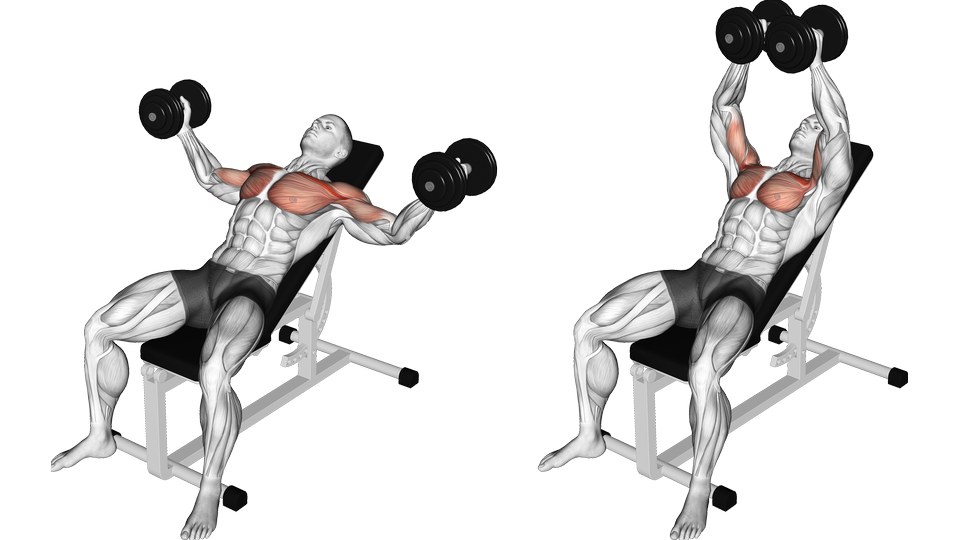
The incline dumbbell fly is a chest isolation exercise performed on an inclined bench. With a small, fixed bend in the elbows, you open the arms in a wide arc and bring the dumbbells back above the upper chest.
How do you perform an incline dumbbell fly?
Set up
- Set a bench to a low or moderate incline and sit with a dumbbell resting on each thigh.
- Lie back, bring the dumbbells above your upper chest and plant your feet.
- Turn your palms toward each other and set a small bend in your elbows.
Execution
- Open your arms in a wide arc while keeping the elbow angle nearly unchanged.
- Stop when you reach a controlled chest stretch or before the shoulders become uncomfortable.
- Reverse the same arc to bring the dumbbells above the upper chest without turning the movement into a press.
Common mistakes
Bending and straightening the elbows
Changing the elbow angle turns the fly into a dumbbell press and makes the path hard to repeat.
Lowering past a controllable range
More depth is not useful when the shoulders roll forward or the weight pulls the arms beyond a comfortable position.
Using a bench angle that is too steep
As the bench approaches upright, the movement becomes increasingly shoulder-dominant instead of matching the upper-chest fly shown here.
Where it fits in a session
After pressing work in a chest or upper-body session.
Use a lighter load than you would press. The set should end because the chest can no longer control the arc, not because the elbows bend to rescue the dumbbells.
Muscles worked
Primary
Secondary
Schematic surface view. Some muscles are partly visible or not shown.
The inclined arm path places the clavicular portion of the pectoralis major in the lead, while the rest of the chest and the front deltoids assist.
Variations
- Incline cable fly — Uses cables to keep resistance through more of the closing arc.
- Incline single-arm dumbbell fly — Moves one dumbbell at a time while the other arm stays out of the repetition.

Frequently asked questions
What muscles does the incline dumbbell fly work?
It mainly trains the clavicular, or upper, portion of the pectoralis major. The rest of the chest and the front deltoids assist the movement.
What bench angle should I use?
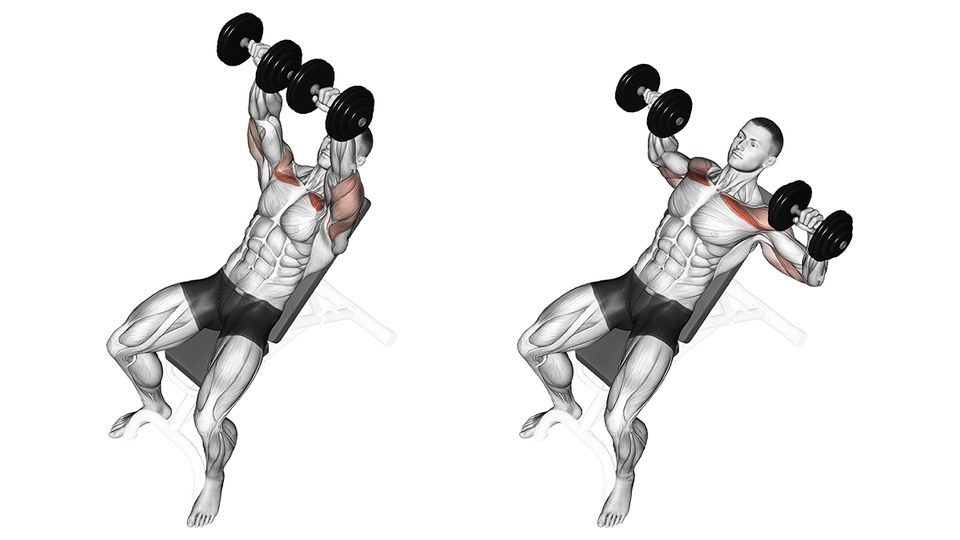
Use a low or moderate incline that lets the dumbbells meet above the upper chest without turning the movement into an overhead fly. The exact angle can vary with the bench and your shoulder comfort.
How is an incline fly different from an incline press?
A fly keeps a small, nearly fixed elbow bend and moves the arms in a wide arc. A press bends the elbows as the weights lower and straightens them as the weights rise.
How low should the dumbbells go?
Lower until you feel a controlled chest stretch, stopping earlier if the shoulders roll forward or feel uncomfortable. The illustration shows one workable range, not a depth everyone must copy.
Should the dumbbells touch at the top?
They can finish close together above the upper chest, but they do not need to touch. Keep the shoulders on the bench instead of reaching farther just to meet the weights.