
Kas glute bridge
Also called Kas hip thrust.
What is a Kas glute bridge?
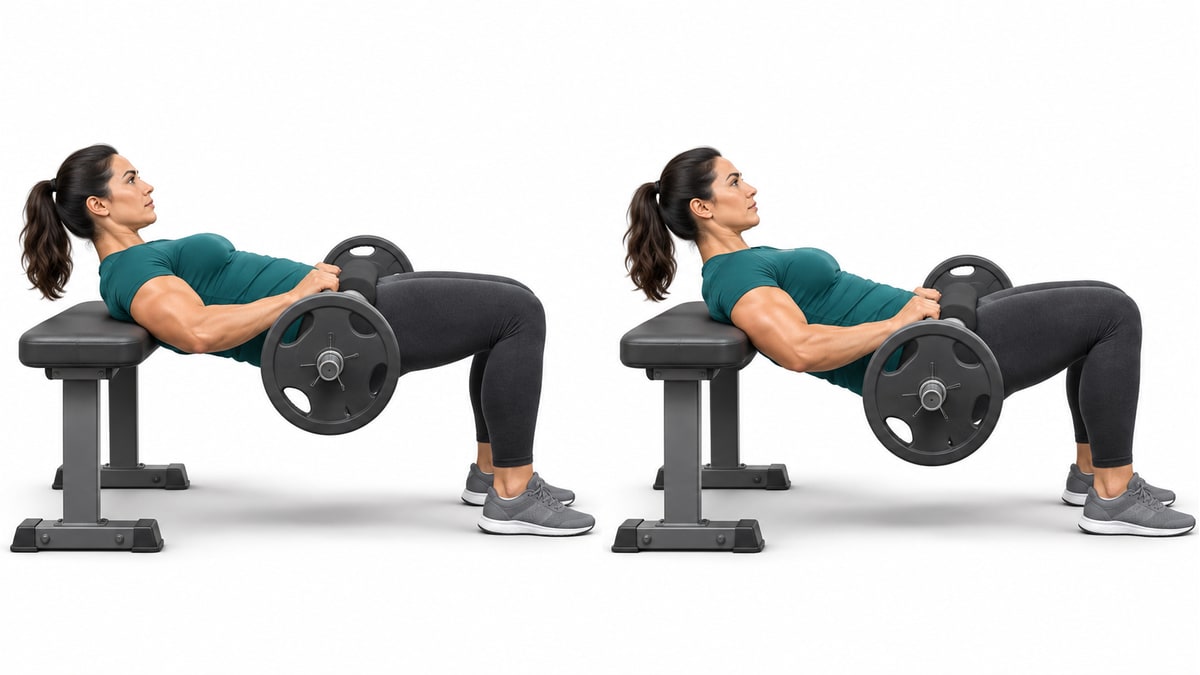
A Kas glute bridge is a hip thrust performed through a short range near the top, with your upper back on a bench and a padded barbell across your hips. From the raised position, lower your hips a little while keeping your knees almost still, then return to the top. It trains the gluteus maximus. A regular hip thrust lowers farther; a floor glute bridge keeps your upper back on the ground.
How do you perform a Kas glute bridge?
Set up
- Secure a sturdy bench against a fixed support so it cannot slide. Sit in front of it with the edge just below your shoulder blades.
- With plates that clear your legs, roll a lightly loaded bar into your lap. Centre its pad over your hip crease and hold the bar with both hands.
- Plant both feet about hip-width apart, close enough that your shins will be nearly upright when your hips are raised. Keep your upper back against the bench.
Execution
- Brace your middle and lift your hips until your shoulders, hips and knees form a roughly straight line, without arching your lower back.
- Lower your hips just a few inches, keeping your feet planted and your knees almost still. Reverse before your knees begin to move back toward the bench.
- Raise your hips to the same top position, keeping the bar steady and finishing without arching your lower back. Repeat this small, controlled movement.
- After your last rep, lower your hips fully and settle the plates on the floor before letting go of the bar.
Common mistakes
Letting each rep sink farther
Once the hips drop enough for the knees to travel back, you are moving into the larger range of a regular hip thrust. Reduce the load if you cannot repeat the same small dip.
Bouncing through the short range
A small movement still needs a clear change of direction. Slow down enough to control both ends instead of rapidly shaking the bar up and down.
Reaching higher by arching the back
Stop at the aligned shoulder, hip and knee position. Throwing the chest back adds movement beyond that finish; keep your middle braced as you return to the top.
Continuing as the bench or bar shifts
Lower the bar and reset if the bench slides or the pad rolls away from the hip crease. Keep both hands on the bar throughout the set.
Where it fits in a session
Use it where your plan calls for short-range glute work, often after your main lower-body lifts.
Learn the small dip without a bar first. Add a light barbell only when you can enter and leave the setup comfortably, then increase the load while keeping the same range. Log it separately from full-range hip thrusts so the change in range does not get mistaken for a strength gain.
Muscles worked
Primary
Secondary
- None listed in this guide
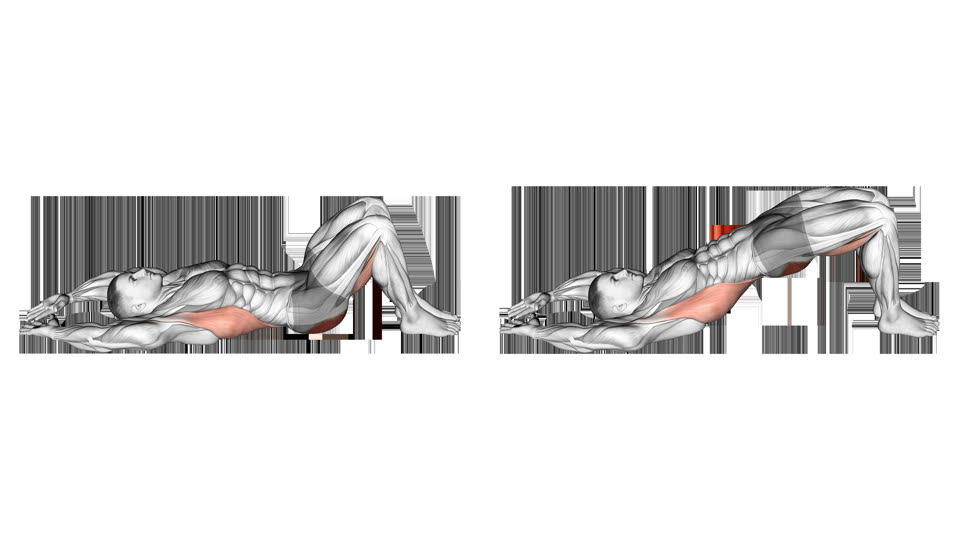
Schematic surface view. Some muscles are partly visible or not shown.
The gluteus maximus is the large buttock muscle that extends the hip.
Variations

Frequently asked questions
How is a Kas glute bridge different from a hip thrust?
The bench and barbell setup can be the same. The Kas version repeats only a short dip below the top position, with little knee movement. A regular hip thrust lowers the hips farther between reps. They are different range choices, so compare your loads within the version you actually performed.
Is a Kas glute bridge done on the floor?
No. Despite the name, this version supports your upper back on a bench. A floor glute bridge keeps the upper back on the ground. Moving the shoulders to the floor changes the setup rather than simply shortening a bench hip thrust.
How far should I lower my hips?
Use a small dip from the top and turn around before your knees start moving backward toward the bench. Keep the shins nearly upright. A few inches is a starting cue, not a distance everyone must match; the knee position helps you keep the movement consistent.
What muscles does the Kas glute bridge work?
The main target is the gluteus maximus, the large buttock muscle that extends the hip. A short rep is not a reason to assume that all other muscles stop contributing, and this guide does not claim that it produces more growth than a full-range hip thrust.
Can I start without a barbell?
Yes. Practise with both feet planted and your upper back supported on a secure bench. Find the aligned top position, then rehearse the small lowering movement. Add a light bar only after you can control that range and safely position and remove it.
Sources
- Betts JG, et al. Anatomy and Physiology 2e, section 11.6: Appendicular Muscles of the Pelvic Girdle and Lower Limbs. OpenStax. 2022. https://openstax.org/books/anatomy-and-physiology-2e/pages/11-6-appendicular-muscles-of-the-pelvic-girdle-and-lower-limbs