Katana extensions
Also called katana extension, cable katana extension, cross-body overhead cable extension.
What are katana extensions?
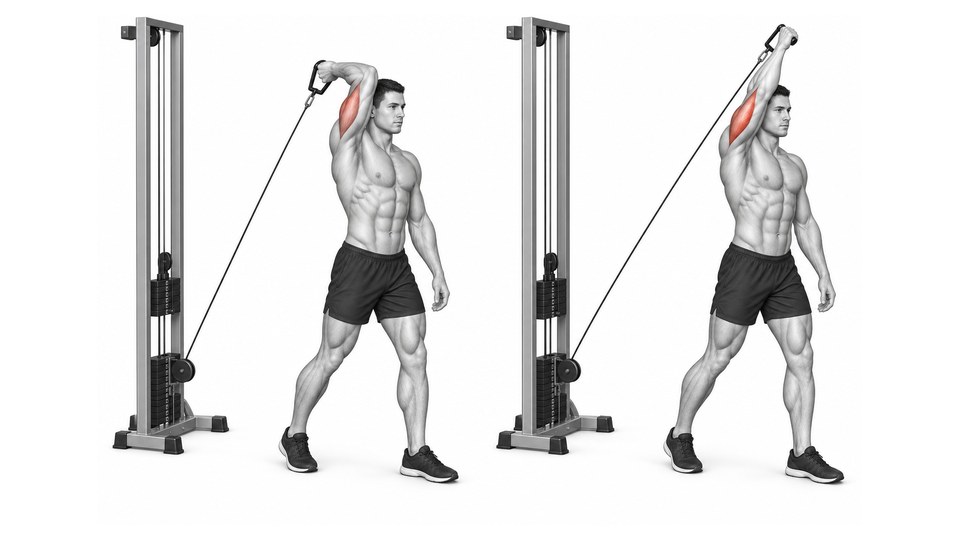
Katana extensions are single-arm cable triceps extensions performed overhead on a diagonal line that crosses the body's midline. The upper arm stays raised while the elbow bends and straightens, giving the movement the sword-drawing path behind its name.
How do you perform katana extensions?
Set up
- Attach one handle to a low cable. Stand with your back partly toward the pulley and take the handle in the opposite-side hand.
- Step forward into a stable staggered stance and bring the working upper arm beside your head, with the elbow bent and the handle behind your head.
- Brace your torso and adjust your position until the cable runs diagonally across your body into the working hand without rubbing your head or shoulder.
Execution
- Keep the upper arm raised and straighten the elbow, sending the handle forward and diagonally overhead.
- Finish with the elbow straight without twisting the torso or turning the movement into a shoulder raise.
- Bend the elbow under control until the handle returns behind your head. Complete the set, then change sides.
Common mistakes
Turning it into an arm swing
If the whole upper arm sweeps forward, shoulder movement replaces the elbow extension that defines the exercise.
Standing where the cable rubs the body
Move a small step or change the pulley height until the cable reaches the handle cleanly on its diagonal path.
Twisting to finish the rep
Torso rotation can make the handle travel farther without the elbow straightening. Shorten the range or reduce the load.
Where it fits in a session
As unilateral triceps work after pressing, or alongside another elbow-extension variation.
Use a load that lets the upper arm remain raised and the cable clear the body. Match the setup on both sides before increasing resistance.
Muscles worked
Primary
Secondary
- None listed in this guide
Schematic surface view. Some muscles are partly visible or not shown.
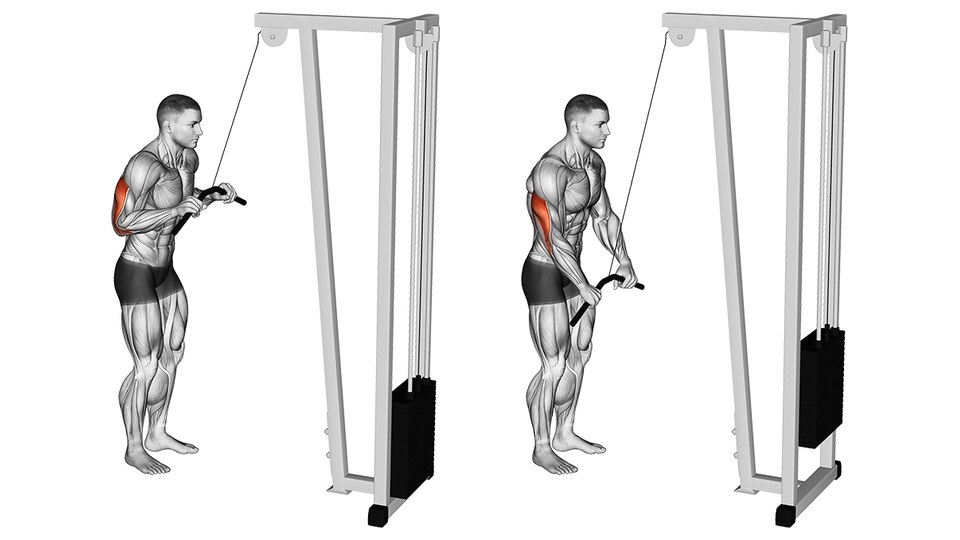
The shoulder holds the upper arm overhead while the triceps straightens the elbow against the diagonal cable line.
Variations
- Bilateral Katana extension — Uses two cables crossed behind the head and extends both elbows together.
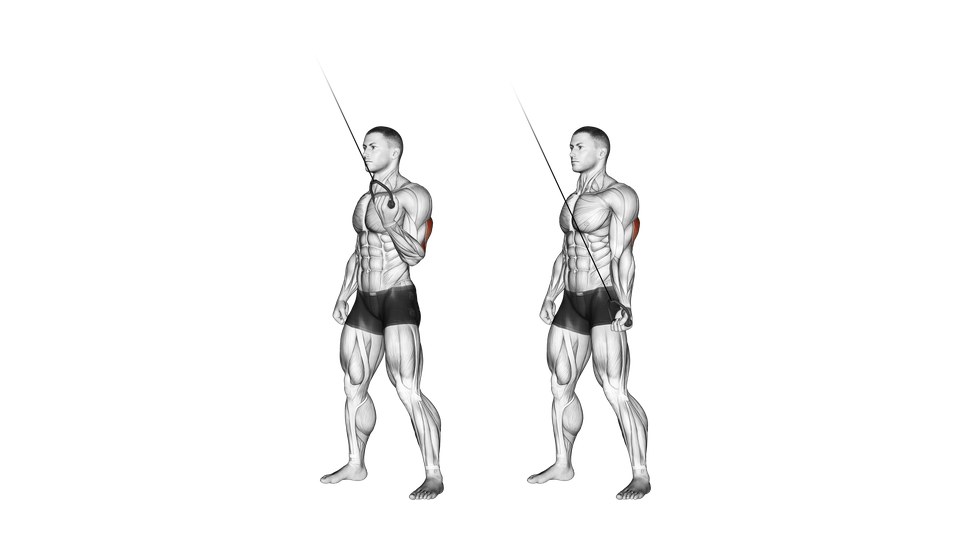
- Single-arm triceps extensionUses a high cable with the upper arm beside the torso rather than overhead.
Frequently asked questions
Why are they called Katana extensions?
The handle travels on a diagonal overhead path like drawing and raising a sword. The name describes the cable line, not a separate joint action.
What muscles do Katana extensions work?
They train the triceps brachii by straightening the elbow while the upper arm is held overhead.
Should the cable be high or low?
This guide shows a low pulley. Other heights can work if the cable follows the forearm's diagonal line and clears the body, but changing the height may require a different stance.
Can you do Katana extensions with both arms?
Yes. A bilateral version uses two cable stations and crossed handles. One arm at a time needs less space and makes each cable path easier to set.
How are Katana extensions different from overhead extensions?
Both straighten an overhead elbow. The Katana version is defined by a diagonal, cross-midline cable line rather than a handle or rope moving straight behind the head.