
Kettlebell high pull
Also called single-arm kettlebell high pull, one-arm kettlebell high pull, kettlebell high pulls.
What is a kettlebell high pull?
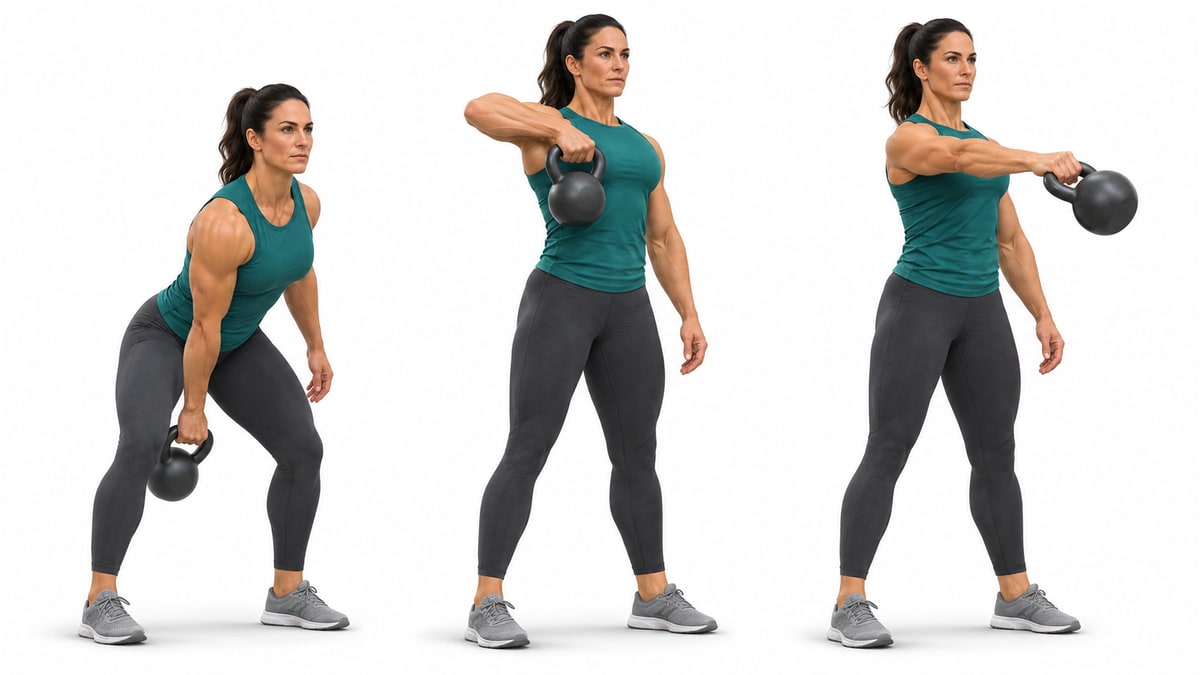
A kettlebell high pull adds a bent-elbow pull to a single-arm swing. Your hips launch the bell, then your elbow travels back as the bell approaches chest height. You send it forward again before the next backswing. This guide teaches that one-arm, swing-based version, with no overhead catch.
How do you perform a kettlebell high pull?
Set up
- Choose a light kettlebell and clear space in front, behind and beside you. Stand with your feet a little wider than hip width, with the bell on the floor a short reach ahead.
- Soften your knees, move your hips back and take the handle in one hand with your palm toward you. Brace your trunk, keep your back steady and leave your free hand clear of the bell.
- Tip the bell toward you and hike it between your upper thighs, keeping the loaded arm long as your hips move back.
Execution
- Drive through your feet and straighten your hips. As the bell rises, bend your elbow back and out to bring the handle toward the same side of your chest, with the forearm roughly level and wrist straight. Finish standing tall.
- Without holding the top position, send the handle forward to lengthen your arm before the bell drops. Keep hold of the handle; the bell stays in front of your hand rather than rolling over it.
- Let the bell return close to your upper thighs, then move your hips back to receive the backswing. Repeat the hip drive and pull without turning your chest after the bell.
- To finish, send the bell forward once more, let it pass back between your thighs, then guide it onto the floor ahead as you hinge. Release it only once it is settled; change hands for the next set.
Common mistakes
Starting the lift with an arm yank
If you haul the bell from the bottom with a bent elbow, the swing and pull become separate efforts. Use less weight and restore a clear hip-driven rise before adding the elbow movement.
Letting the bell collapse onto the wrist
This is not an overhead catch or a clean. Keep your grip secure and wrist in line with the forearm; redirect the bell before its round body flips behind your hand.
Dropping straight down from the finish
A bent-arm drop leaves no clear return path. Reach the handle away as part of the same repetition, then let the long arm guide the backswing.
Where it fits in a session
Practise the timing before fatigue makes the bell's path difficult to repeat.
Learn a controlled one-arm swing first, then add occasional high pulls with a light bell. Park the weight between sides and stop the set if you cannot direct it away from your wrist and back into the swing. Log the bell's weight and repetitions for each arm.
Muscles worked
Primary
Secondary
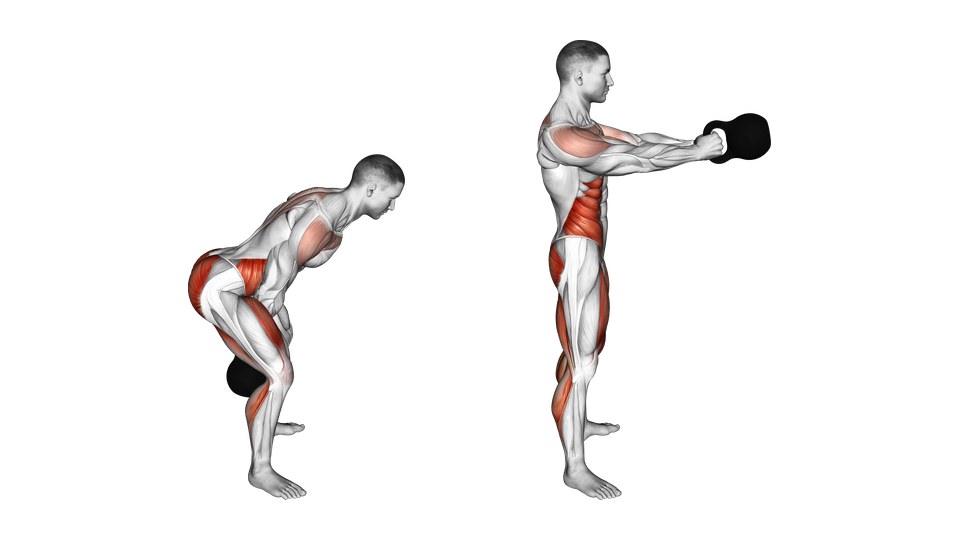
Schematic surface view. Some muscles are partly visible or not shown.
The gluteus maximus and the hamstrings that cross the hip supply the initial drive. The rear shoulders, trapezius and elbow flexors help redirect the bell; the spinal erectors and grip muscles support the movement. These are functional roles, not a measured activity ranking.
Variations
- Two-hand kettlebell swingKeeps both hands on one handle and the arms long through a chest-height float, without the elbow-back finish.
- Double-kettlebell high pull — Swings and redirects one kettlebell in each hand at the same time.
- Kettlebell sumo high pull — Uses two hands on one bell with a wide stance and an upward pull in front of the body. It differs from the single-arm swing-and-redirect sequence taught here.
Frequently asked questions
Which muscles help with a kettlebell high pull?
The gluteus maximus and hip-extending hamstrings start the movement. The rear deltoids, trapezius and elbow flexors help guide the pull, with the spinal erectors supporting the trunk and the forearm and finger flexors holding the bell. The list describes their jobs rather than ranking muscle activity.
Is a kettlebell high pull an upright row?
The version here begins with a backswing and a forceful hip extension. An upright row lifts the weight with a comparatively still lower body. A two-hand sumo high pull is another version again; keep those different movements separate when recording your training.
How high should I pull the kettlebell?
Bring the handle toward the side of your chest with the forearm roughly horizontal. Keep the elbow around shoulder level rather than chasing a higher finish. The bell does not travel overhead or land on the back of your forearm.
What happens after the pull?
Send the handle away to straighten the arm, then allow the bell to descend into the next backswing. Do not wait with it beside your chest or drop it vertically from a bent elbow. For the last repetition, finish that backswing and park the bell ahead of you.
Should I start with the same weight I use for swings?
Begin lighter while learning to change the bell's direction. A familiar swing weight may be difficult to manage near the chest. Add load only after the pull, push-out and return stay repeatable; use a qualified coach if that sequence remains unclear.
Sources
- Elzanie A, Borger J. Anatomy, Bony Pelvis and Lower Limb, Gluteus Maximus Muscle. StatPearls. Updated April 1, 2023. https://www.ncbi.nlm.nih.gov/books/NBK538193/
- Hu Y, Raja A. Anatomy, Bony Pelvis and Lower Limb, Hamstring Muscle. StatPearls. Updated January 31, 2026. https://www.ncbi.nlm.nih.gov/books/NBK546688/
- McCausland C, Sawyer E, Eovaldi BJ, Varacallo MA. Anatomy, Shoulder and Upper Limb, Shoulder Muscles. StatPearls. Updated August 8, 2023. https://www.ncbi.nlm.nih.gov/books/NBK534836/
- Henson B, Kadiyala B, Edens MA. Anatomy, Back, Muscles. StatPearls. Updated August 14, 2023. https://www.ncbi.nlm.nih.gov/books/NBK537074/
- Betts JG, et al. Anatomy and Physiology 2e, section 11.5: Muscles of the Pectoral Girdle and Upper Limbs. OpenStax. https://openstax.org/books/anatomy-and-physiology-2e/pages/11-5-muscles-of-the-pectoral-girdle-and-upper-limbs