Kettlebell row
Also called single-arm kettlebell row, one-arm kettlebell row.
What is a kettlebell row?
A kettlebell row is a bent-over pull that brings the bell toward your side. This guide uses one arm at a time, with your free forearm resting on your front thigh, so you need one kettlebell and no bench.
How do you perform a kettlebell row?
Set up
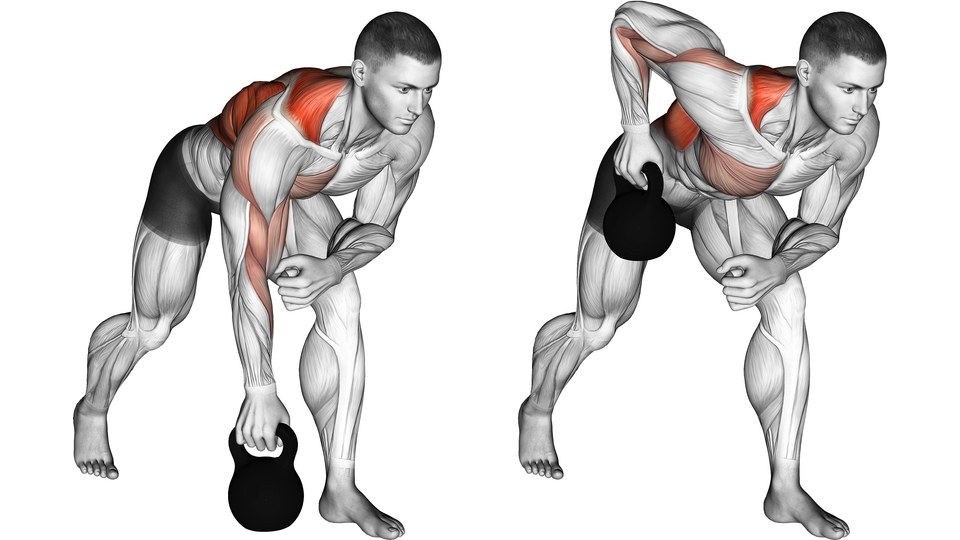
- Place a kettlebell beside one foot. Step the opposite foot forward, bend your knees and lean your torso forward from the hips.
- Rest your free forearm on the front thigh above the knee. Grip the bell with your other hand and let it hang beneath that shoulder, keeping your back steady.
Execution
- Pull your elbow back beside your ribs, bringing the bell toward your hip without turning your chest upward.
- Stop before you need to twist or lift your torso to bring the bell higher. Let your shoulder blade move with the pull.
- Lower the bell steadily until your arm is long again. Repeat on that side, then set the bell down before changing hands and stance.
Common mistakes
Twisting upward to finish the pull
Use a lighter bell and stop the repetition where your torso can stay still.
Shrugging the loaded shoulder toward your ear
Keep your neck long and draw the elbow toward your side rather than lifting the shoulder.
Where it fits in a session
Use it as a pulling exercise in your strength session.
Choose a weight that lets you keep the same torso position from the first repetition to the last. Record repetitions per arm and use the same setup when comparing sessions.
Muscles worked
Primary
Secondary
Schematic surface view. Some muscles are partly visible or not shown.
The back muscles move the upper arm and shoulder blade; the elbow flexors assist the pull. These groups are not ranked by measured activation.
Variations
Frequently asked questions
Do I need a bench?
No. The version shown rests your free forearm on your front thigh. A sturdy bench can also provide support, but keep your chosen setup consistent when tracking progress.
Can I row two kettlebells together?
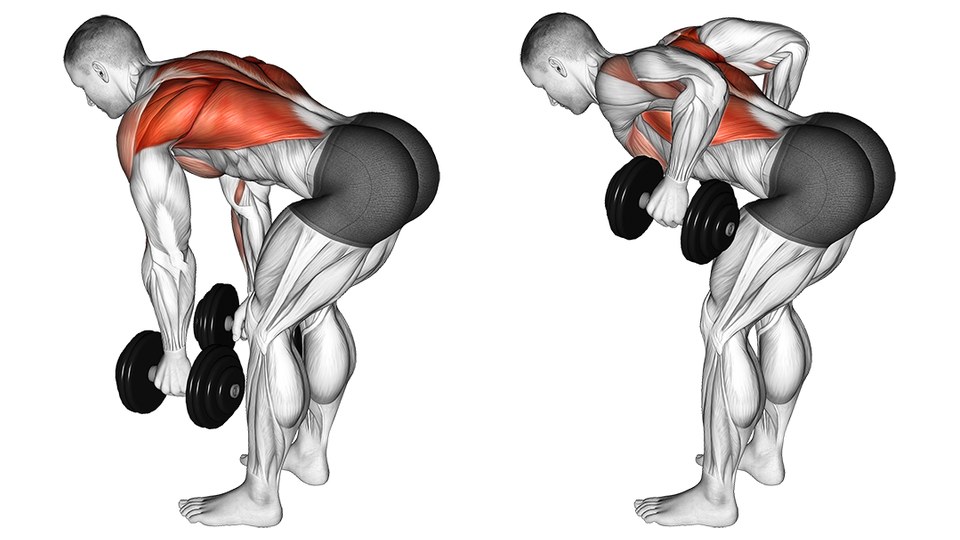
Yes, but that uses a different setup with neither arm resting on your thigh. This guide teaches the supported single-arm version; record the two-arm version separately.
Sources
- J. Gordon Betts et al.. Anatomy and Physiology 2e: Muscles of the pectoral girdle and upper limbs. 2022. https://openstax.org/books/anatomy-and-physiology-2e/pages/11-5-muscles-of-the-pectoral-girdle-and-upper-limbs