Larsen press
What is a Larsen press?
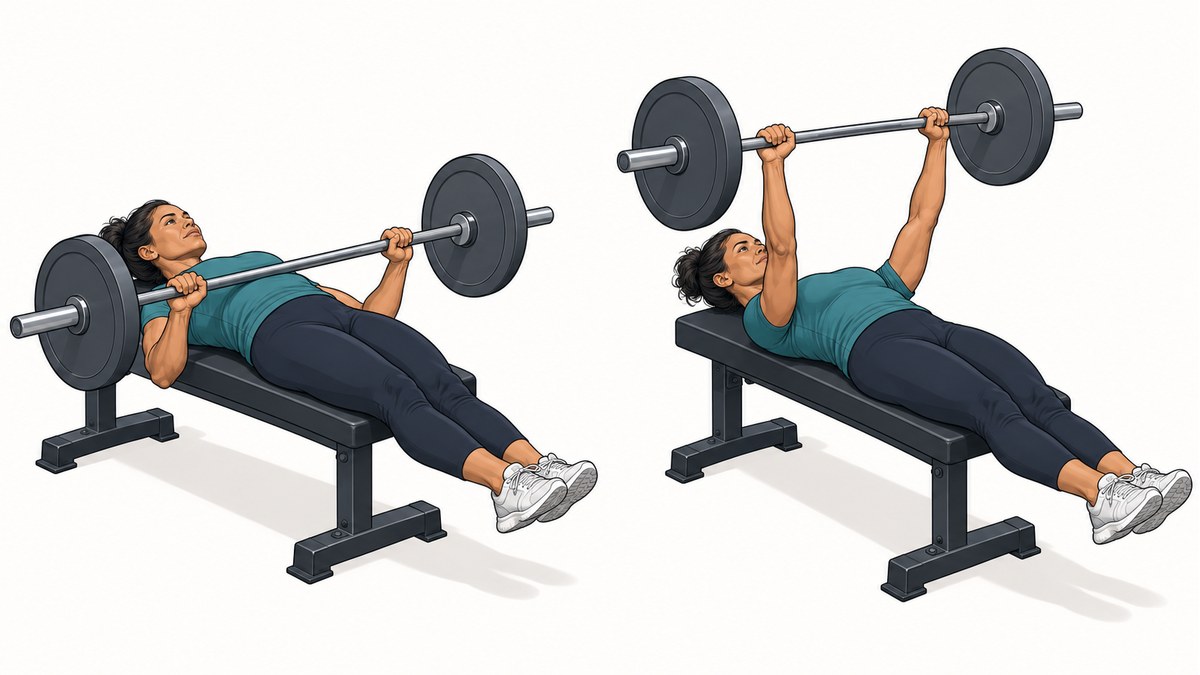
A Larsen press is a flat barbell bench press with your legs extended in front of you and your feet hovering off the floor. You lower the bar to your chest and press it back up without leg drive. The chest, front deltoids and triceps perform the press.
How to do a Larsen press
Set up
- Set a flat bench inside a rack. Adjust the safeties to catch the bar if you flatten your back, and have a spotter help with the lift-off.
- Lie with your eyes under the bar, feet on the floor and buttocks on the bench. Bring your shoulder blades together and hold a comfortable upper-back arch.
- Take an overhand grip just wider than your shoulders and wrap your thumbs around the bar. Set the bar across the base of your palms, with your wrists nearly straight.
Execution
- Unrack to straight arms over your shoulders. Once the bar is steady, extend your legs forward with your heels hovering off the floor and below bench height.
- Brace your torso and lower the bar toward the lower half of your chest. Keep your forearms upright and your legs still.
- Touch your chest lightly, then press up and slightly back until your elbows straighten. Keep your buttocks and upper back against the bench.
- After the last repetition, put your feet back on the floor. Hold the bar at arm's length, guide it back against both uprights and lower it into the hooks.
Common mistakes
Turning the movement into a leg raise
Keep your thighs close to the bench's line instead of drawing your knees toward your chest. The goal is to take your feet away from the floor, not to hold your legs as high as possible.
Letting the shoulders slide forward at the bottom
Keep the upper back settled against the pad as you lower. If you have to reach your shoulders forward to finish the descent, reset your position and reduce the load for the next set.
Kicking the legs to finish a repetition
Keep the legs quiet through the press. If a repetition stalls, put your feet down and let your spotter help you re-rack; use less weight on the next set rather than swinging through it.
Where it fits in a session
Use after your main feet-down bench work, or as the planned pressing variation in another session.
Begin with light warm-up sets in the Larsen position and choose the load from those sets. Keep its loads separate from your feet-down bench press so that comparisons use the same setup.
Muscles worked
Primary
Secondary
- None listed in this guide
Schematic surface view. Some muscles are partly visible or not shown.
Pressing muscles listed together, without an activation ranking. The chest and front deltoid act at the shoulder; the triceps straightens the elbow.
Variations
- Barbell bench pressKeeps the feet on the floor and allows leg drive. Use its own training history when comparing loads.
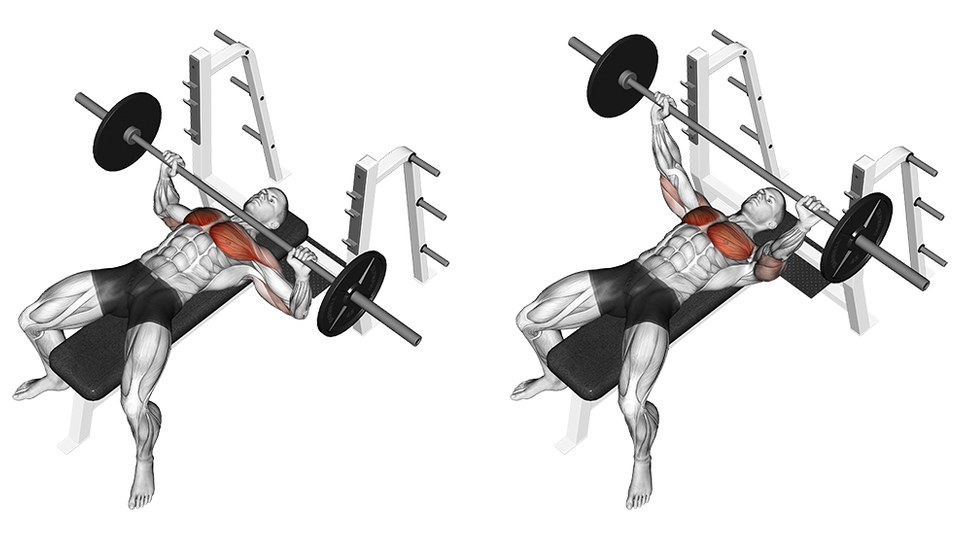
- Paused Larsen press — Adds a deliberate stop at light chest contact before the press. The legs stay extended and the feet remain off the floor.
Related tools
Frequently asked questions
What muscles does the Larsen press work?
The pectoralis major, anterior deltoid and triceps brachii perform the press. The chest and front deltoid move the upper arm at the shoulder, while the triceps straightens the elbow. Lifting the feet does not turn it into a chest isolation exercise.
How is a Larsen press different from a regular bench press?
The legs extend forward and the feet stay off the floor during each repetition, so you cannot push through them for leg drive. The bench stays flat and the bar still travels from straight arms down to the chest and back up.
Should your legs be straight or bent?
Extend them forward, with your feet floating above the floor and below the height of the bench. Keep a slight bend in the knees if you need it to hold that position. Bringing the knees above the hips or planting the feet on the bench creates a different legs-up setup.
Should you flatten your back for a Larsen press?
Keep a comfortable arch with your shoulder blades held against the bench. You do not need to force your entire back flat. If holding the legs out pulls you out of position, end the set and reset rather than chasing a particular foot height.
How much weight should you use?
Start with an empty bar or a lighter training bar and add weight only while you can keep the legs still, touch the chest under control and press smoothly. Choose the working load from warm-up sets in this position instead of assuming a fixed percentage of your usual bench.
Sources
- Solari F, Burns B. Anatomy, Thorax, Pectoralis Major Major. StatPearls. Updated July 24, 2023. https://www.ncbi.nlm.nih.gov/books/NBK525991/
- Elzanie A, Varacallo MA. Anatomy, Shoulder and Upper Limb, Deltoid Muscle. StatPearls. Updated January 30, 2024. https://www.ncbi.nlm.nih.gov/books/NBK537056/
- Tiwana MS, Sinkler MA, Bordoni B. Anatomy, Shoulder and Upper Limb, Triceps Muscle. StatPearls. Updated August 28, 2023. https://www.ncbi.nlm.nih.gov/books/NBK536996/