
Muscle snatch
Also called barbell muscle snatch, muscle snatches.
What is a muscle snatch?
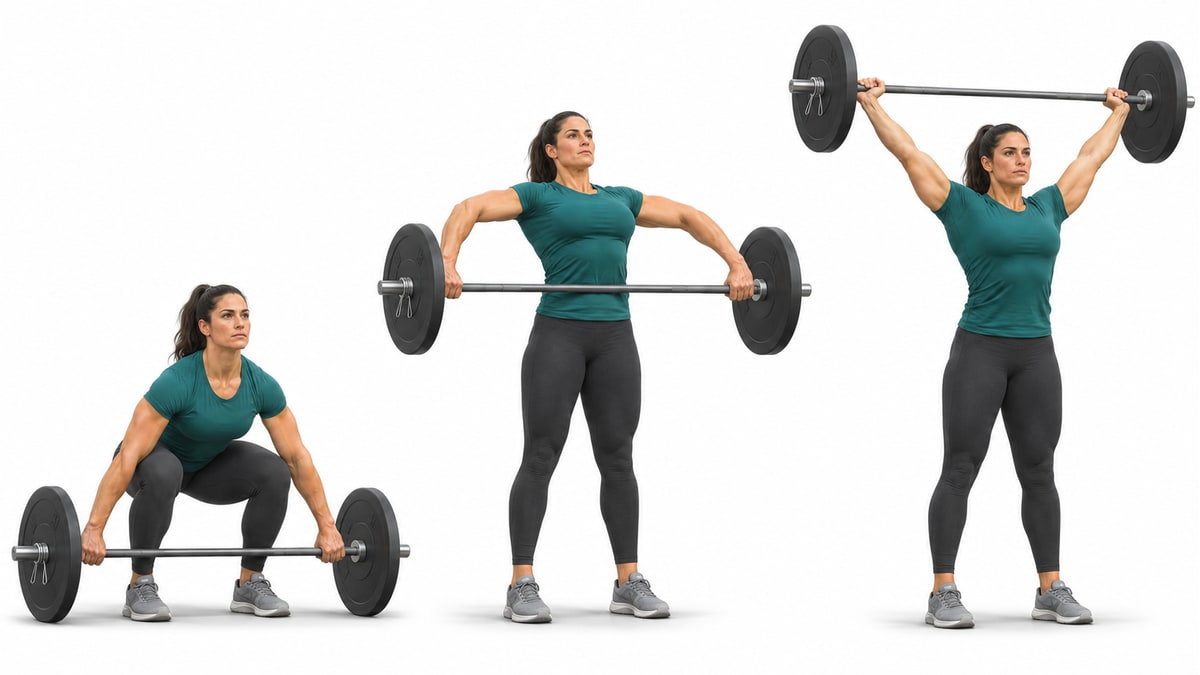
A muscle snatch lifts a barbell overhead with a wide grip, without bending the knees again to receive it. Your legs and hips start the lift; your arms continue the pull and turn the bar overhead while you remain standing. This guide uses a floor start and a continuous turnover into straight elbows.
How do you perform a muscle snatch?
Set up
- Choose a light technique bar and a clear lifting area with room overhead. If using plates, secure full-size technique or bumper plates with collars on a suitable platform.
- With a technique bar, rehearse a wide overhand grip that puts the bar at your hip crease when your arms hang straight. Check that you can hold this grip overhead while standing upright, and learn a suitable missed-lift release with a qualified coach.
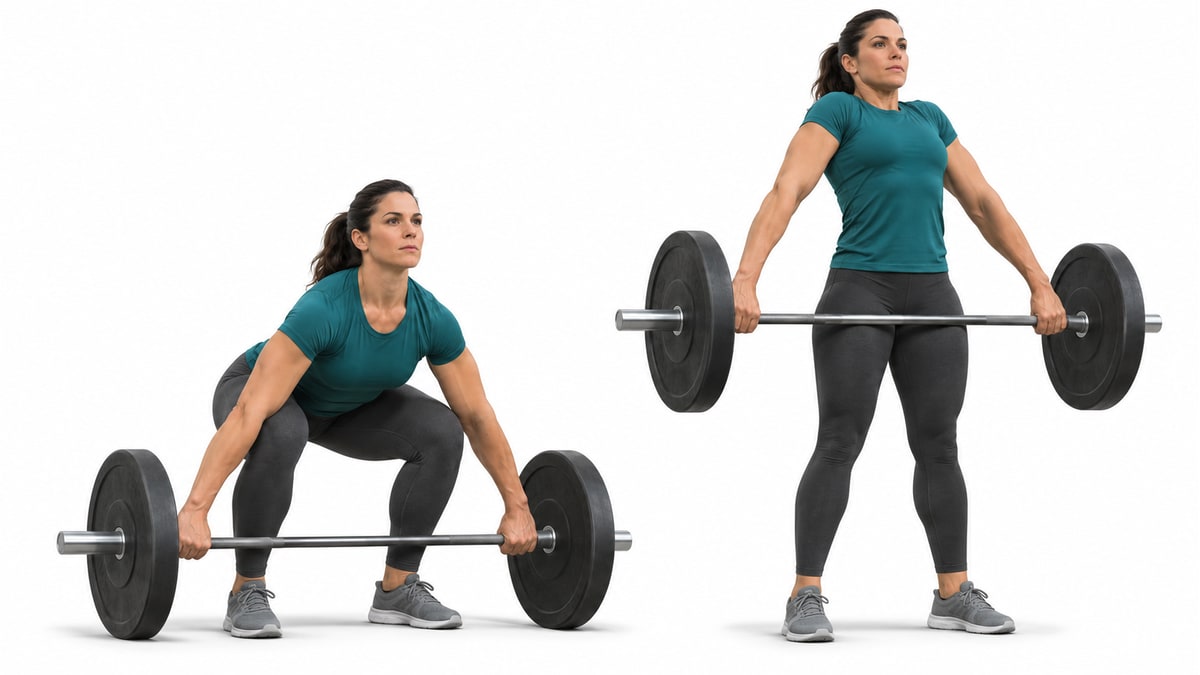
- Place the bar over the middle of your feet, with your feet around hip-width apart. Keep that wide grip as you bend your hips and knees, brace your trunk and bring your shoulders slightly in front of the bar.
Execution
- Start by pressing your feet into the platform. Raise the bar close to your legs with straight arms, keeping your chest and hips rising together until the bar passes your knees.
- Drive upward through your legs and hips as the bar approaches the hip crease, letting it brush the hips rather than bounce forward. As you finish standing tall, lift your elbows outward and upward to continue the bar’s rise.
- Turn the bar overhead while keeping your elbows elevated until they straighten. Move your head through your arms to finish with the bar over your base of support and your feet flat. Keep your knees extended during this turnover; do not dip underneath the bar.
- Pause with the bar balanced, then guide it down in front of you to your thighs, softening your knees as it lowers. Bend your hips and knees to return it to the platform. Let the bar settle before resetting for another repetition or releasing your hands at the end of the set.
Common mistakes
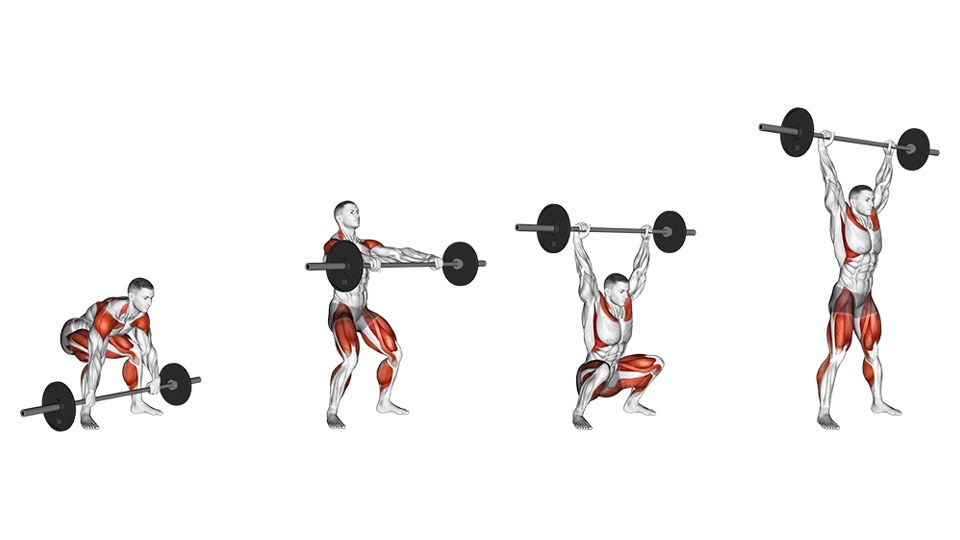
Bending the knees again to get below the bar
That adds a receiving dip, changing the movement into a power-snatch-style catch. Reduce the load and keep the turnover in a standing position.
Dropping the elbows before pushing the bar up
For this continuous-turnover version, keep the elbows raised as the bar moves overhead. A slow press from a low-elbow position is a different coaching variation, so use a lighter bar rather than forcing this version through.
Throwing the chest backward to finish
Bring the bar into a balanced overhead position without leaning far behind your feet. Stop and reset with less weight if you need a large backbend or have to step around to control it.
Where it fits in a session
Practice with a light bar after your warm-up, while you can concentrate on the turnover.
Keep each repetition deliberate and reset on the floor. End the set when you begin dipping under the bar, leaning back excessively or turning the finish into a slow press. Get coaching on the grip, overhead position and missed-lift release before adding load.
Muscles worked
Primary
Secondary
Schematic surface view. Some muscles are partly visible or not shown.
Your quadriceps and gluteus maximus supply knee and hip extension. The deltoids lift the upper arms, the trapezius positions the shoulder blades, and the infraspinatus helps rotate the upper arms outward during turnover. The triceps straighten the elbows for the overhead finish. These are functional roles, not an activation or growth ranking.
Variations
Frequently asked questions
What is the difference between a muscle snatch and a power snatch?
A power snatch receives the bar with the knees bent in a partial squat. A muscle snatch keeps the legs extended after the upward drive and completes the turnover while standing. Starting from the floor or a hang is a separate choice.
Do I use my legs in a muscle snatch?
Yes. In the floor-start version, the legs and hips drive the bar upward before the upper-body pull and turnover. The word muscle does not mean the whole repetition is an arm lift. What you leave out is the second knee bend to receive the bar.
Can I start from the hang instead of the floor?
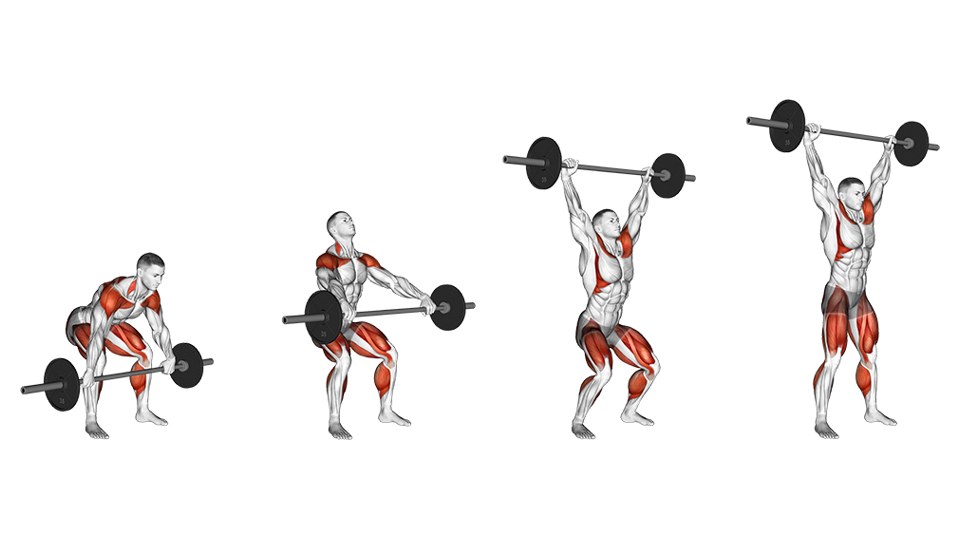
Yes. Hang and block starts are used for muscle snatches, as is a tall version with little or no lower-body drive. This guide teaches the floor-start version. Specify the start when choosing a variation; all keep the finish free of a receiving knee dip.
Why do some muscle snatches look like a press?
Coaches use the name for somewhat different upper-body finishes. This guide teaches a continuous turnover with raised elbows followed by an immediate straight-arm finish. Other lifters deliberately allow the elbows to come underneath before pressing. Keep the chosen version consistent rather than switching to a press as the load becomes too heavy.
Does the bar have to touch my hips?
This guide uses light hip contact as the legs finish driving upward. A deliberate no-contact version is also used in weightlifting practice. Neither choice calls for knocking the bar away from your body, and neither adds a knee dip underneath it.
Sources
- OpenStax. Anatomy and Physiology 2e,11.5: Muscles of the pectoral girdle and upper limbs. https://openstax.org/books/anatomy-and-physiology-2e/pages/11-5-muscles-of-the-pectoral-girdle-and-upper-limbs
- OpenStax. Anatomy and Physiology 2e,11.6: Appendicular muscles of the pelvic girdle and lower limbs. https://openstax.org/books/anatomy-and-physiology-2e/pages/11-6-appendicular-muscles-of-the-pelvic-girdle-and-lower-limbs
- University of Arkansas for Medical Sciences. Muscles of the lower limb. https://medicine.uams.edu/neuroscience/education/medical-school-courses/human-structure-module/anatomy-tables/muscle-tables/muscles-of-the-lower-limb/