
Oblique crunch
Also called side crunch, side crunches, oblique crunches.
What is an oblique crunch?
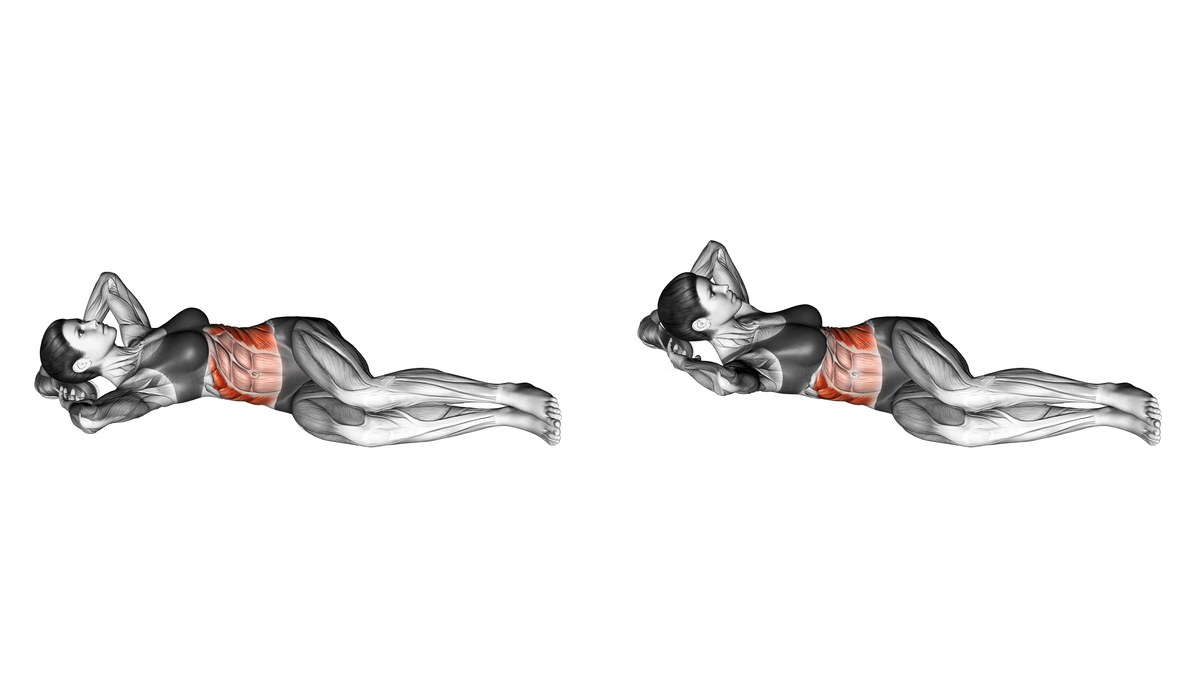
An oblique crunch, also called a side crunch, is a bodyweight floor exercise done with your bent knees resting to one side. You curl your upper body toward the upper hip while your hips and legs stay down. It trains the obliques with the rectus abdominis also involved. This guide covers that floor version, rather than a standing knee-to-elbow crunch or a twisting crunch toward the opposite knee.
How to do an oblique crunch
Set up
- Lie back with your knees bent, then let both knees settle together to one side while your hips stay on the floor.
- Place your fingertips lightly behind your ears, open your elbows and let your upper back rest in a comfortable position. Do not force both shoulders flat.
Execution
- Exhale and curl your head and upper back off the floor, bringing your ribs a little closer to the upper hip while your knees and hips stay down.
- Pause at the end of that small curl without pulling on your head or reaching your elbow toward a knee.
- Lower your upper back gently to the floor. Complete your planned reps, then move your knees to the other side and repeat.
Common mistakes
Chasing the knee with your elbow
Folding the elbow inward can look like a finished rep even when the upper body barely moves. Keep the elbow open and judge the rep by the curl of your upper back.
Rolling the hips back during the lift
If the knees drift toward the ceiling on every rep, you keep changing the starting position. Use a smaller curl that lets the lower body stay settled.
Lifting the knees to meet the chest
The legs stay supported in this version. Moving them toward the torso adds another movement and makes it harder to repeat the same side crunch.
Pulling the head forward
Your hands should support the head rather than haul it upward. Reduce the range if you cannot start the curl without tugging.
Where it fits in a session
Place it with your other abdominal work, where you have room to lie down and work both sides.
Pick a rep target you can repeat on each side without pulling your head or moving your knees. Start with the side you find harder and match its controlled reps on the other. If the full curl is awkward, shorten the range before trying to add more reps.
Muscles worked
Primary
Secondary
Schematic surface view. Some muscles are partly visible or not shown.
Variations
- Short-range side crunch — Start with only the upper-back lift you can control while the knees stay settled, then gradually explore more range.
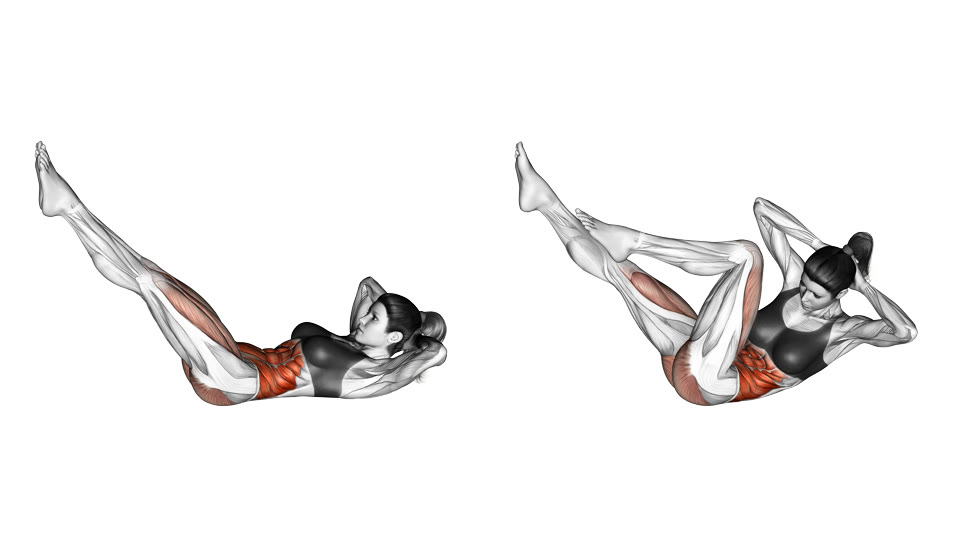
- Bicycle crunchAlternates the legs while turning the upper body toward the opposite knee, instead of keeping the knees resting to one side.
Frequently asked questions
Are oblique crunches and side crunches the same?
Here they name the same floor exercise: the bent knees rest to one side while the upper body curls. The names also get used loosely for other movements, so check the setup. A standing knee-to-elbow crunch and a cross-body twisting crunch are different versions from the one shown here.
What muscles do oblique crunches work?
The internal and external obliques are the main targets, with the rectus abdominis also involved.
Should the elbow touch the knee?
No. With the legs resting on the floor, the elbow and knee do not need to meet. Keep the hands light and lift the upper back instead of folding the elbow across your face.
Should you lift your legs during a side crunch?
Keep them down for this version. A side crunch that also raises the legs uses a different movement pattern from the supported floor crunch shown here.
How high should you lift?
Lift only as far as you can curl your upper back while the hips and knees stay settled. You do not need to sit up. Start with a shorter range if a bigger curl makes you pull on your head or roll backward.
Is this the same as a side-plank hip dip?
No. In a side-plank hip dip, your forearm and feet support your body while your hips lower and rise. In this side crunch, your hips and legs rest on the floor and the upper body curls.