
Pin bench press
Also called pin press, bench press from pins.
What is a pin bench press?
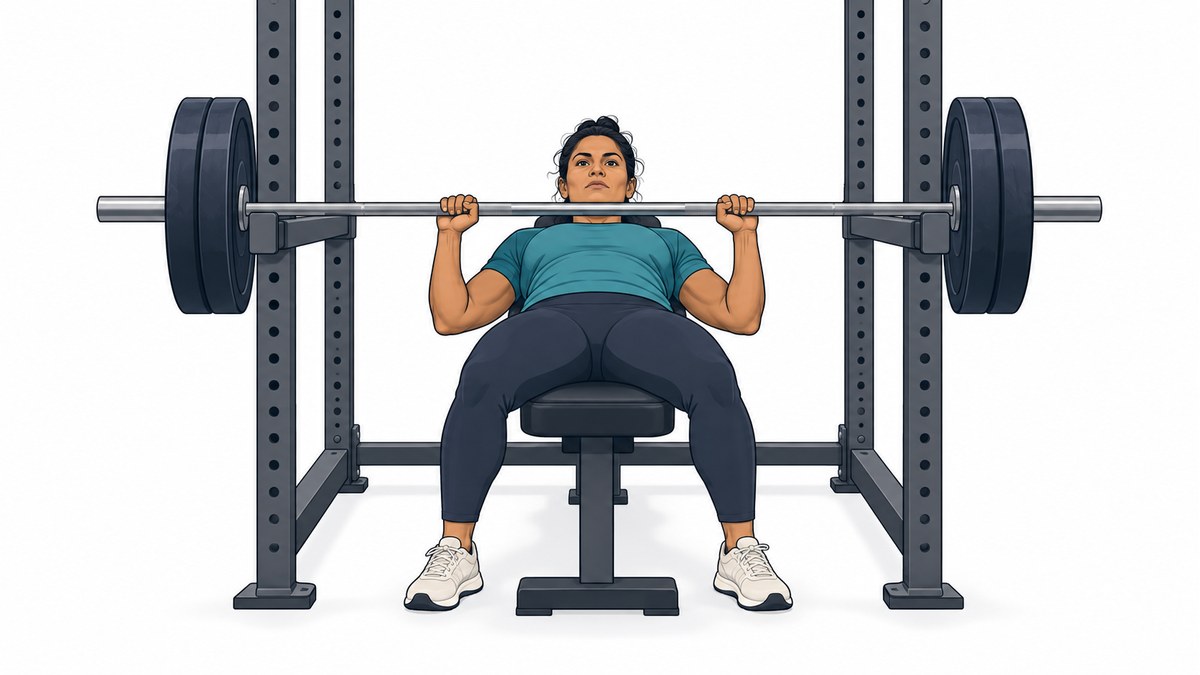
A pin bench press is a flat barbell bench press that starts each rep from a motionless bar resting on safety pins. The pins hold the bar above your usual chest touch point, so you press through a selected, shortened range. Return the bar to the pins between reps rather than touching your chest.
How do you perform a pin bench press?
Set up
- Secure both safety pins at the same height in a power rack and center a flat bench beneath them, following the rack instructions.
- With an empty bar on the pins, choose a height that clears your chest and neck and leaves room to press to straight arms. Move the bench until your forearms are upright beneath the bar in your pressing position.
- Load both sides evenly and secure the plates. Lie back with feet planted, glutes and upper back on the bench, then grip the bar evenly with thumbs wrapped and wrists above elbows.
Execution
- Brace and lift the stationary bar clear of both pins together, then press up and slightly back to straight arms above your shoulders.
- Lower under control until the bar rests evenly on both pins.
- Let the bar become completely still before the next press, keeping your grip and body position set throughout.
- After the final rep, lower onto both pins and check that the bar is fully supported before letting go and getting up.
Common mistakes
Bouncing the bar on the pins
Let the bar settle before pressing again. Reduce the weight if you cannot lower it quietly onto both supports.
Relaxing your whole body during the stop
The rack supports the bar during the pause. Keep your feet planted and upper back set so you are ready to press again from the same position.
Changing the setup to chase a heavier load
Raising the pins or shifting the bench changes the rep you are comparing. Keep your chosen setup fixed for the set and note any changes between sessions.
Where it fits in a session
Use it as a separate bench variation before tiring pressing accessories.
Start light enough to learn the setup and the stop. Record the pin height, bench position and load, and keep these sets separate from full-range bench sets. End the set when the bar will no longer leave both pins together without changing your position.
Muscles worked
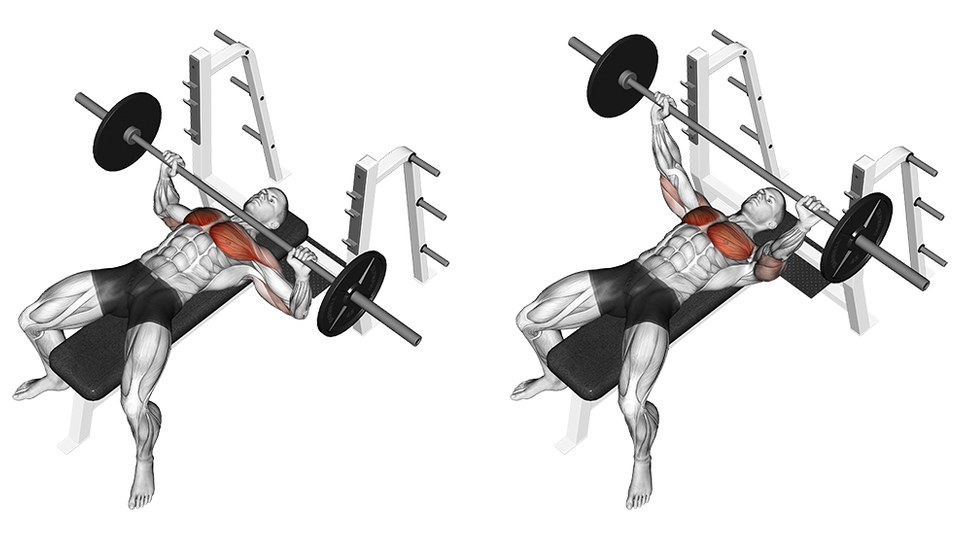
Primary
Secondary
- None listed in this guide
Schematic surface view. Some muscles are partly visible or not shown.
These are the pressing muscles involved. The list does not rank their contribution at a particular pin height.
Variations
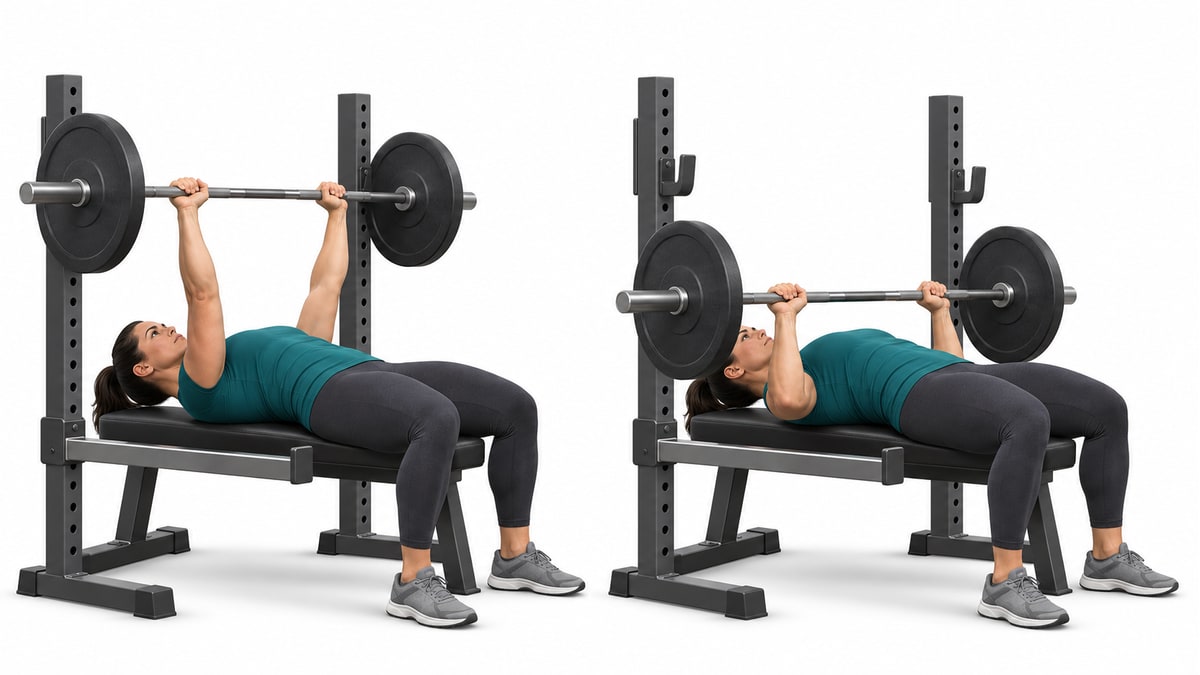
Frequently asked questions
What muscles does the pin bench press work?
The chest, triceps and front deltoids take part in the press. The triceps straighten your elbows, while the chest and front deltoids help move your upper arms.
How high should I set the pins?
Choose the shortened range you intend to train, with the resting bar clear of your chest and neck and room to finish at straight arms. Test it with an empty bar first. There is no single rack hole that suits every bench, rack and lifter; keep your chosen height and bench position consistent.
Is a pin bench press the same as a Spoto press?
No. In a Spoto press you hold the bar above your chest throughout the pause. In a pin bench press the rack supports the bar between reps, and each press begins from a complete stop on the pins.
Is a pin press only a lockout exercise?
No. The starting height determines how much of the bench press you perform. A high setting leaves a short press near the top; a lower setting leaves more of the movement. Here, pin press means the flat bench variation. An overhead press from pins is a different exercise.
Should I use more weight than my normal bench press?
Choose the load by whether you can complete controlled reps from a full stop at your chosen height. Start light and build up while keeping the setup fixed, rather than assuming a percentage of your regular bench weight will fit.
Sources
- Solari F, Burns B. Anatomy, Thorax, Pectoralis Major Major. StatPearls. Updated 2023. https://www.ncbi.nlm.nih.gov/sites/books/NBK525991/
- Miniato MA, Anand P, Varacallo MA. Anatomy, Shoulder and Upper Limb, Shoulder. StatPearls. Updated 2023. https://www.ncbi.nlm.nih.gov/sites/books/NBK536933/