Reverse crunch
Also called reverse crunches, reversed crunch, pelvic curl.
What is a reverse crunch?
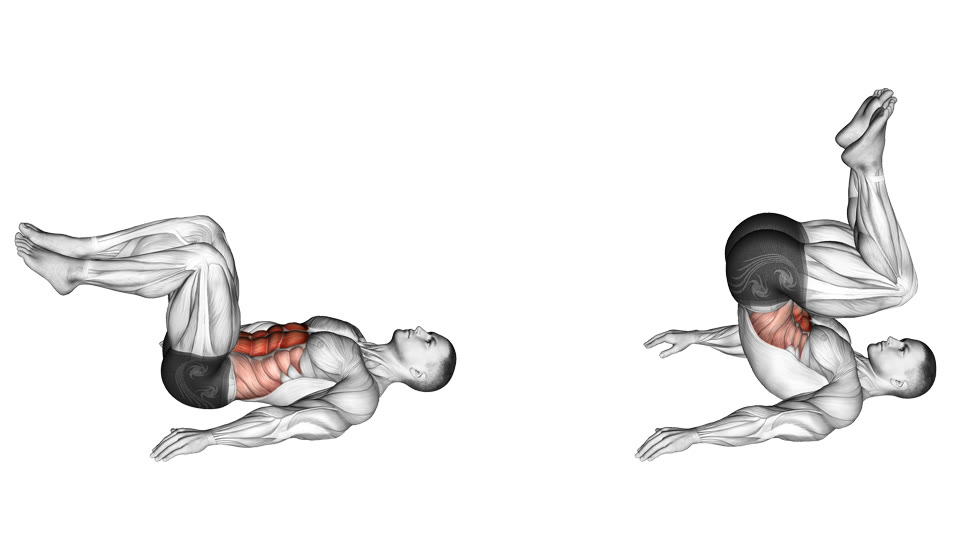
A reverse crunch is a floor exercise in which you curl your pelvis toward your rib cage and lift your hips a short distance while the knees stay bent. It trains the rectus abdominis, with the external obliques assisting. The pelvic curl, rather than simply moving the legs, defines the repetition.
How do you perform a reverse crunch?
Set up
- Lie on your back with your arms alongside you and your shoulders and head resting comfortably.
- Bring your hips and knees to roughly right angles, then let your pelvis settle on the floor.
Execution
- Tighten your trunk and roll your pelvis toward your rib cage until your hips lift a small distance.
- Pause without throwing the knees, then lower your pelvis slowly until it rests on the floor again.
- Reset the same bent-knee position before the next rep.
Common mistakes
Swinging the knees for momentum
A fast leg swing can lift the hips without a controlled abdominal curl. Slow the start and reduce the range.
Moving only at the hips
If the pelvis never curls or leaves the floor, the rep has become a bent-knee leg movement rather than a reverse crunch.
Rolling onto the neck
The lift only needs to be small. Stop while the upper back and shoulders remain comfortably supported.
Where it fits in a session
Alongside other trunk work or near the end of a session.
Choose a range you can control without a leg swing. Add repetitions or a slower lowering before trying to curl farther.
Muscles worked
Primary
Secondary
Schematic surface view. Some muscles are partly visible or not shown.
The defining action is a controlled pelvic curl, not a leg swing. The rectus abdominis drives trunk flexion while the obliques assist and steady the pelvis.
Variations
- Reverse crunch on a bench — Uses the bench edges for hand support while keeping the same bent-knee pelvic curl.
Frequently asked questions
Is a reverse crunch the same as a leg raise?
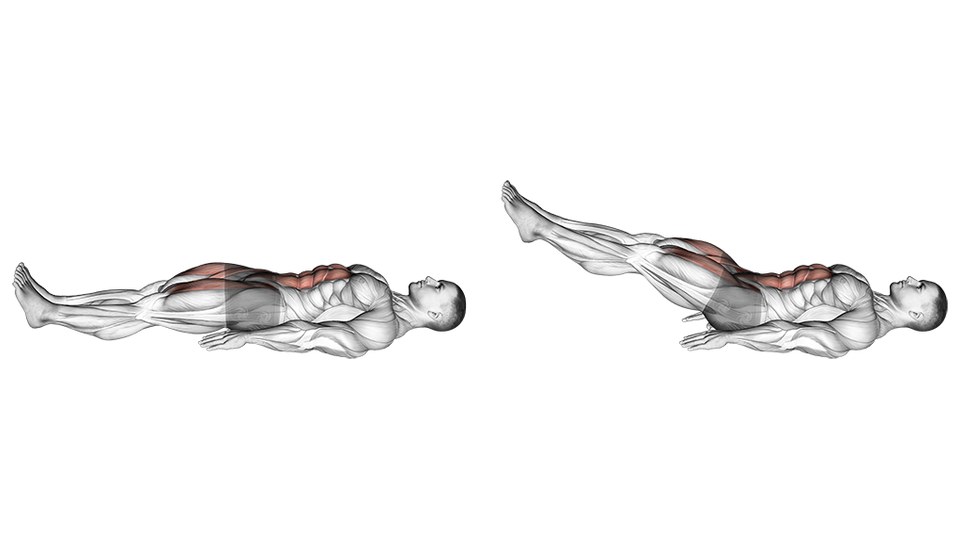
No. A reverse crunch is defined by curling and lifting the pelvis with bent knees. A leg raise moves the legs through a larger arc while the pelvis stays more settled.
Should the hips leave the floor?
Yes, but only by a small controlled amount. The aim is to curl the pelvis, not roll onto the upper back or neck.
Do reverse crunches isolate the lower abs?
No. The rectus abdominis is one continuous muscle. Reverse crunches can train it without creating a separate lower-abdominal muscle to isolate.