
Ring dip
What is a ring dip?
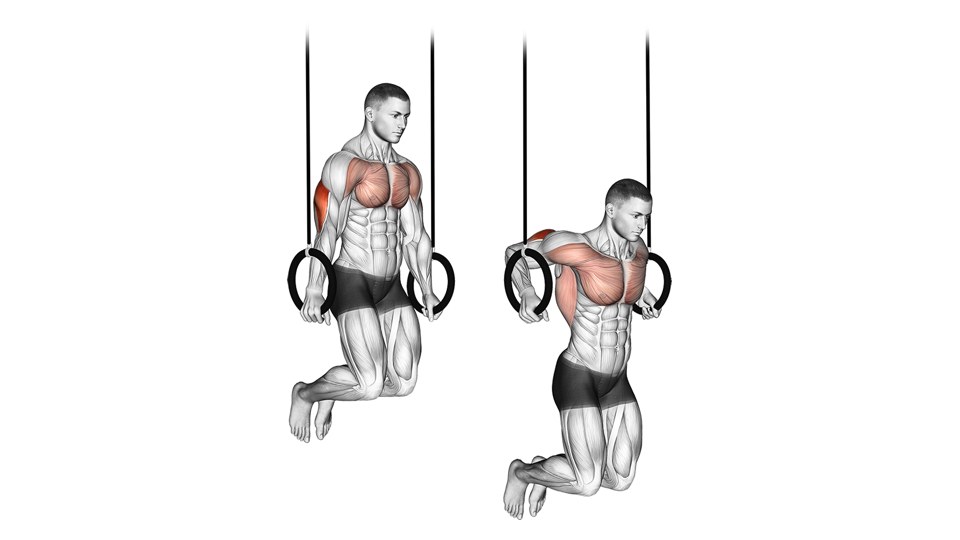
A ring dip lowers the body between gymnastic rings and presses back to straight-arm support. The rings can move independently, so each repetition includes controlling their position beside your torso.
How do you perform a ring dip?
Set up
- Hang the rings securely at equal height, close enough that you can hold them beside your hips. Leave room below and use low rings or a step for access.
- Move into straight-arm support with the rings near your sides. Keep the wrists steady and let any wobble settle before lowering.
Execution
- Bend the elbows and lower between the rings, keeping them close to your ribs.
- Stop at a depth you can press out of smoothly without the shoulders rolling forward or the rings spreading away.
- Press until the elbows straighten, then steady the support before the next repetition.
- After the set, put your feet onto the floor or access step before releasing the rings.
Common mistakes
Letting the rings drift wide
Use foot assistance and shorten the range until you can hold their position.
Dropping into a deep bottom position
Control the descent and stop before you lose the pressing position.
Where it fits in a session
Practice this movement while you can control the required positions and finish each repetition deliberately.
Use supported repetitions until you can hold both the top and chosen bottom position. End the set before the rings become difficult to keep beside your body.
Muscles worked
Primary
Secondary
- None listed in this guide
Schematic surface view. Some muscles are partly visible or not shown.
Variations
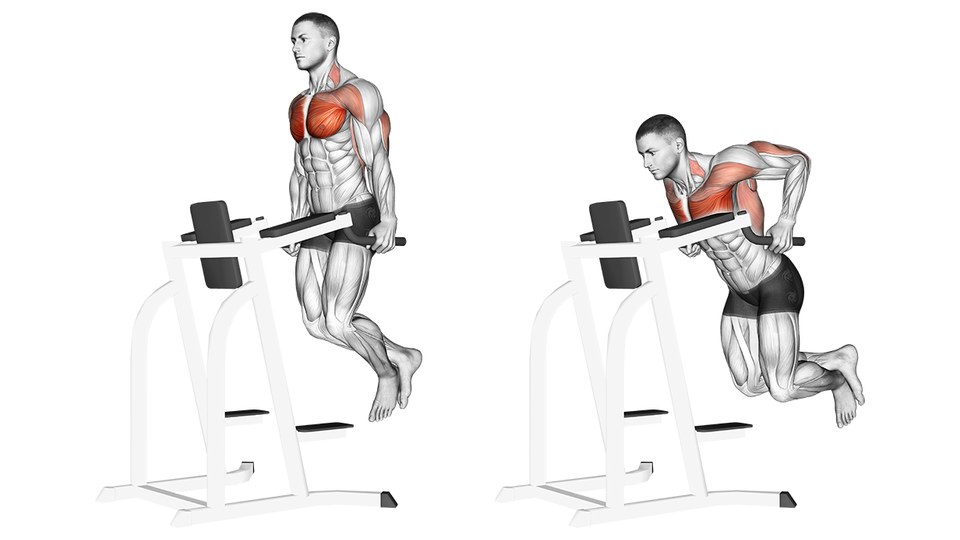
- Foot-assisted ring dip — Keeps the feet supported to reduce the bodyweight you press.
Frequently asked questions
How do I scale ring dips?
Lower the rings and keep the feet on the floor, using the legs to help through the range. Practise short steady supports before adding unsupported repetitions.
Do the rings have to turn outward at the top?
This guide uses a steady comfortable grip without requiring a turned-out finish. A deliberate turned-out support is a skill progression to practise separately.
Sources
- Betts et al. Anatomy and Physiology 2e. OpenStax, 2022. https://openstax.org/books/anatomy-and-physiology-2e/pages/11-5-muscles-of-the-pectoral-girdle-and-upper-limbs