
Ring row
What is a ring row?
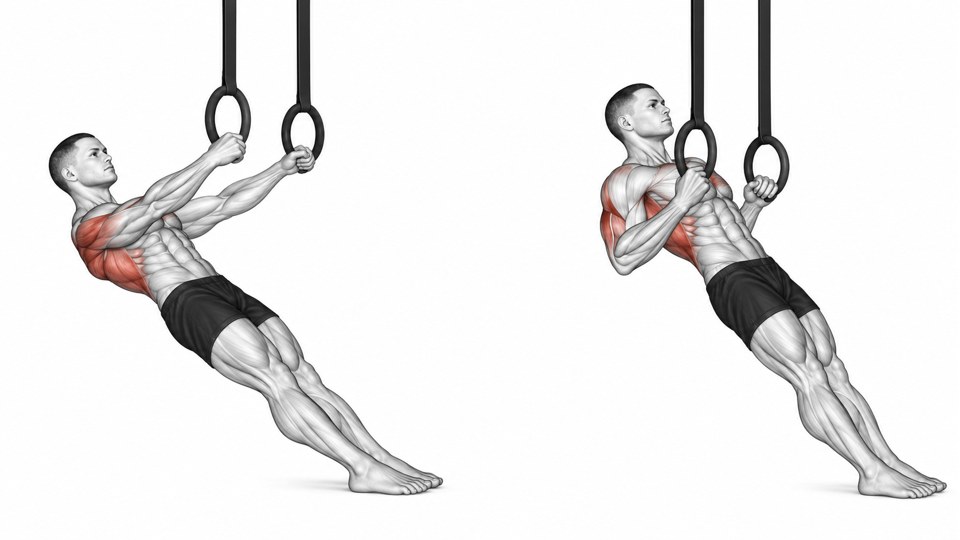
A ring row pulls your chest toward a pair of suspended rings while your feet stay on the floor. Moving your feet changes the body angle, letting you choose a position you can row with control.
How do you perform a ring row?
Set up
- Secure both rings at equal height and clear the floor underneath them. Start with the rings around waist height and adjust as needed.
- Hold the rings with palms facing each other and lean back until the elbows straighten. Plant your feet and keep your body in one line.
Execution
- Pull the rings toward your ribs as the chest rises between them, keeping the hips in line with the shoulders.
- Finish when the hands reach your torso without shrugging or pushing the hips forward.
- Lower to straight elbows while maintaining the body line, then repeat.
- Walk your feet toward a standing position before releasing the rings.
Common mistakes
Lifting the hips ahead of the chest
Use a more upright angle and hold a straight body line.
Changing foot position as repetitions get harder
End the set or record a deliberate change in assistance rather than mixing angles unnoticed.
Where it fits in a session
Practice this movement while you can control the required positions and finish each repetition deliberately.
Keep ring height and foot position consistent when comparing sessions. Adjust the angle between sets if the full movement is no longer controlled.
Muscles worked
Primary
Secondary
- None listed in this guide
Schematic surface view. Some muscles are partly visible or not shown.
Variations
- Feet-elevated ring row — Raises the feet on a stable support and changes the pulling angle; track the setup separately.
Frequently asked questions
How do I make ring rows easier?
Move your feet farther from the point beneath the straps so your torso becomes more upright, or raise the rings. Choose an angle that allows the chest to reach the rings without bending at the hips.
Are ring rows the same as inverted rows?
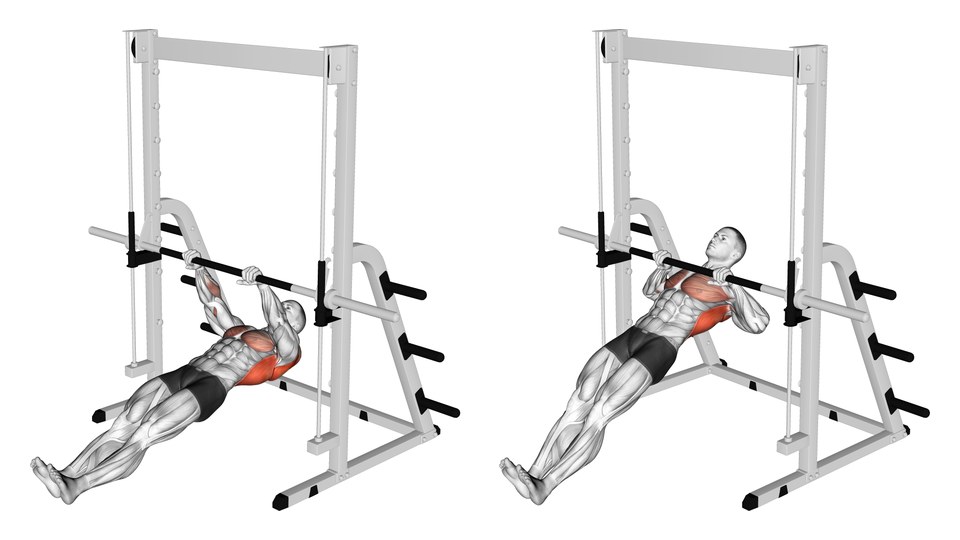
They share the bodyweight horizontal pull. A fixed bar holds the hand position in place; rings can move and rotate independently.
Sources
- Betts et al. Anatomy and Physiology 2e. OpenStax, 2022. https://openstax.org/books/anatomy-and-physiology-2e/pages/11-5-muscles-of-the-pectoral-girdle-and-upper-limbs