Inverted row
Also called bodyweight row, Australian row, horizontal pull-up.
What is an inverted row?
An inverted row is a bodyweight horizontal pull performed underneath a low fixed bar. With your heels on the floor and your body held straight, you pull your chest toward the bar, training the upper back, lats and elbow flexors without supporting a free weight in a hip hinge.
How do you perform an inverted row?
Set up
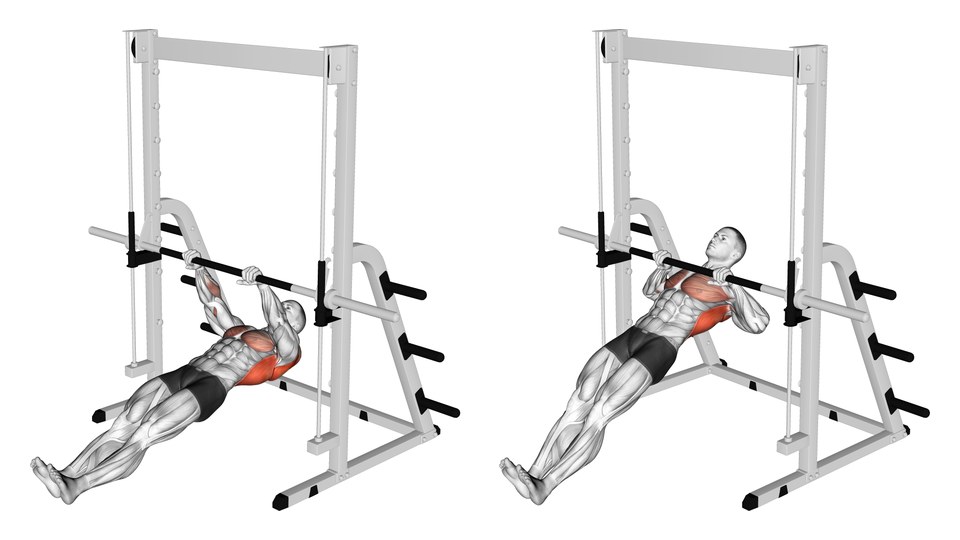
- Lock a Smith-machine bar at a height that lets you reach it from underneath while keeping your body off the floor. Confirm that both hooks are engaged before you get under it.
- Lie beneath the bar, take an overhand grip about shoulder-width apart and place your heels on the floor with your legs straight.
- Straighten your arms, brace your midsection and lift your hips until your shoulders, hips and ankles form one line.
Execution
- Pull your chest toward the bar by driving the elbows back and drawing the shoulder blades together.
- Reach the top without letting the hips sag or pushing the chin forward.
- Lower under control until the arms are straight and the shoulder blades can move forward, then begin the next rep without resting on the floor.
Common mistakes
Letting the hips sag
A changing body line shortens the pull and makes successive repetitions hard to compare. Raise the bar or bend the knees if needed.
Reaching with the chin
Moving the head can create the appearance of extra height while the chest stays away from the bar. Keep the neck in line with the torso.
Dropping from the top
A fast descent removes the controlled return and can make the shoulders lose position. Lower until the arms straighten before repeating.
Where it fits in a session
As the main horizontal pull in a bodyweight session, or as additional upper-back work after heavier rows.
Raise the bar or bend the knees to make clean repetitions possible. Lower the bar, straighten the legs or elevate the feet only while the body line and full range stay repeatable.
Muscles worked
Primary
Secondary
Schematic surface view. Some muscles are partly visible or not shown.
The back muscles move the upper arm and shoulder blades during the row while the elbow flexors assist. The trunk and hips hold the body in one line.
Variations
- Bent-knee inverted row — Brings the feet closer and keeps the knees bent to reduce the share of bodyweight being pulled.
- Ring row — Uses rings that allow the hands to rotate and the bar height to be changed quickly.
- Feet-elevated inverted row — Places the heels on a bench so the body is more horizontal and the pull is harder.
- Weighted inverted row — Adds a vest or a securely positioned plate after strict bodyweight repetitions are repeatable.
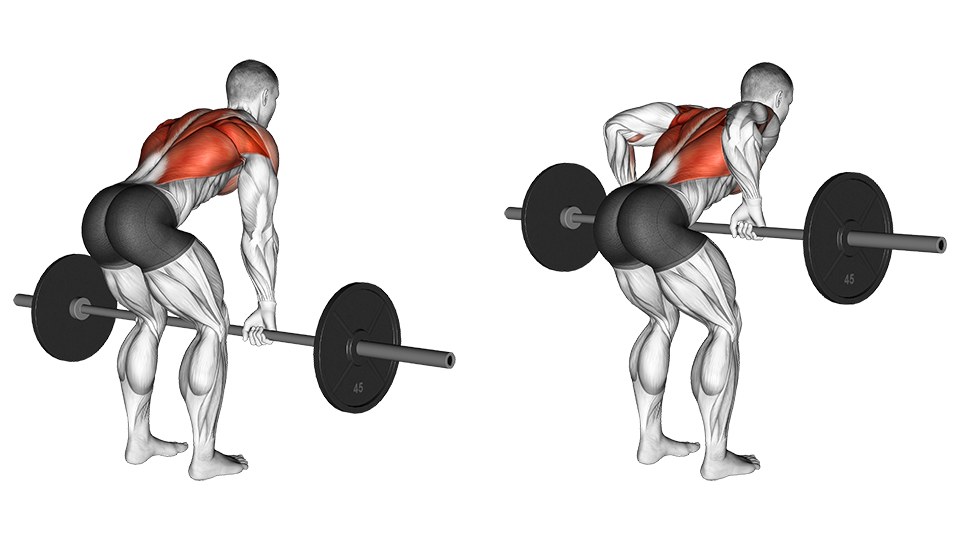
- Barbell rowHinges forward while rowing a free barbell rather than moving the body toward a fixed bar.
Frequently asked questions
What muscles do inverted rows work?
They train the upper back, including the latissimus dorsi, trapezius and posterior deltoid, with the biceps assisting.
How high should the bar be?
Use a height that lets you reach straight arms at the bottom and bring the chest close to the bar without the hips sagging. A higher bar makes the exercise easier.
Should your chest touch the bar?
Aim the chest toward the bar and get as close as your shoulder range and setup allow without reaching with the head or losing the body line.
Are inverted rows the same as pull-ups?
No. An inverted row is a horizontal pull with the feet on the floor. A pull-up is a vertical pull from a hanging position.
How do you make inverted rows easier or harder?
Raise the bar or bend the knees to make them easier. Lower the bar, straighten the legs or elevate the feet to increase the share of bodyweight you pull.