
Scapular pull-up
Also called scapula pull-up, scap pull-up.
What is a scapular pull-up?
A scapular pull-up is a short shoulder-blade movement performed while hanging from a bar. Your body rises slightly as you draw the shoulder blades down and gently together, then lowers as they rise again. Keep the elbows straight throughout; the repetition stops before the arm pull of a full pull-up.
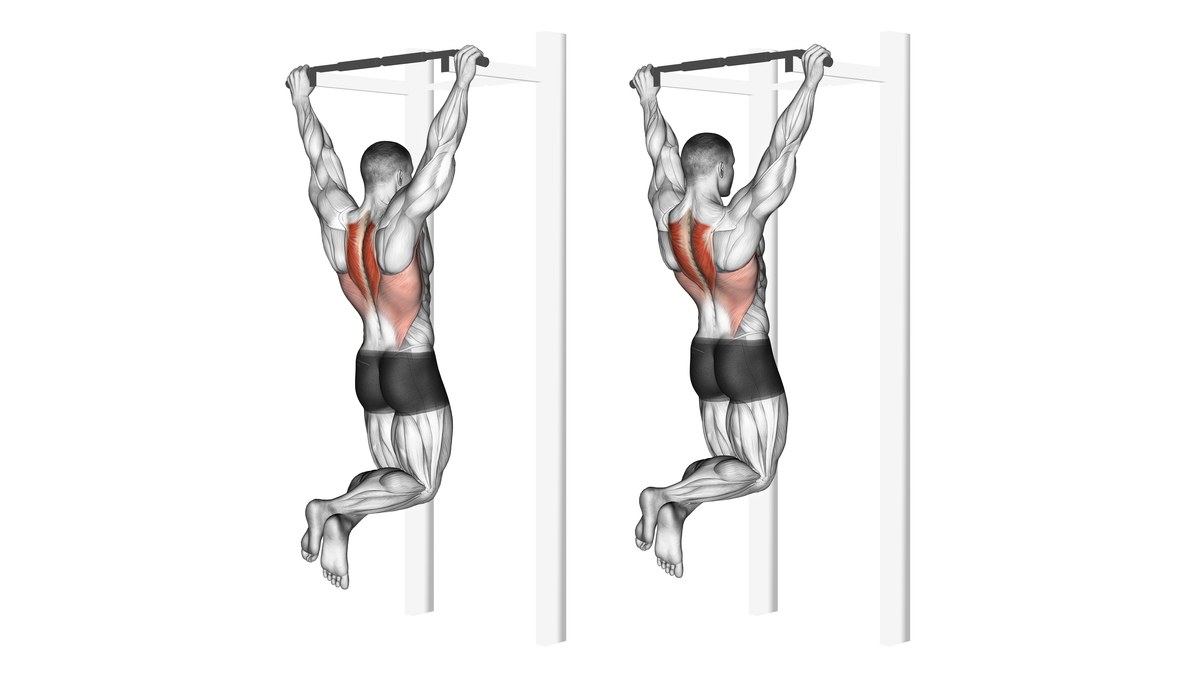
How do you perform a scapular pull-up?
Set up
- Use a secure overhead bar and a stable step you can return to. Take an overhand grip slightly wider than your shoulders, with your thumbs wrapped around the bar.
- Step clear and hang with your arms straight, shoulders allowed to rise and legs still. Bend your knees if needed to clear the floor.
Execution
- Draw your shoulder blades down and gently toward each other so your torso rises a little between your arms. Keep the elbows straight.
- Stop at the highest position you can reach without bending the elbows, kicking or arching your lower back to lift the chest.
- Ease back into the longer hang, allowing the shoulders to rise without dropping suddenly.
- Let any swing settle before repeating. When the set is finished, put your feet on the step before releasing the bar.
Common mistakes
Turning the repetition into a small pull-up
Bending the elbows changes the task. End the lift earlier and keep the same straight-arm shape from start to finish.
Throwing the ribs forward for extra height
Keep the trunk steady beneath the bar. Count the shoulder movement rather than the height you can gain by arching or swinging.
Dropping into the bottom position
Lower at a pace you can stop, then settle before the next repetition. Use foot support if you cannot control the return.
Where it fits in a session
Practise early in a pulling session while you can keep the hang steady.
End the set when your elbows start bending or you cannot control the return. Keep the same grip and straight-arm standard when comparing repetitions.
Muscles worked
Primary
Secondary
Schematic surface view. Some muscles are partly visible or not shown.
The lower trapezius draws the shoulder blades down; the middle trapezius draws them toward the spine. These are the shoulder-blade actions practised here, with the elbows kept straight.
Variations
- Pull-upContinues the pull by bending the elbows and raising the body toward the bar. It has a separate repetition standard from this straight-arm drill.
Frequently asked questions
What muscles do scapular pull-ups work?
This guide focuses on the lower and middle trapezius, which move the shoulder blades down and toward the spine. The arms remain straight while you practise that movement in a hang.
How is a scapular pull-up different from a pull-up?
The elbows stay straight in a scapular pull-up, so the body travels only a short distance. A full pull-up includes elbow bending and continues much higher toward the bar.
Should my chin reach the bar?
No. Stop when the shoulder-blade movement ends with your elbows still straight. Reaching for the bar with your chin or bending the arms changes the repetition.
Can I keep my feet on a step?
Yes. Set a stable support beneath the bar and keep some weight through your feet while practising the shoulder movement. Keep the legs quiet rather than pushing up with them.
Does the grip have to be as wide as the illustration?
No. The illustration shows one overhand grip. Start slightly wider than your shoulders and adjust to a comfortable width that lets you hang and move the shoulders with straight elbows.
Sources
- Ourieff J, Scheckel B, Agarwal A. Anatomy, Back, Trapezius. StatPearls. Updated March 11, 2023. https://www.ncbi.nlm.nih.gov/sites/books/NBK518994/