
Single-arm kettlebell swing
Also called one-arm kettlebell swing, one-hand kettlebell swing, single-hand kettlebell swing.
What is a single-arm kettlebell swing?
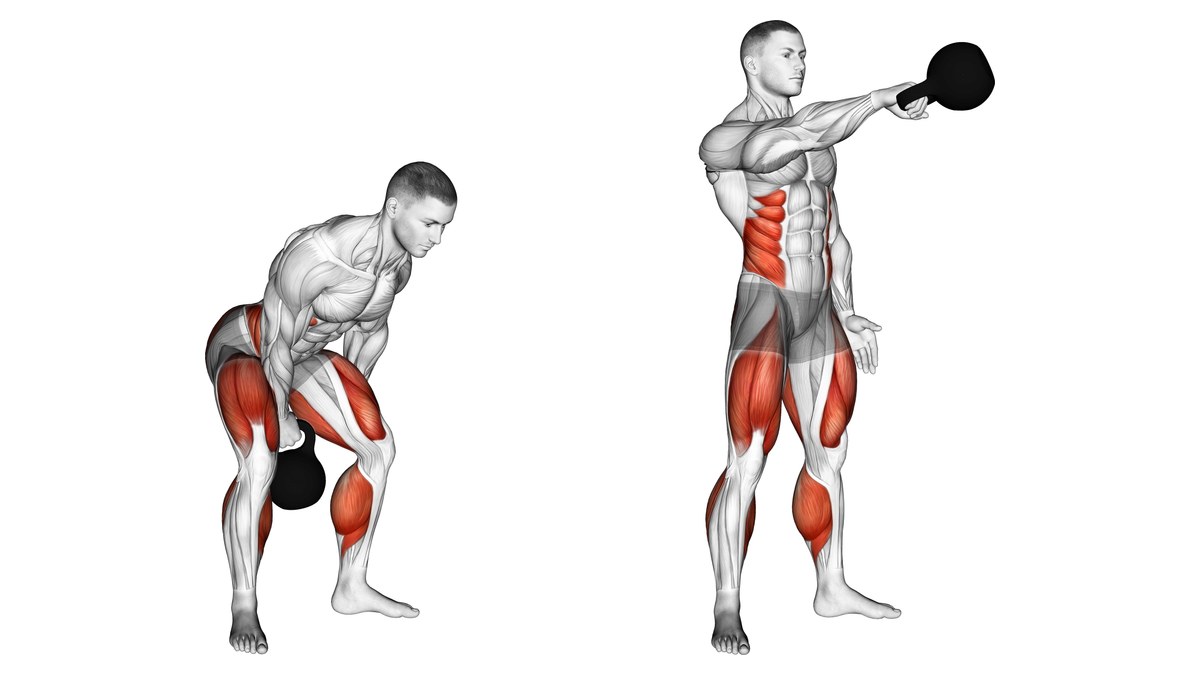
A single-arm kettlebell swing moves one bell between your legs and forward in a chest-height arc while you keep the same hand on the handle. A quick hip extension supplies the drive; the arm stays long rather than pulling the bell toward your shoulder. Your trunk stays facing ahead as the bell moves on one side.
How do you perform a single-arm kettlebell swing?
Set up
- Clear space around you and choose a bell you can control with one hand. Stand a little wider than hip width, with the bell on the floor a short reach in front of your feet.
- Bend your knees slightly and send your hips back to take the handle in one hand. Keep your back steady, close your grip and brace your midsection; leave the other hand clear of the bell.
- Tilt the bell toward you, then sweep it back between your upper thighs. Keep the loaded arm long and your feet planted as your hips receive the weight.
Execution
- Extend your hips briskly to stand tall and send the bell forward. Let it float to roughly chest height with a long arm, keeping your ribs above your pelvis and your chest facing ahead.
- As the bell descends, wait until your arm comes back toward your body before moving your hips behind you. Guide the handle high between your thighs, with a small knee bend and the same steady back position.
- Drive from the hips again to continue the swings. Keep the same hand on the handle and breathe with the rhythm, exhaling as you stand tall.
- After the last float, receive one more backswing and guide the bell forward onto the floor as you hinge. Keep hold until it is settled, then stand up and rest before setting up with the other hand.
Common mistakes
Turning to follow the bell
A loaded hand can draw your shoulder and chest around with it. Keep both feet planted and shorten the set or reduce the weight if you cannot hold your facing direction.
Pulling the handle toward your shoulder
Bending the elbow to add a pull changes the finish into a different movement. Let the hips create the rise and keep the arm long without forcing the bell higher.
Folding forward while the bell is still far away
Starting the hinge too soon leaves the weight reaching out ahead of you. Stay upright through the float and begin the return hinge when the arm approaches your body.
Where it fits in a session
Practise while you can repeat the hinge and control the bell's return.
Build a reliable two-hand swing before taking one hand away. Use short sets on each side and rest between them; stop while you can still park the bell deliberately. Record the bell's weight and the repetitions for each arm rather than combining both sides into one number.
Muscles worked
Primary
Secondary
Schematic surface view. Some muscles are partly visible or not shown.
The gluteus maximus and the hamstrings that cross the hip drive the swing. The obliques and spinal erectors help hold the trunk steady, while the forearm and finger flexors maintain your grip. These roles do not rank muscle activity or predict muscle growth.
Variations
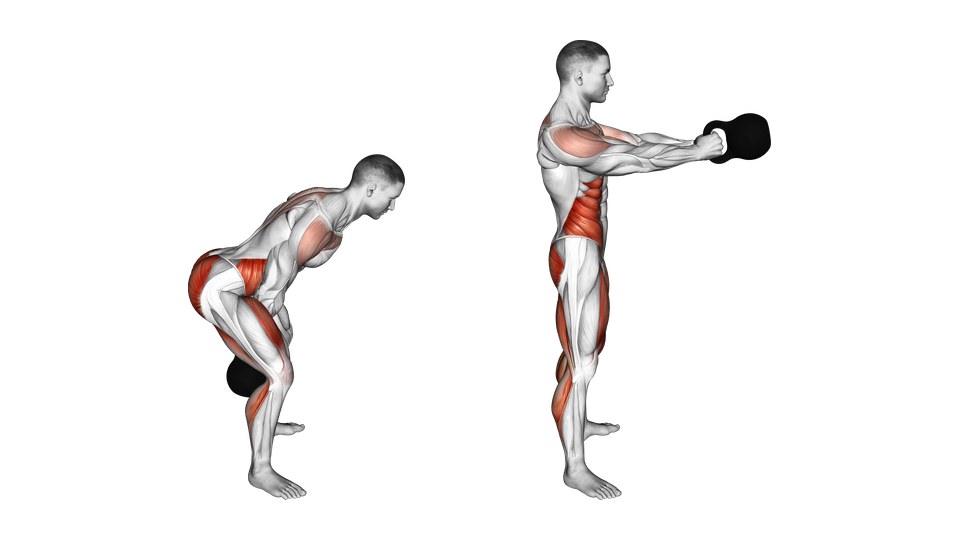
- Two-hand kettlebell swingBoth hands share one handle. It is the family root and a useful way to learn the hip-driven swing before using one hand.
Frequently asked questions
What muscles does a single-arm kettlebell swing work?
The main hip drivers are the gluteus maximus and the hamstrings that cross the hip. The obliques and spinal erectors support your trunk position, and the forearm and finger flexors keep the handle in your hand. The one-hand setup does not turn the swing into an arm curl.
Should my free arm stay still?
It can move naturally beside you or mirror the loaded arm. Either is a coaching choice, not another repetition to force. Keep the free hand away from the moving bell and avoid turning your chest after it.
How high should I swing the kettlebell?
Use a chest-height arc as a guide, not a height you must reach with your shoulder. The bell may float a little lower depending on the load and hip drive. Finish standing tall; do not lean back or bend the elbow to make it rise farther.
Do I change hands during the swing?
Not in the version taught here. Complete the set, park the bell and set up again with your other hand. A midair transfer is a separate coordination skill; you do not need it to train both sides with one-arm swings.
Is this the same as a kettlebell high pull?
No. In this swing, the arm remains long as the bell floats away from you. A swing-based high pull deliberately bends the elbow back and draws the handle toward the chest before sending it away again. Keep those movements separate in your training record.
Sources
- Elzanie A, Borger J. Anatomy, Bony Pelvis and Lower Limb, Gluteus Maximus Muscle. StatPearls. Updated April 1, 2023. https://www.ncbi.nlm.nih.gov/books/NBK538193/
- Hu Y, Raja A. Anatomy, Bony Pelvis and Lower Limb, Hamstring Muscle. StatPearls. Updated January 31, 2026. https://www.ncbi.nlm.nih.gov/books/NBK546688/
- Henson B, Kadiyala B, Edens MA. Anatomy, Back, Muscles. StatPearls. Updated August 14, 2023. https://www.ncbi.nlm.nih.gov/books/NBK537074/
- Betts JG, et al. Anatomy and Physiology 2e, section 11.4: Axial Muscles of the Abdominal Wall, and Thorax. OpenStax. https://openstax.org/books/anatomy-and-physiology-2e/pages/11-4-axial-muscles-of-the-abdominal-wall-and-thorax
- Betts JG, et al. Anatomy and Physiology 2e, section 11.5: Muscles of the Pectoral Girdle and Upper Limbs. OpenStax. https://openstax.org/books/anatomy-and-physiology-2e/pages/11-5-muscles-of-the-pectoral-girdle-and-upper-limbs