
Single leg extension
Also called one-leg extension, unilateral leg extension, single-leg leg extension.
What is a single leg extension?
A single leg extension is a machine knee extension performed with one leg at a time. You align the working knee with the machine's pivot, place the shin behind the roller and straighten the knee without lifting your hips from the seat.
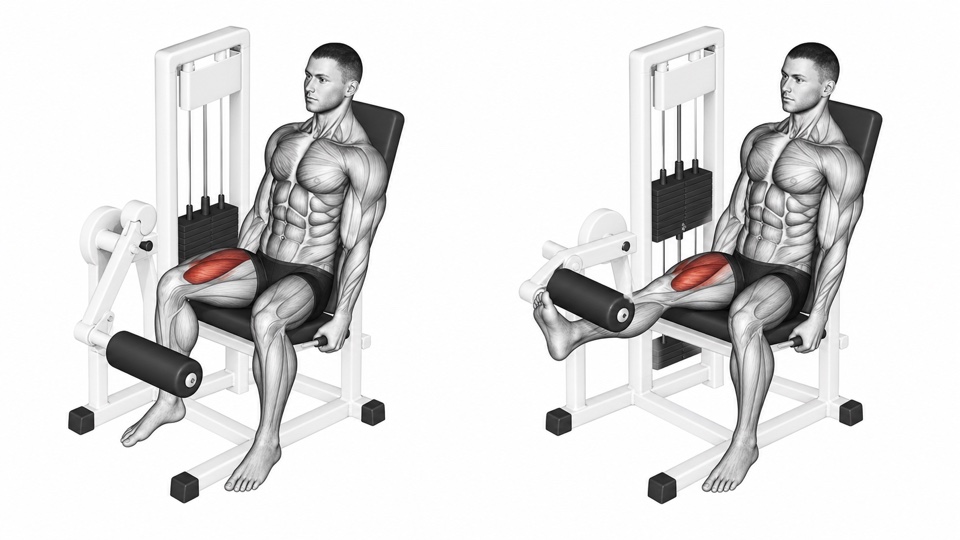
How do you perform a single leg extension?
Set up
- Adjust the seat so the working knee lines up with the machine's pivot and your back stays against the pad.
- Place the roller above the ankle, secure the thigh pad if the machine has one and let the non-working leg rest clear of the moving arm.
Execution
- Straighten the working knee smoothly until the leg is long without forcing the joint past its natural endpoint.
- Pause briefly, then lower the roller under control until the weight nearly returns to the stack.
- Finish all reps on one side, then match the setup and reps on the other side.
Common mistakes
Sitting with the knee away from the machine pivot
Poor alignment can make the pad and joint move through mismatched arcs. Adjust the seat before loading the machine.
Lifting the hip to finish the rep
Twisting or rising changes the setup and hides a load the working leg cannot control. Keep both hips heavy on the seat.
Dropping the weight into the stack
Letting the stack crash removes control from the lowering phase and makes reps hard to compare. Stop just before the plates settle.
Where it fits in a session
Use it after compound leg work, or earlier when you want each quadriceps to work without the stronger side sharing the rep.
Set the load by the weaker side and match controlled reps. The two sides do not need separate weights unless a clinician or coach has given you a specific reason.
Muscles worked
Primary
Secondary
- None listed in this guide
Schematic surface view. Some muscles are partly visible or not shown.
The quadriceps straighten the working knee. Training one side at a time does not change the target muscle group.
Variations
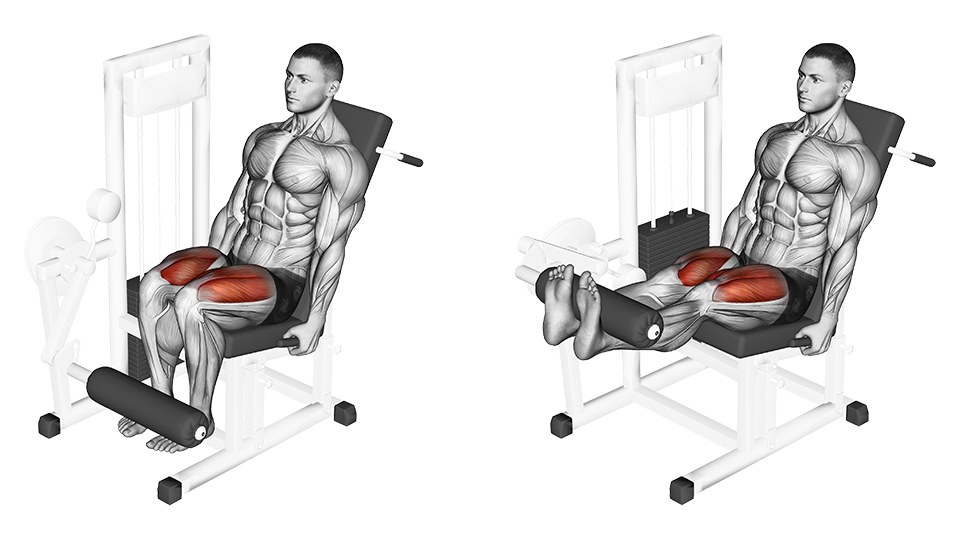
- Alternating leg extension — Alternates legs within the set instead of completing one side first.
Frequently asked questions
What muscles does a single leg extension work?
It isolates the quadriceps of the working leg by straightening the knee against the machine's resistance.
Should the knee line up with the machine pivot?
Yes. Adjust the seat so the knee joint is close to the machine's rotation point before starting the set.
Do you alternate legs on single leg extensions?
You can, but completing one side before switching makes the setup and rep count easier to keep consistent.
Sources
- Bordoni B, Varacallo MA. Anatomy, Bony Pelvis and Lower Limb: Thigh Quadriceps Muscle. StatPearls. https://www.ncbi.nlm.nih.gov/books/NBK513334/