
Single-leg hip thrust
Also called one-leg hip thrust, single-leg bench hip thrust, bodyweight single-leg hip thrust.
What is a single-leg hip thrust?
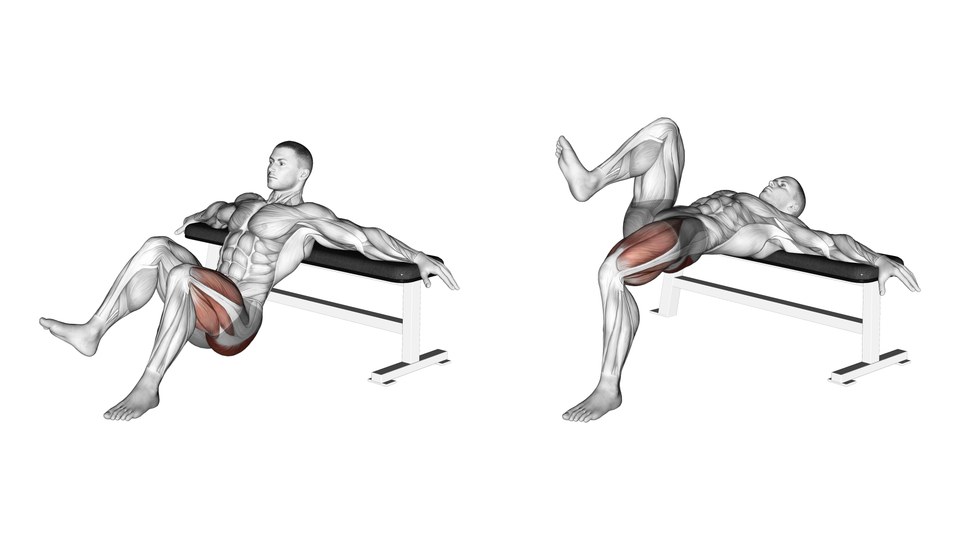
The single-leg hip thrust is a hip-extension exercise performed with your upper back on a bench, one foot planted and the other leg raised. The planted leg drives the hips upward while you keep the pelvis level, making the working-side glute the main target.
How do you perform a single-leg hip thrust?
Set up
- Sit in front of a stable bench and place your upper back against its edge. Plant one foot flat and raise the other leg clear of the floor.
- Brace your midsection, keep the pelvis level and set the planted foot where you can drive through the whole foot.
Execution
- Lower the hips under control while the planted foot stays flat and the free leg stays raised.
- Drive through the planted foot and extend the hip until the torso and working thigh form a straight line.
- Pause without arching the lower back or twisting the pelvis, then lower with the same control.
Common mistakes
Twisting toward the working side
Rotation lets one side of the pelvis rise ahead of the other. Shorten the range until both hip points move together.
Finishing by arching the lower back
The top comes from hip extension. Stop when the torso and working thigh line up instead of chasing more height through the spine.
Placing the working foot where it cannot stay planted
A foot too close or too far away can make the heel or toes lift. Adjust before the set so the whole foot can drive the floor.
Where it fits in a session
As unilateral glute work after larger lower-body lifts or as a bodyweight hip-extension option.
Begin with bodyweight and match the controlled range on both sides. Add load only after the pelvis stays level through every repetition.
Muscles worked
Primary
Secondary
- None listed in this guide
Schematic surface view. Some muscles are partly visible or not shown.
The gluteus maximus of the planted leg extends the hip. Exact movement guides disagree on which assisting muscles to rank, so no secondary target is listed.
Variations
- Weighted single-leg hip thrust — Adds a dumbbell, barbell or other load over the working-side hip after the bodyweight version is controlled.
- Banded single-leg hip thrust — Adds band resistance around the hips or above the knees.
- Single-leg glute bridge — Keeps the upper back on the floor, reducing the available hip range.

Frequently asked questions
What muscles do single-leg hip thrusts work?
They mainly train the gluteus maximus of the planted leg. Other muscles assist, but exact movement guides do not agree enough to rank them here.
Where should my upper back sit on the bench?
Use the bench edge to support the upper back while the hips remain free to lower and rise. Adjust until the edge feels stable and does not slide along your back during the set.
What should I do with the free leg?
Keep it raised and still enough that it does not touch down or swing the pelvis. Its exact knee angle matters less than keeping the hips level.
How high should I lift my hips?
Lift until the torso and working thigh form a straight line with the pelvis level. More height from arching the lower back is not a bigger hip thrust.
How is this different from a regular hip thrust?
A regular hip thrust uses both planted feet. The single-leg version puts the hip-extension work and balance demand on one side, so it deserves separate technique and tracking.