
Snatch-grip deadlift
Also called barbell snatch-grip deadlift, snatch grip deadlifts.
What is a snatch-grip deadlift?
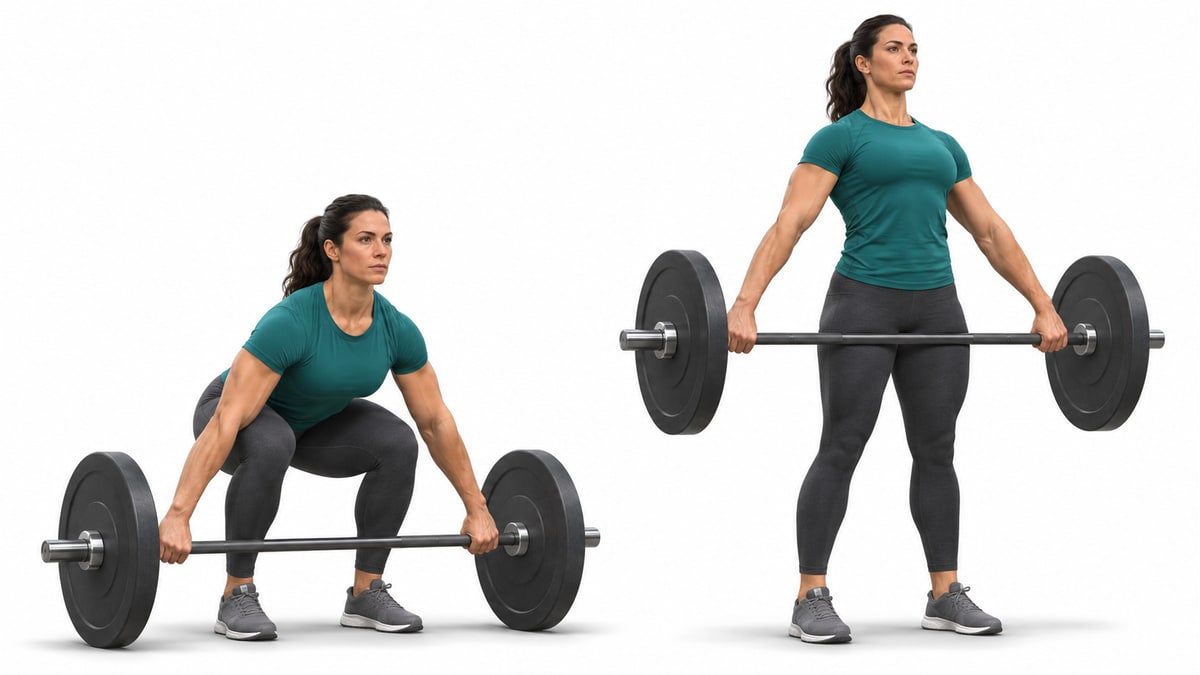
A snatch-grip deadlift is a floor-start barbell deadlift with the hands set far apart in a snatch-width grip. You lift to standing with straight arms, then return the plates to the floor. It works the glutes and spinal erectors, with help from the legs and upper back; there is no high pull or overhead catch.
How do you perform a snatch-grip deadlift?
Set up
- With a light bar or dowel, rehearse a symmetrical, wide overhand grip. Then place the bar on a level lifting surface, add a light load using full-size plates for normal floor height, and secure the plates with collars.
- Set your feet around hip-width with the loaded bar above the middle of your feet. Bend at your hips and knees to take that grip, with your hands well outside your legs and both palms facing you. Keep your knees inside your arms.
- Bring your shins near the bar, brace your midsection and let your arms straighten. Settle into a position you can hold without your back rounding, then gently tension the bar before the plates leave the floor.
Execution
- Press your feet into the floor and rise steadily, keeping the bar near your legs. Let your knees and hips straighten as you finish standing tall; keep your heels down and arms long instead of shrugging or pulling the bar higher.
- Guide the bar down your thighs by moving your hips back. Once the bar passes your knees, bend them to return both plates to the floor. Keep hold of the bar and let it settle rather than bouncing into another lift.
- For another repetition, reset your breath and brace with the plates resting on the floor. Keep the same grip width and establish your starting position again before lifting.
- To finish, leave both plates resting securely, release your hands and stand up without the bar. Step clear, remove the collars and unload the plates alternately from each end with the bar resting on the floor.
Common mistakes
Using a normal deadlift grip and calling it a snatch grip
The deliberately wide hand position defines this version. Keep the chosen width consistent instead of moving your hands inward as the set gets harder.
Trying to turn the finish into a pull
The repetition ends at an upright stance with the arms straight. A forceful shrug, rising onto the toes or bending the elbows adds another movement.
Reaching the floor by letting the back collapse
The wider grip changes your starting position. Reduce the load and check the setup rather than forcing the bar to move from a position you cannot hold.
Where it fits in a session
Give the wide-grip floor setup your attention after warming up, in the place your strength or weightlifting session assigns to it.
Use a load that leaves the grip, back position and floor reset repeatable. If you cannot keep those features, lower the weight or stop the set; a conventional deadlift load is not a starting prescription for this variation.
Muscles worked
Primary
Secondary
Schematic surface view. Some muscles are partly visible or not shown.
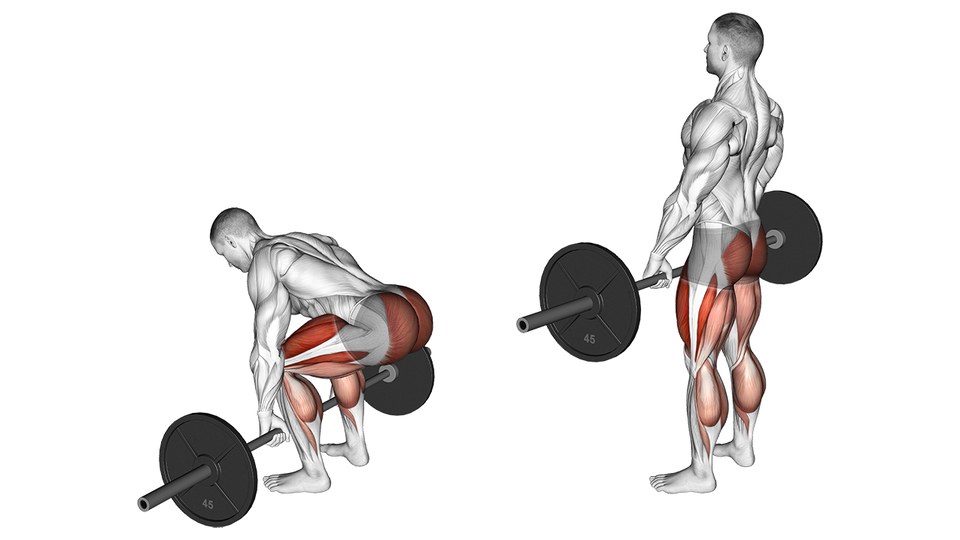
The gluteus maximus and hip-extending hamstrings help straighten the hips, while the quadriceps straighten the knees. The spinal erectors resist the trunk folding forward, and the trapezius helps support the shoulder position. These roles are not a ranking of muscle growth.
Variations
- Conventional deadliftUses the usual narrower hand position outside the legs; the bar still starts on the floor.
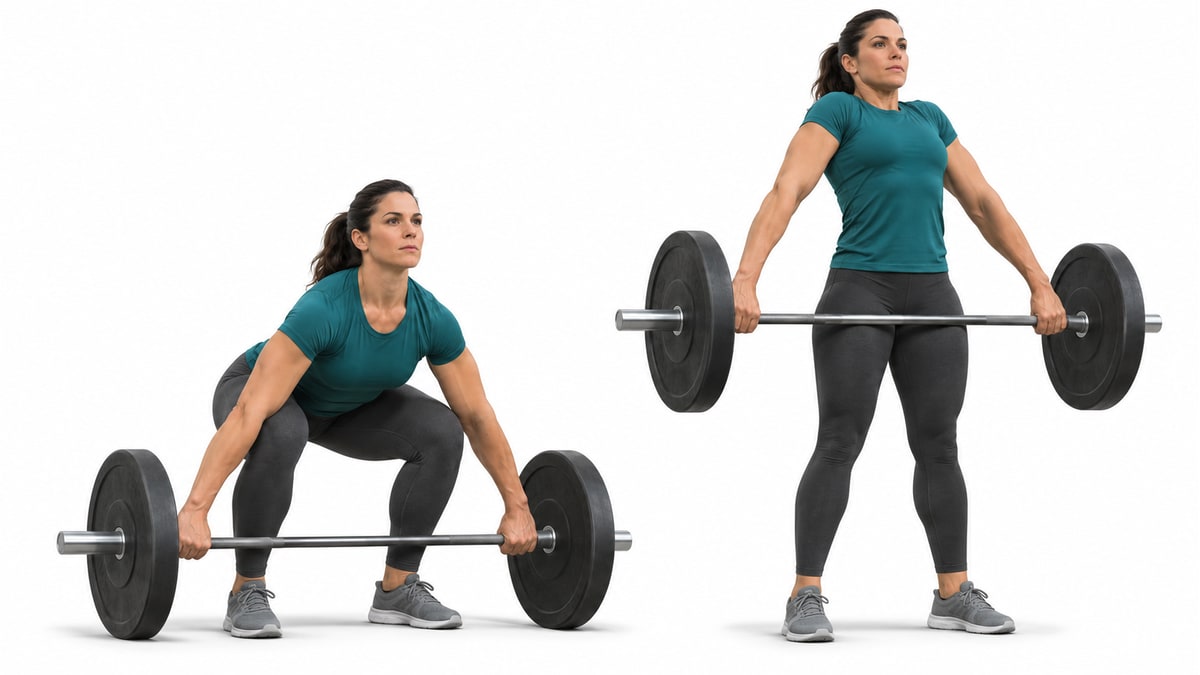
- Snatch pullContinues the leg and hip drive into an explosive finish. This deadlift stops at standing without that added pull.
- Paused snatch-grip deadlift — Adds a deliberate hold during the same floor-to-standing movement; agree the pause position before the set.
Frequently asked questions
How wide should my snatch grip be?
Use a clearly wider grip than your ordinary deadlift, with both hands equally far from the centre of the bar. If you already snatch, use the grip you have established for that lift. Arm and torso proportions affect the width, so there is no single hand spacing for everyone. Rehearse with a light bar and have a coach check it if you are unsure.
What muscles does a snatch-grip deadlift work?
The gluteus maximus helps extend the hips and the spinal erectors hold the trunk steady. The quadriceps assist knee extension, the hip-extending hamstrings assist at the hips, and the trapezius supports the shoulder position. A muscle helping hold the load does not have to move visibly during the repetition.
What changes compared with a conventional deadlift?
The hands move farther apart while the feet remain in a relatively narrow stance. With straight arms, that places the bar higher against the body at standing and changes how far you must bend to reach the floor. Rebuild your starting position and choose the load for this grip instead of copying your conventional setup.
Is this the same as a snatch deadlift used in weightlifting?
The names overlap. In weightlifting, a snatch deadlift can be coached specifically to reproduce the posture and balance of the snatch start and first pull. This guide covers the wider-grip floor-to-standing deadlift. If your coach prescribes it as a snatch-position drill, follow that specific start position rather than assuming every wide-grip deadlift is identical.
Should I lift it quickly or pull the bar toward my chest?
Lift smoothly enough to keep the bar close and the starting position under control. End with your feet flat, knees and hips straight and arms long. Pulling toward the chest or adding an explosive shoulder lift belongs to another pulling variation; it is not required to complete this repetition.
Sources
- UAMS Department of Neuroscience. Muscles of the lower limb. https://medicine.uams.edu/neuroscience/education/medical-school-courses/human-structure-module/anatomy-tables/muscle-tables/muscles-of-the-lower-limb/
- UAMS Department of Neuroscience. Muscles of the back region. https://medicine.uams.edu/neuroscience/education/medical-school-courses/human-structure-module/anatomy-tables/muscle-tables/muscles-of-the-back-region/
- University of Washington Department of Radiology. Biceps femoris — long head. https://rad.uw.edu/muscle-atlas/biceps-femoris-long-head/