
Snatch high pull
Also called snatch high-pull, barbell snatch high pull.
What is a snatch high pull?
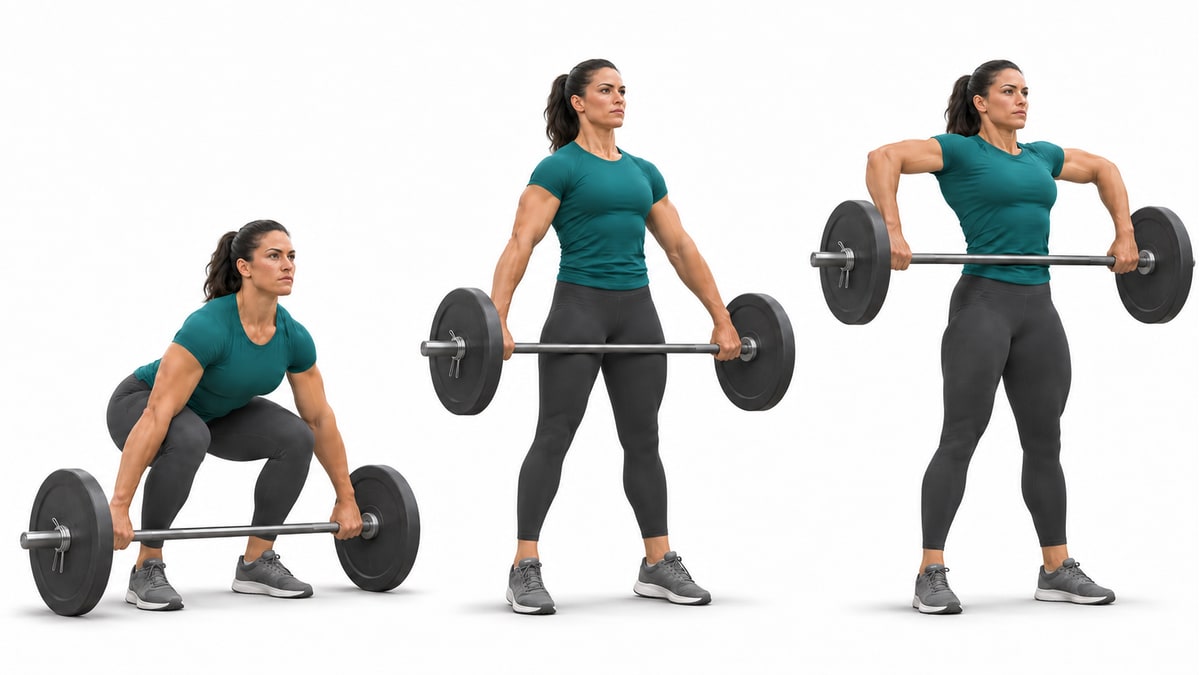
A snatch high pull starts with a wide-grip barbell on the floor. After driving upward with your legs and hips, you shrug and actively raise your elbows to continue the pull. You finish the upward pull while standing, without an overhead catch. This guide teaches a floor start with a reset between repetitions.
How do you perform a snatch high pull?
Set up
- Before loading, pick up a light bar and stand with an overhand grip and straight arms. Widen your hands until the bar rests at your hip crease. Use a clear, level lifting area and full-size light plates secured with collars.
- Set the bar on the floor and stand about hip-width apart, with your toes slightly outward and the bar over the balls of your feet. Bend your hips and knees to take that grip, keeping your knees inside your arms.
- Brace your trunk with your shoulders above the bar and your back steady. Keep your elbows straight and spread your weight across your feet; take up the slack without jerking the plates off the floor.
Execution
- Start by pressing into the floor. Bring the bar up beside your shins, keeping your chest and hips rising together until it clears your knees.
- As the bar passes your knees, accelerate with your legs and hips to a tall finish. Shrug and carry the rising bar into an elbow lift out to either side, keeping it close and your hands below your elbows. Do not turn the bar overhead or drop underneath it.
- As the bar descends, return to flat feet if your heels rose and guide it down toward your hips as your elbows straighten. Bend your hips and knees to lower the plates to the floor. Pause there and rebuild your starting position for the next repetition.
- End with the bar resting on the ground before you open your hands and step clear. For unloading, remove the collars and take plates off each end alternately while the bar stays on the floor.
Common mistakes
Starting the lift with an arm tug
Keep the elbows long as the bar leaves the floor. The deliberate elbow lift belongs after the main leg-and-hip drive, rather than replacing that drive.
Trying to reach a fixed point on the chest
The bar will not reach the same height with every load. Keep the elbow action and upright finish; use less weight if more height requires leaning over the bar or curling it.
Receiving the bar overhead
Turning the bar over and catching it overhead adds the receiving phase of a snatch. This repetition ends its upward path in front of you and returns to the floor.
Where it fits in a session
Include it in the pulling portion of a planned weightlifting session after rehearsing the start with a light bar.
Choose a load that lets you keep the bar close, complete the elbow lift and return it under control. Stop to reset when your arms take over early or your chest tips forward; heavier weights are not a reason to change the movement.
Muscles worked
Primary
Secondary
Schematic surface view. Some muscles are partly visible or not shown.
The knee and hip drive involves the quadriceps and gluteus maximus. The upper trapezius contributes to the shoulder rise, the lateral deltoid lifts the upper arms, and the elbow flexors bend the elbows. The categories describe those roles, not measured activation or muscle growth.
Variations
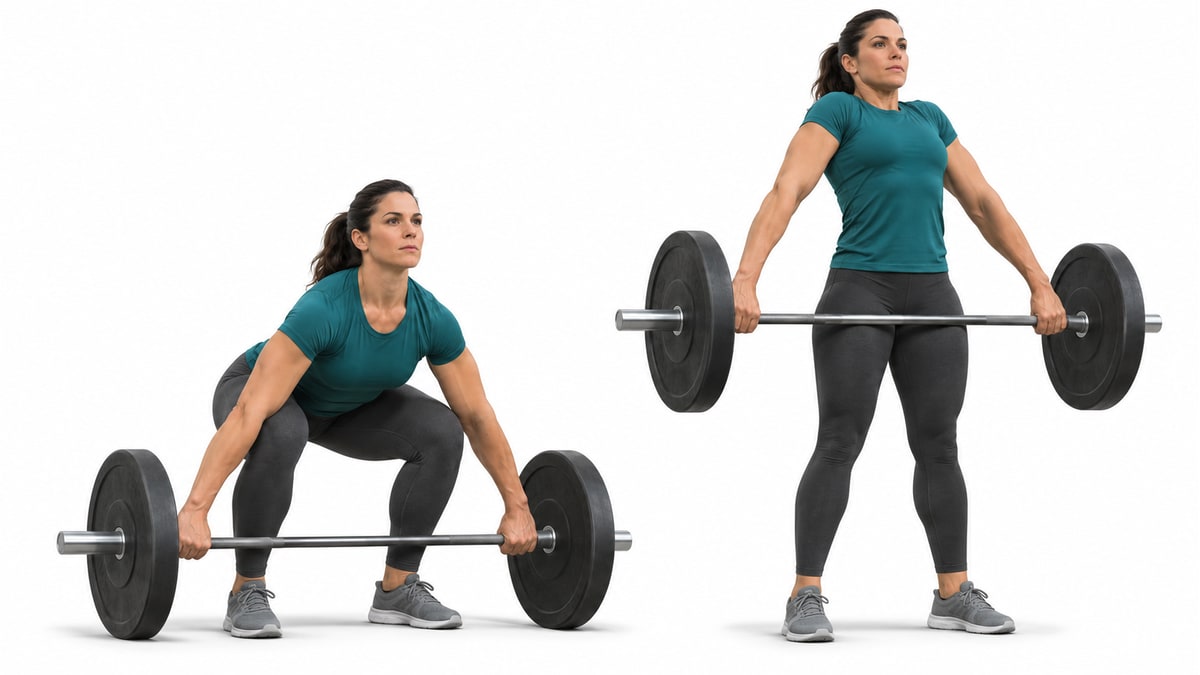
- Snatch pullUses the same wide-grip floor approach but leaves out the deliberate continued elbow lift.
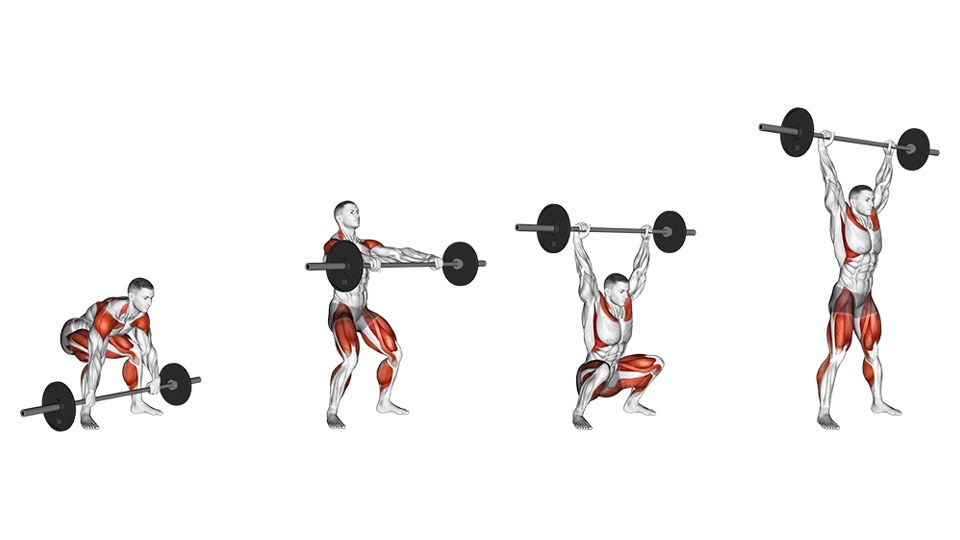
- SnatchContinues into an overhead receiving position and a squat rather than stopping with the high pull.
Frequently asked questions
What makes a snatch high pull different from a snatch pull?
Both use the wide snatch grip and a forceful finish through the legs and hips. The high pull continues with a deliberate bent-elbow lift. A snatch pull finishes without that sustained arm action; a small natural bend while the bar stays near you is a different thing. Neither requires an overhead catch.
How wide should my hands be?
Use a light bar to find a grip that places it at your hip crease when you stand with your arms straight. Your hand spacing depends on your proportions, so there is no universal distance or bar marking to copy. Keep the same grip for the floor start and pull.
Is this an upright row or a sumo deadlift high pull?
No. An upright row starts standing and raises the bar through the shoulders and arms. A sumo deadlift high pull uses a wide stance with the hands inside the legs. Here the feet stay around hip-width, the snatch grip places your hands well outside the legs, and the upward drive begins on the floor.
Must the bar reach my chest?
There is no single required bar height. Continue the elbow lift while staying tall and keeping the bar near your body; the load affects how far it rises. Do not create extra height by tipping forward or turning the movement into a snatch.
Can I do the high pull from the hang?
Yes, a hang start begins with the bar held off the ground and changes the approach to the pull. This guide starts and resets on the floor. Use a separate setup for a hang or block variation when that is what your session calls for.
Sources
- OpenStax. Anatomy and Physiology 2e. 11.6 Appendicular Muscles of the Pelvic Girdle and Lower Limbs. https://openstax.org/books/anatomy-and-physiology-2e/pages/11-6-appendicular-muscles-of-the-pelvic-girdle-and-lower-limbs
- OpenStax. Anatomy and Physiology 2e. 11.5 Muscles of the Pectoral Girdle and Upper Limbs. https://openstax.org/books/anatomy-and-physiology-2e/pages/11-5-muscles-of-the-pectoral-girdle-and-upper-limbs
- Mohammed A. Miniato; Prashanth Anand; Matthew A. Varacallo. Anatomy, Shoulder and Upper Limb, Shoulder. StatPearls. Updated July 24, 2023. https://www.ncbi.nlm.nih.gov/sites/books/NBK536933/