
Weighted dip
Also called weighted dips, loaded dip, dip with weight.
What is a weighted dip?
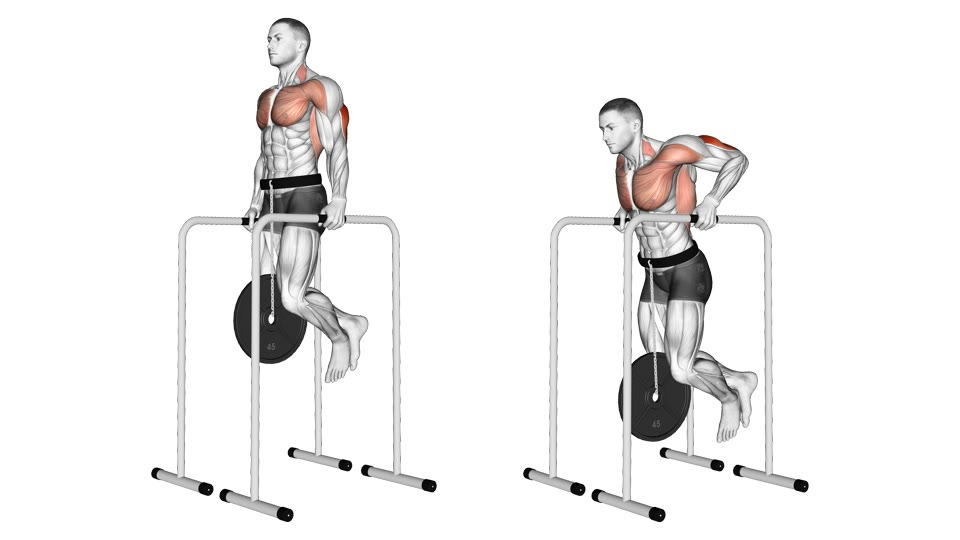
A weighted dip is a parallel-bar dip with extra resistance, usually a plate hanging from a dip belt. Start at straight arms, lower under control and press back to the top. The chest, triceps and front deltoids remain the main movers; the added weight simply makes each repetition harder.
How do you perform a weighted dip?
Set up
- Secure the plate to a dip belt, check the chain and step into the parallel bars before letting the load hang freely.
- Support yourself on straight arms with the shoulders stable, then let the knees bend so the plate hangs clear of the floor and frame.
Execution
- Lower under control by bending the elbows and letting the upper arms travel behind the torso.
- Stop around upper arms parallel to the floor, or sooner if the shoulders feel uncomfortable.
- Press the bars down to return to straight arms without swinging the plate or kicking the legs.
Common mistakes
Adding weight before bodyweight dips are controlled
Use a load that preserves the same depth, shoulder position and lockout you use without weight.
Letting the plate swing
Pause until the load settles and keep the legs quiet so momentum does not pull the torso out of position.
Dropping into the bottom
Control the descent and stop at a depth your shoulders tolerate instead of bouncing from the lowest point.
Where it fits in a session
Use after the main press or as the primary heavy dip movement in an upper-body session.
Add load only while the plate stays still and every repetition keeps the same controlled depth and lockout.
Muscles worked
Primary
Secondary
Schematic surface view. Some muscles are partly visible or not shown.
Added load changes the difficulty, not the joint action. Chest, triceps and anterior deltoid press the body upward while pectoralis minor and lower trapezius help control the shoulder blades.
Variations
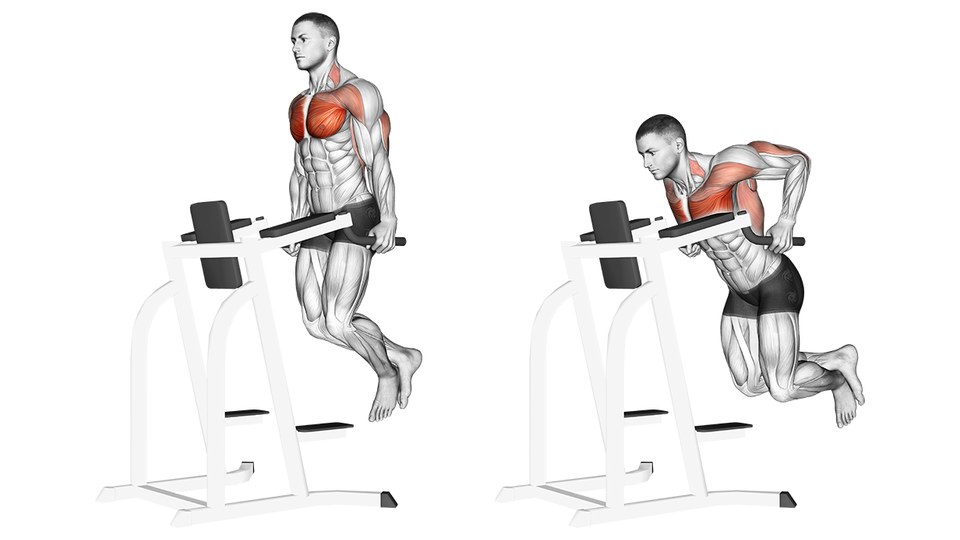
- Weighted-vest dip — Distributes the added load around the torso instead of hanging it from a belt.
- Dumbbell-weighted dip — Holds a dumbbell between the feet when no dip belt is available.
Related tools
Frequently asked questions
What muscles do weighted dips work?
The chest, triceps and anterior deltoid are the main movers. Pectoralis minor and lower trapezius help control the shoulder blades.
When should you add weight to dips?
Add load when you can perform your target bodyweight repetitions with a stable shoulder position, controlled depth and full return to straight arms.
How do you attach weight?
A dip belt is the usual option. Thread the chain through the plate, secure it to the belt and confirm the plate hangs clear before starting.
Should you lean forward?
A forward lean generally shifts more work toward the chest, while a more upright torso and closer elbows emphasize the triceps. Use the version you can control comfortably.