Weighted pull-up
Also called weighted pull up, weighted pullup, loaded pull-up.
What is a weighted pull-up?
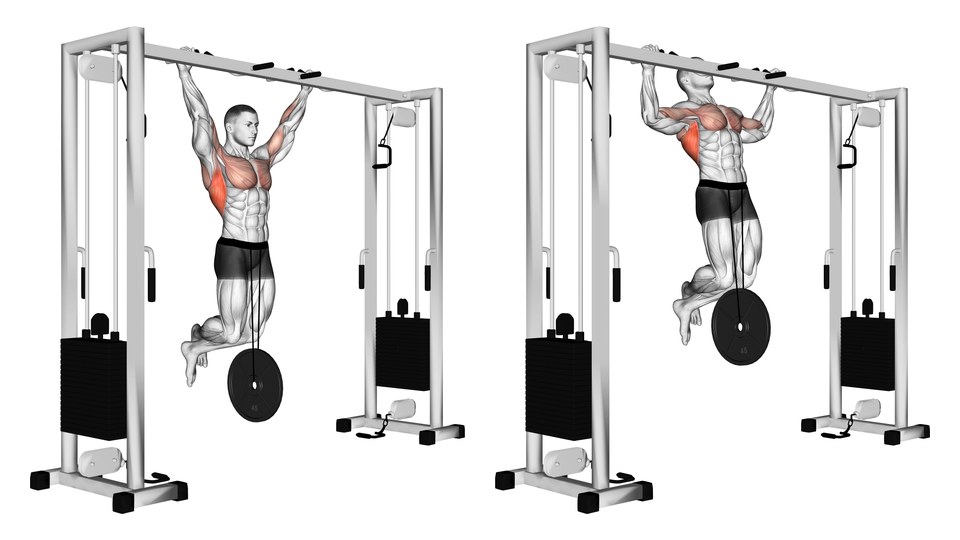
A weighted pull-up is a strict pull-up performed with extra resistance, commonly a plate hanging from a dip belt. The added load makes lower-repetition sets possible after bodyweight pull-ups become repeatable, while the lats, upper back and elbow flexors perform the same vertical pull.
How do you perform a weighted pull-up?
Set up
- Fasten a secure dip belt around your hips, thread its chain or strap through the plate and clip it back to the belt. Check that the plate hangs clear without touching the floor.
- Use a stable step to reach the bar. Take an overhand grip and step off carefully so the load settles before the first rep.
- Start from a still hang with straight arms, your midsection braced and the plate controlled between your legs.
Execution
- Pull your elbows down and raise your chest toward the bar without kicking or swinging the plate.
- Continue until your chin clears the bar, keeping the load quiet beneath you.
- Lower under control to straight arms, let the plate settle, then begin the next rep. Step back onto the support before removing the belt.
Common mistakes
Letting the plate swing
A swinging load pulls the body out of position and changes each repetition. Pause in the hang until it settles.
Jumping from the floor to the bar
The hanging plate makes an awkward landing and can catch on the legs. Use a step for both mounting and dismounting.
Adding load before bodyweight reps are repeatable
External weight only helps progression when the same full range can be reproduced without kicking or shortening the hang.
Where it fits in a session
As the main vertical pull when bodyweight pull-ups have become a repeatable high-repetition exercise.
Use the smallest load increase available and keep the same grip, hang and top position from session to session. Return to bodyweight when added load shortens the range.
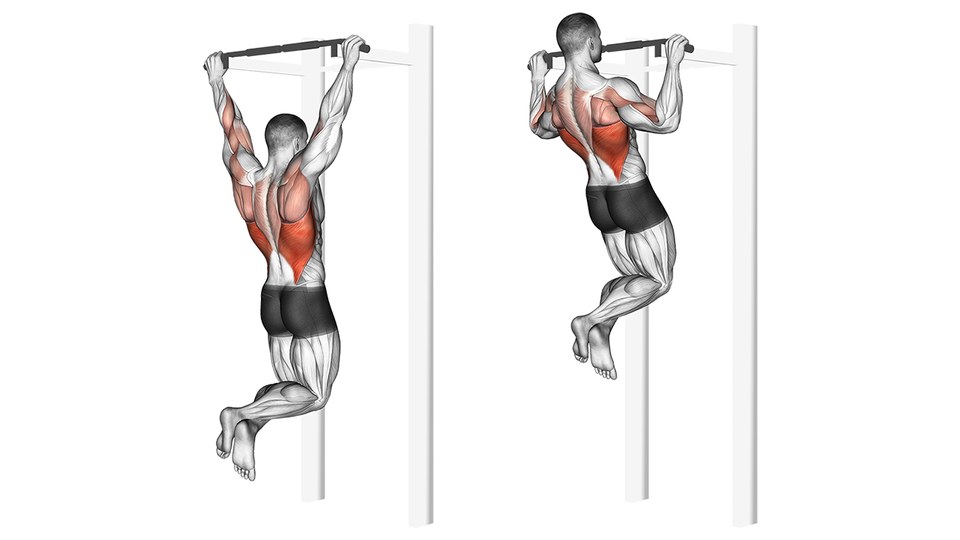
Muscles worked
Primary
Secondary
Schematic surface view. Some muscles are partly visible or not shown.
Adding external load changes the resistance, not the muscles performing the pull-up. The back and elbow flexors work together through the repetition.
Variations
- Weighted chin-up — Uses an underhand grip with the same external-loading options.
- Vest weighted pull-up — Distributes the load around the torso instead of suspending it between the legs.
- Dumbbell weighted pull-up — Holds a dumbbell between the feet or lower legs when no dip belt is available.
Related tools
Frequently asked questions
When should you start weighted pull-ups?
Start when you can repeat strict bodyweight pull-ups through the same full range without kicking. There is no required rep number; consistency matters more than a threshold.
How do you add weight to pull-ups?
A dip belt with a plate is the clearest setup. A weighted vest also works, and a light dumbbell can be held between the feet if it stays secure.
What muscles do weighted pull-ups work?
They train the same pulling muscles as a bodyweight pull-up: latissimus dorsi, teres major, the middle and lower trapezius, and the elbow flexors, with other shoulder muscles assisting.
Should the plate hang in front or behind?
Let it hang naturally beneath the hips where it clears your legs and the floor. The important part is that it stays controlled rather than swinging.
Are weighted pull-ups a separate exercise?
The repetition is still a pull-up, but attaching, controlling and progressing external load create a distinct setup. This guide covers that loaded version; the bodyweight guide covers learning the base movement.