
B-stance hip thrust
Also called staggered-stance hip thrust, kickstand hip thrust.
What is a B-stance hip thrust?
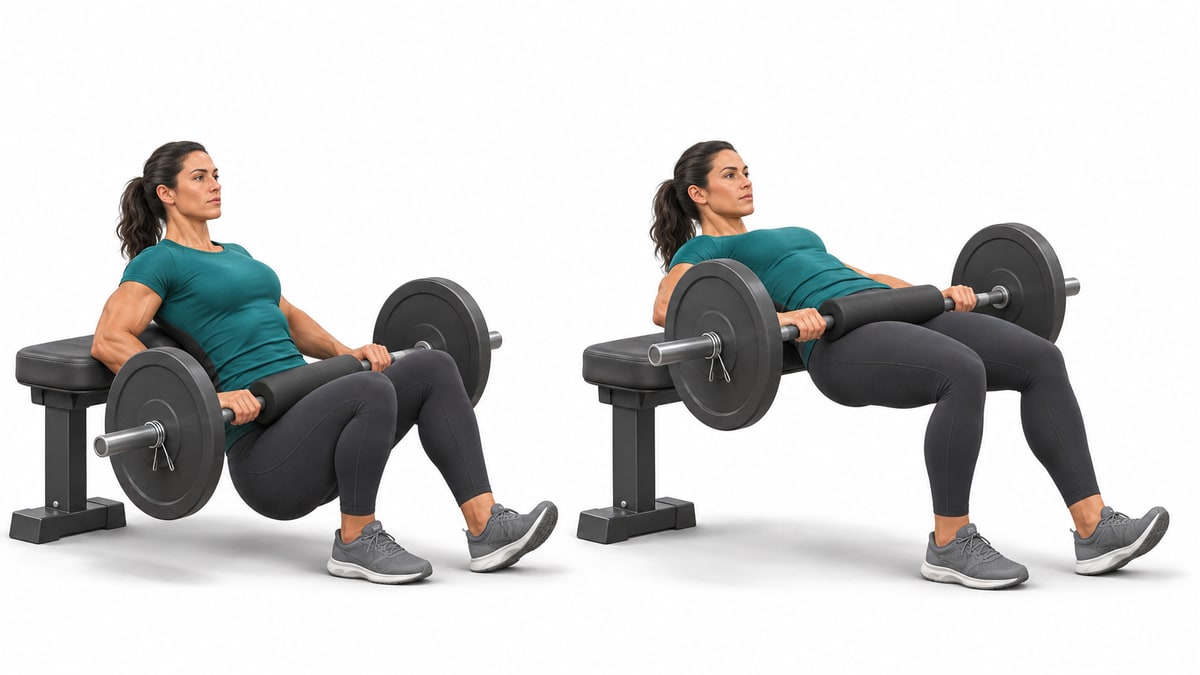
A B-stance hip thrust is a bench-supported hip thrust with staggered feet: one foot stays flat near your body while the other heel rests a little farther forward as a kickstand. You lift mainly with the flat-footed leg, then switch sides. This guide uses a padded barbell across the hips; both feet remain in contact with the floor.
How to do a B-stance hip thrust
Set up
- Secure a sturdy bench against movement. Sit on the floor with its padded edge across your upper back, just below your shoulder blades.
- Use a light barbell with plates that clear your legs as you roll it into your lap. Centre the padded bar at your hip crease and hold it steady with both hands.
- Start with your feet about hip-width apart. Keep your working foot flat, its shin roughly upright at the top. Move the other heel forward near your working foot's toes, and lift the forward foot's toes.
Execution
- Brace your trunk and push through your flat foot to raise your hips, keeping only light pressure through the forward heel. Let your upper back pivot on the bench and keep your neck in line with your torso.
- Finish when your shoulders, hips and working knee line up. Keep the bar level across your hips and stop before you arch your lower back to lift it higher.
- Lower your hips under control while keeping both sides of your pelvis level. Repeat with the same leg doing most of the work, using a range you can control without sliding on the bench.
- At the end of the set, lower until the plates rest on the floor before changing your foot positions. Repeat on the other side; after both sides, roll the settled bar away before standing up.
Common mistakes
Letting the kickstand become a second working leg
If you start pushing hard through the forward heel, the set loses its intended one-side emphasis. Reduce the load and keep that heel's contribution light from the first rep to the last.
Twisting the hips or tilting the bar
The staggered feet do not call for a staggered pelvis. Slow down and shorten the descent if needed to keep the bar level, rather than turning toward your working leg.
Finishing the rep by arching your back
Lifting your chest after the hips have finished moving adds a different motion. Keep your trunk braced and end the ascent at the same aligned position on each rep.
Where it fits in a session
Use it as a separate glute exercise in your lower-body session when you want to work one side at a time with heel support.
Practise without a barbell first. Add a light load only when you can keep the pelvis level and the forward heel's help small. Record each side's reps and keep the same foot positions between sessions; add weight only while those features stay consistent.
Muscles worked
Primary
Secondary
- None listed in this guide
Schematic surface view. Some muscles are partly visible or not shown.
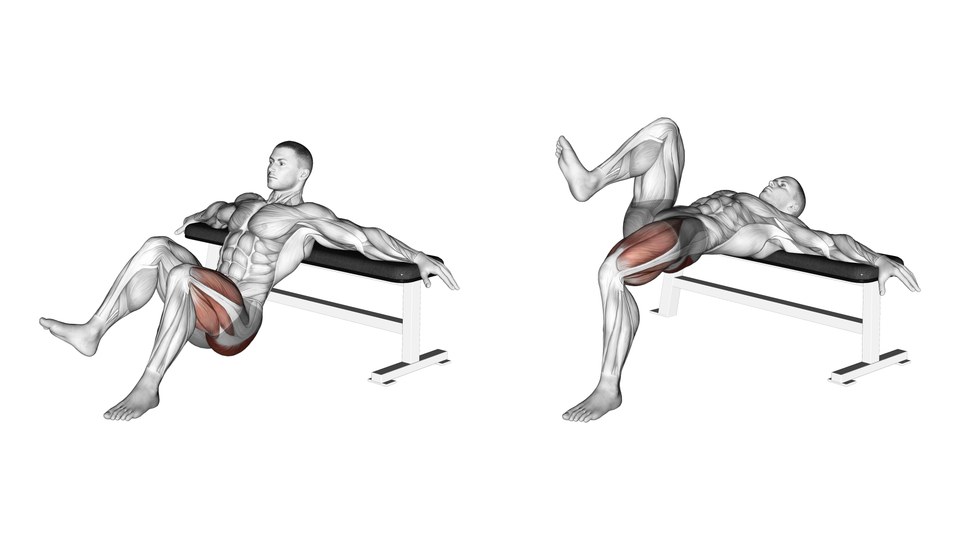
The gluteus maximus extends the hip as you raise your pelvis. The closer, flat-footed leg supplies most of the effort; the other heel stays down for support. This target list highlights the main muscle, without implying that every other muscle is inactive.
Variations
- Single-leg hip thrustLifts the non-working foot completely off the floor instead of keeping a heel down for support.

Frequently asked questions
Which leg works in a B-stance hip thrust?
The leg with its whole foot planted closer to your body does most of the work. The foot placed farther forward rests on its heel and helps you stay balanced. Keep that support light; you do not need to calculate a particular percentage of force through each foot.
Is a B-stance hip thrust the same as a single-leg hip thrust?
No. In the B-stance version, the other heel remains on the ground. In a single-leg hip thrust, the other foot is held off the floor. They use different amounts of support, so keep their loads and reps separate when comparing your sessions.
What muscles does the B-stance hip thrust work?
The main target is the gluteus maximus, the large buttock muscle that extends the hip. The kickstand changes how you share the effort between your legs; it does not make this a different joint action or establish that it builds more muscle than another hip thrust.
How far forward should the kickstand foot go?
Start with its heel near the toes of your flat working foot, rather than reaching the leg far away. Keep its toes raised and enough heel contact to steady yourself. Adjust the spacing so you can move without the hips rotating or the working foot lifting.
Can I do B-stance hip thrusts without a barbell?
Yes. Keep the same bench support and staggered feet, and practise with bodyweight. A dumbbell can also supply resistance, but it needs to stay secure across your hips. This page's loaded instructions describe a barbell; do not try to roll the bar over your legs if its small plates do not leave enough clearance.
How does this differ from a Kas glute bridge?
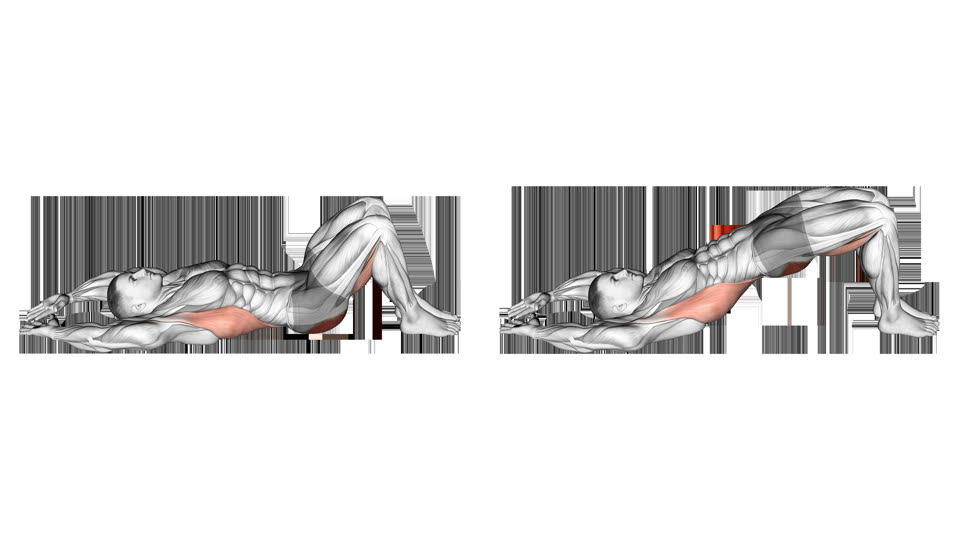
B-stance describes the staggered feet and the help from the forward heel. A Kas glute bridge describes a bench-supported hip thrust using a small movement near the top. This guide uses a controlled descent and ascent, rather than repeated short pulses at the top.
Sources
- OpenStax. Anatomy and Physiology 2e, section 11.6: Appendicular muscles of the pelvic girdle and lower limbs. Gluteal-region anatomy. https://openstax.org/books/anatomy-and-physiology-2e/pages/11-6-appendicular-muscles-of-the-pelvic-girdle-and-lower-limbs