
Bayesian curl
Also called behind-the-body cable curl, Bayesian curls.
What is a Bayesian curl?
A Bayesian curl is a standing, single-arm cable curl with the pulley behind you and the upper arm held slightly behind the torso. You bend the elbow to bring the handle forward and up. It trains the biceps.
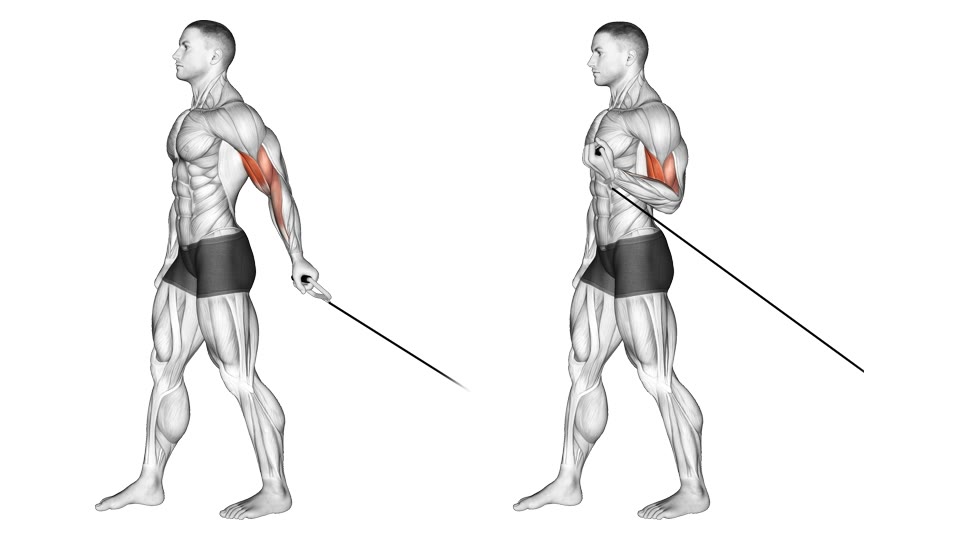
How do you perform a Bayesian curl?
Set up
- Attach a single handle to a low pulley and choose a light weight. Take the handle in one hand, turn away from the stack and step forward until the cable is taut.
- Use a staggered stance with your torso upright. Let the working arm sit slightly behind your side with the palm facing forward; move closer if the shoulder position feels forced.
Execution
- Bend the working elbow and bring the handle toward the front of your shoulder while keeping the upper arm in its starting position.
- Stop before you need to roll the shoulder forward or lean back to lift farther.
- Open the elbow slowly to return the handle behind you. Finish the repetitions, then change sides.
Common mistakes
Walking too far from the pulley
Move closer if holding the starting position pulls the shoulder backward uncomfortably.
Turning the curl into a forward arm swing
Reduce the weight until you can bend the elbow without bringing the whole upper arm forward.
Twisting toward the stack
Keep the chest facing ahead and adjust your stance if the cable turns you around.
Where it fits in a session
Place it with your other curls, usually after larger pulling exercises.
Begin with a load that lets both sides hold the same shoulder position. Match the repetitions and setup on each side before adding weight.
Muscles worked
Primary
Secondary
- None listed in this guide
Schematic surface view. Some muscles are partly visible or not shown.
Variations
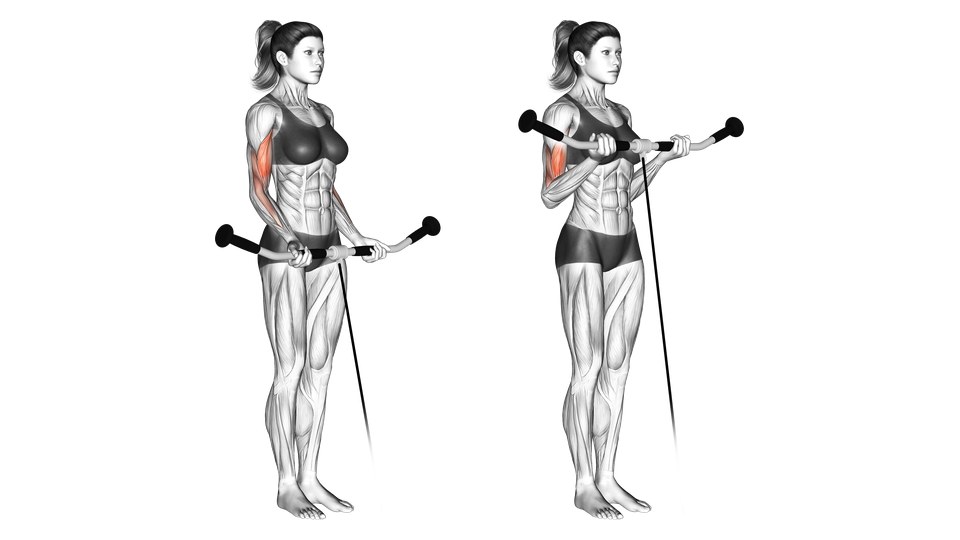
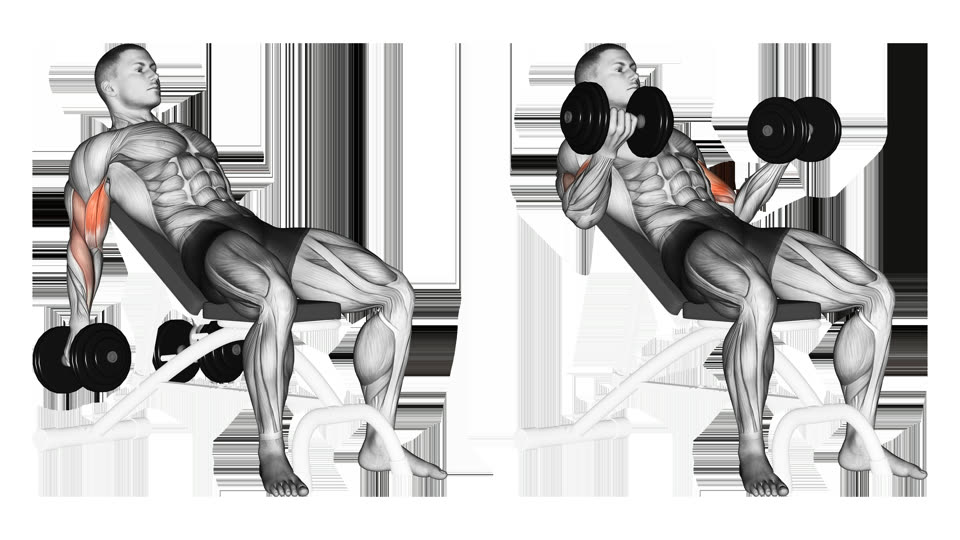
Frequently asked questions
How far behind you should the arm go?
Use only a small, comfortable amount of backward reach. The goal is to hold that position during the curl, not to find the largest possible shoulder stretch.
Does the pulley have to be at floor level?
A low pulley is a practical starting point. Adjust it if needed so the cable clears your body and you can curl without changing your shoulder position.
Should you lean forward?
Start upright in a staggered stance. Adjust your feet before adding a lean; the torso should stay in the same position throughout the set.
Sources
- Attarieh P, Nunes JP, Khani S, Negahdar S, Goli A, Nazarirad H, Nazarirad S, Mojtahedi S, Nosaka K, Soori R. Comparison Between Shoulder Flexed and Extended Positions in Elbow Flexion Resistance Training on Regional Hypertrophy and Maximum Strength: Preacher versus Bayesian Cable Curls. 2025. https://pubmed.ncbi.nlm.nih.gov/40082069/