
Incline dumbbell curl
Also called incline dumbbell curls, seated incline dumbbell curl, incline biceps curl.
What is an incline dumbbell curl?
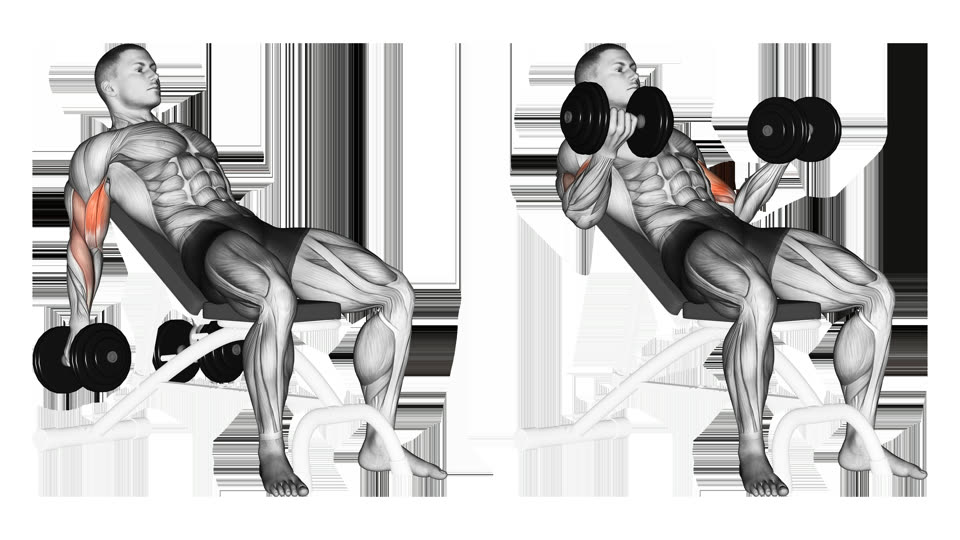
The incline dumbbell curl is performed seated against an inclined backrest with the arms hanging slightly behind the torso. Curling from that position trains the biceps brachii and the other elbow flexors while the bench limits torso momentum.
How do you perform an incline dumbbell curl?
Set up
- Set a bench to a moderate incline, sit back with both feet planted and hold a dumbbell in each hand.
- Let your arms hang beside and slightly behind your torso with the palms facing forward and the shoulders relaxed against the pad.
Execution
- Bend your elbows to curl the dumbbells without bringing the upper arms forward.
- Stop before the shoulders roll away from the backrest or the wrists bend to finish the rep.
- Lower the dumbbells under control until the elbows are nearly straight and the upper arms return to the same hanging position.
Common mistakes
Reaching the elbows forward
Moving the upper arms changes the shoulder position that distinguishes this curl. Keep them hanging beside the bench.
Choosing an overly low bench angle
If the position pulls the shoulders uncomfortably or prevents a controlled bottom, raise the backrest and use a range you can repeat.
Dropping the dumbbells into straight arms
The lengthened bottom should be reached under control rather than caught abruptly by the elbows and shoulders.
Where it fits in a session
Use it after compound pulling or as one of the direct biceps movements in an upper-body or arm session.
Keep the bench angle and bottom range consistent when comparing loads between sessions.
Muscles worked
Primary
Secondary
Schematic surface view. Some muscles are partly visible or not shown.
Leaning against the bench places the upper arms slightly behind the torso at the bottom. All elbow flexors still contribute; the guide does not claim that one biceps head is isolated.
Variations
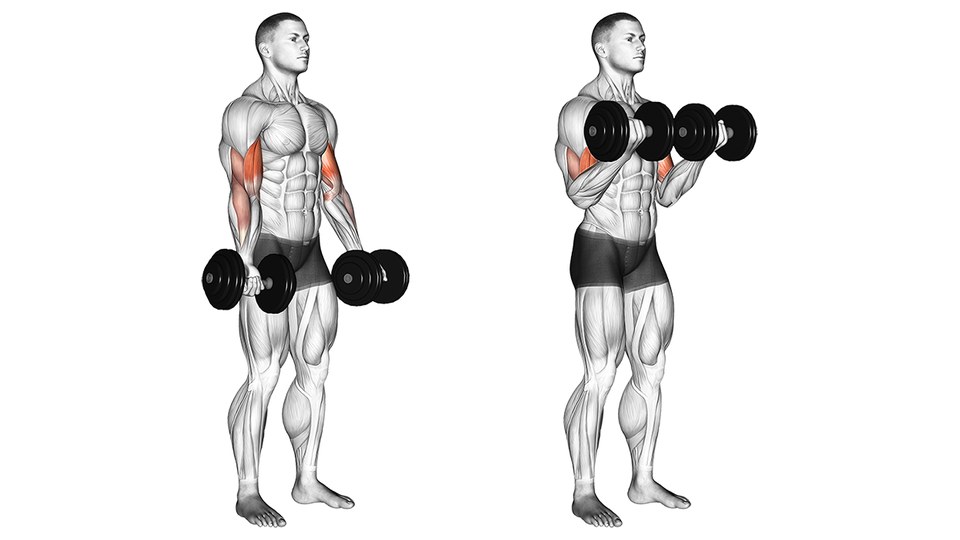
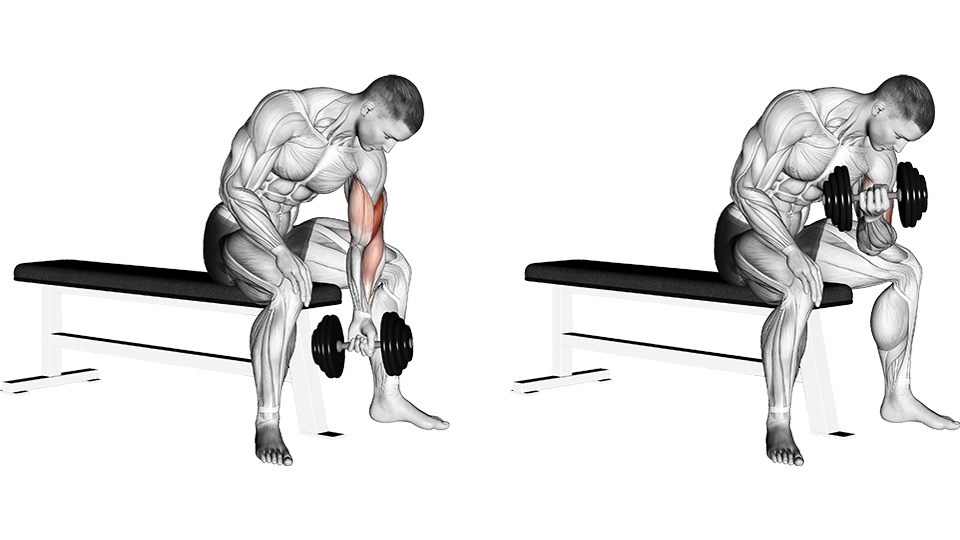
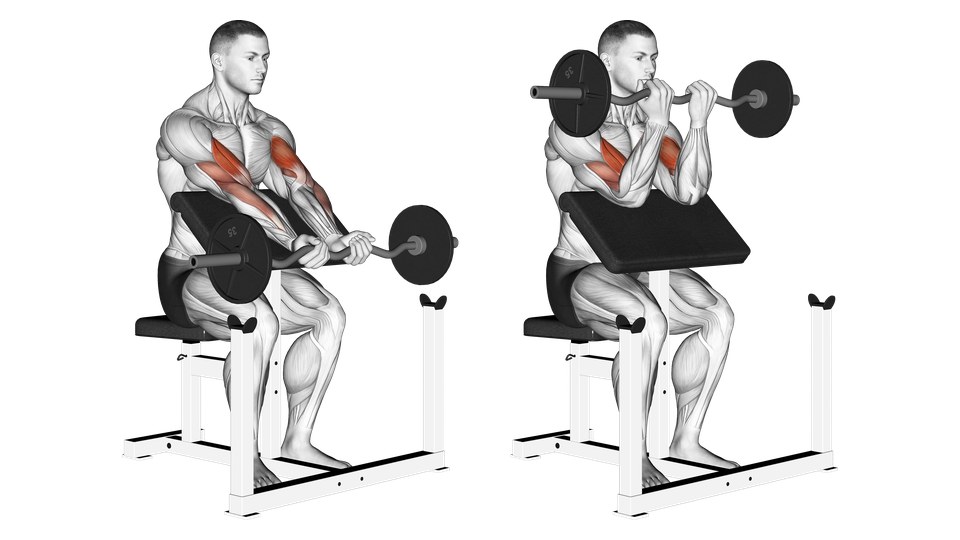
- Dumbbell biceps curlUses an upright torso, so the upper arms begin beside rather than behind the body.
Frequently asked questions
What muscles do incline dumbbell curls work?
They train the biceps brachii, with the brachialis, brachioradialis and forearm flexors also contributing to the curl and grip.
What angle should the bench be for incline dumbbell curls?
Use a moderate incline that lets your back stay supported and your arms hang slightly behind the torso without shoulder discomfort. Keep that setting consistent.
Should your elbows move during incline curls?
The elbows bend, but the upper arms should stay in roughly the same position rather than swinging forward as the dumbbells rise.
Can you alternate arms on incline dumbbell curls?
Yes. Alternate or curl both together, but keep the torso and non-working upper arm quiet and use the same range on each side.
Sources
- Anatomy, Shoulder and Upper Limb, Biceps Muscle. StatPearls, NCBI Bookshelf. https://www.ncbi.nlm.nih.gov/books/NBK519538/
- Plantz MA, Bordoni B. Anatomy, Shoulder and Upper Limb, Brachialis Muscle. StatPearls, NCBI Bookshelf. https://www.ncbi.nlm.nih.gov/books/NBK551630/