Bench dip
Also called bench dips, triceps bench dip, chair dip.
What is a bench dip?
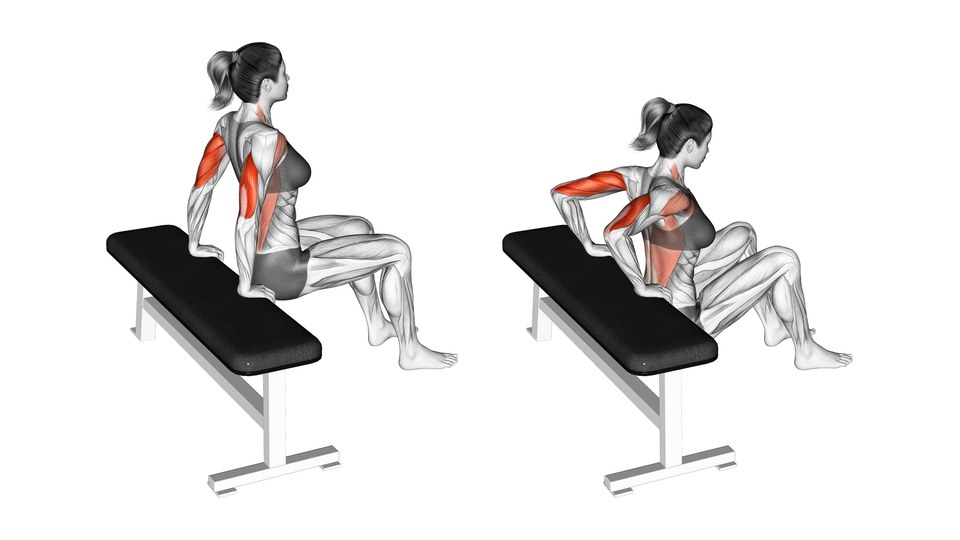
A bench dip is a bodyweight pressing exercise performed with both hands on a bench behind you and the feet on the floor. You bend and straighten the elbows while keeping the hips close to the bench, making the triceps the main target.
How do you perform a bench dip?
Set up
- Sit on the edge of a stable bench. Place both palms beside your hips with your fingers over the edge and your feet flat on the floor.
- Slide your hips just clear of the bench, keep your knees bent and set your shoulders away from your ears.
Execution
- Bend your elbows to lower your hips straight down, keeping them close to the bench and your forearms roughly vertical.
- Stop before the shoulders roll forward or the position becomes uncomfortable; your upper arms do not need to pass parallel with the floor.
- Press the bench away and straighten your elbows to return without shrugging or forcing the finish.
Common mistakes
Letting the hips drift away from the bench
Moving forward changes the shoulder angle and makes it harder to keep the forearms stacked under the hands.
Dropping deeper than the shoulders can control
More depth is not automatically better. Stop while the shoulders stay organised and the bottom position feels stable.
Using a bench that can slide or tip
Your hands push backward as well as down, so the support must stay fixed before the set starts.
Where it fits in a session
As bodyweight triceps work when a stable bench is available.
Keep the knees bent until the same depth and shoulder position are repeatable. Straighten the legs only if that does not change the path.
Muscles worked
Primary
Secondary
Schematic surface view. Some muscles are partly visible or not shown.
The triceps straighten the elbows while the front of the shoulder and chest help move the upper arm from behind the torso. The feet remain on the floor and carry part of the bodyweight.
Variations
- Straight-leg bench dip — Extends the legs farther from the bench, reducing how much the feet can help.
- Feet-elevated bench dip — Places the feet on a second bench and increases the share of bodyweight supported by the arms.
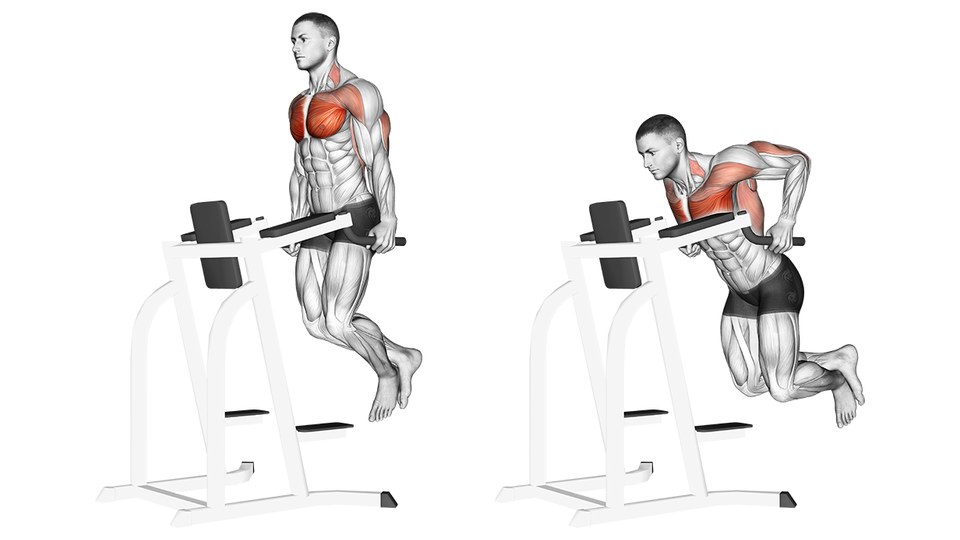
- Parallel-bar dipSupports the whole body between two bars with the feet off the floor, creating a different shoulder and loading position.
Frequently asked questions
What muscles do bench dips work?
They mainly train the triceps. The anterior deltoid and pectoralis major also help move the upper arm as you press out of the bottom.
How low should I go in a bench dip?
Lower only while the shoulders stay controlled and comfortable. Upper arms around parallel is a useful ceiling, not a depth target everyone must reach.
Should my knees be bent or straight?
Bent knees let the feet carry more of your weight and are the version shown here. Straight legs make the arms support more, but the same shoulder and elbow control still matters.
Are bench dips the same as parallel-bar dips?
No. Bench dips keep the feet on the floor and the hands behind the torso. Parallel-bar dips suspend the whole body between bars, so they deserve separate technique and tracking.
Can I use a chair instead of a bench?
Only if it is broad, stable and cannot slide or tip. A light chair on a smooth floor is not a secure support.