
Box squat
Also called barbell box squat, box squats.
What is a box squat?
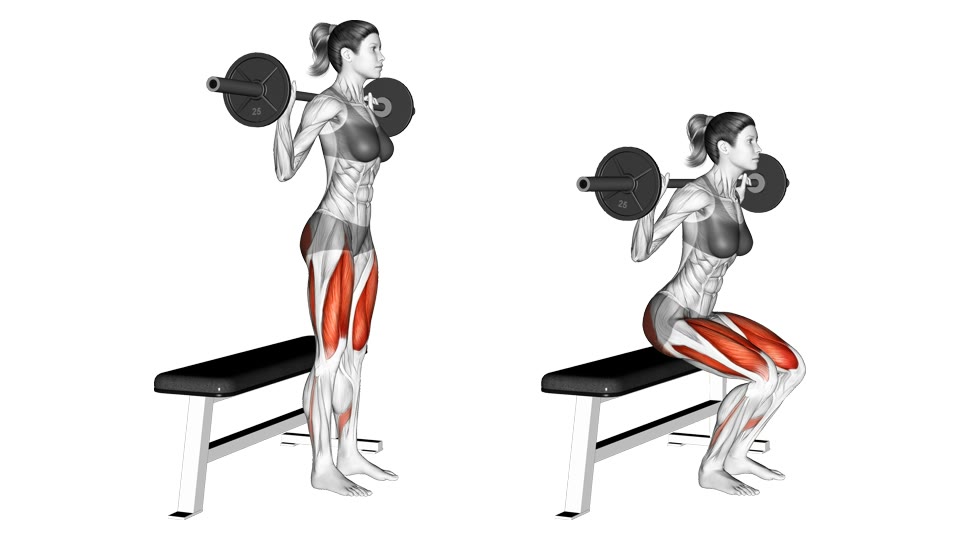
A box squat uses a stable box at the bottom of a barbell squat. In the paused version, you sit briefly while keeping your feet planted and your torso braced before standing again. It trains the quadriceps and glutes.
How do you perform a box squat?
Set up
- Set a firm, load-rated box inside the rack and adjust the safety bars just below your intended bottom position. Test the box height and position without a bar first.
- Place the bar across your upper back, grip it securely and stand to clear the hooks. Take short steps into position with the box behind you and your feet around shoulder width.
Execution
- Take a breath, brace your torso and bend your knees and hips together to lower toward the box. Keep your whole foot in contact with the floor.
- Settle onto the box gently and pause. Keep holding your brace; do not slump or rock backward.
- Push through both feet and stand, keeping the bar balanced over your feet. Reset your breath before the next repetition.
- After the final repetition, walk the bar into both rack uprights and lower it onto the hooks.
Common mistakes
Dropping the last few inches
Use a higher box or less weight if you cannot control the contact. Do not fall onto the seat.
Rocking to start the ascent
Hold your position on the box, then stand without swinging your torso forward.
Placing the box too far behind you
Test the position before unracking so you can sit without shifting onto your heels.
Where it fits in a session
If box squats are your main squat, do them before tiring leg accessories.
Keep the same box height and pause when comparing sessions. Increase the load only when every contact and ascent remains controlled.
Muscles worked
Primary
Secondary
- None listed in this guide
Schematic surface view. Some muscles are partly visible or not shown.
Variations
- Touch-and-go box squat — Touches the box as a depth marker without taking a seated pause.
- Bodyweight squat to a boxUses the box without a barbell; choose a height that lets you stand smoothly.
Frequently asked questions
How high should the box be?
Choose a height you can reach with both feet planted and a controlled descent. Test it without the bar, and use the same height for the whole set.
Should you sit down or just touch the box?
Both versions are used. For a paused box squat, take a brief seated pause while staying braced. A light touch uses the box only to mark depth; decide which version you are doing before the set.
Is this the same as a bodyweight squat to a chair?
Both use a seat, but a barbell box squat also requires a secure rack setup, safety bars and control of the bar during the pause. Start without a bar if the seat position is unfamiliar.