
Cable upright row
Also called upright cable row, low-cable upright row.
What is a cable upright row?
A cable upright row is a standing pull from a low pulley. Hold the attachment in front of your thighs, lead with the elbows and pull it close to the body toward the lower chest or shoulders. It trains the lateral deltoids and trapezius, with the front deltoids and elbow flexors assisting.
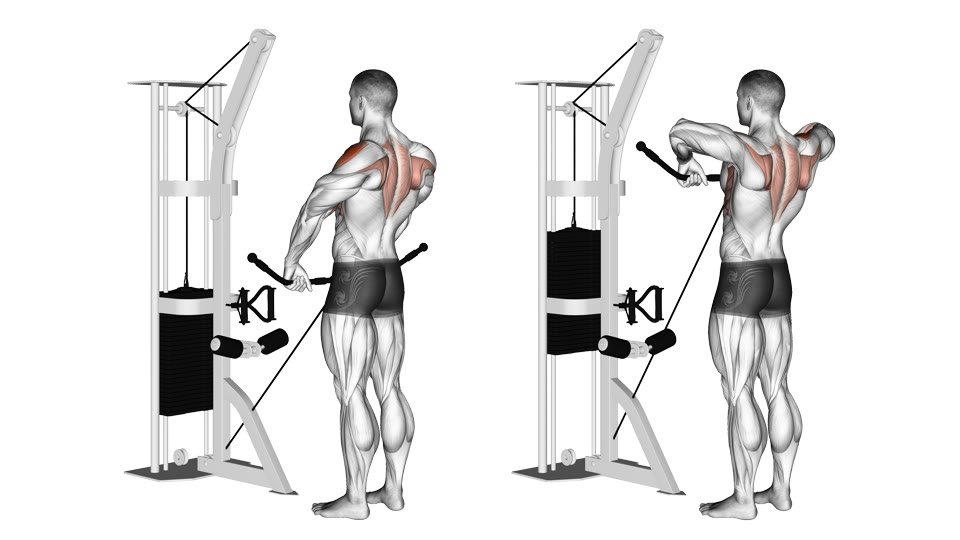
How do you perform a cable upright row?
Set up
- Attach a straight or gently curved bar to a low pulley and stand tall facing the machine with the cable taut.
- Hold the bar overhand around shoulder width in front of your thighs, brace your torso and keep the wrists straight.
Execution
- Lead with the elbows and pull the bar upward close to your body while the elbows move out to the sides.
- Stop around lower-chest to shoulder height, or sooner if the shoulders feel pinched or painful.
- Lower the bar under control until the arms are straight, then reset without letting the weight stack crash.
Common mistakes
Forcing the bar toward the chin
The top is not a required height. Stop where the shoulders remain comfortable and the torso stays still.
Leaning back to move the stack
Use less load so the shoulders and elbows create the pull instead of the hips and torso.
Folding the wrists
Keep the knuckles over the forearms and let the elbows guide the attachment.
Where it fits in a session
Use after heavier pressing or pulling work, or with other shoulder accessories.
Choose a load that keeps the torso still and lets you use a comfortable shoulder range.
Muscles worked
Primary
Secondary
Schematic surface view. Some muscles are partly visible or not shown.
The lateral deltoid raises the upper arm while the trapezius moves and supports the shoulder blade. The elbow flexors assist as the elbows bend.
Variations
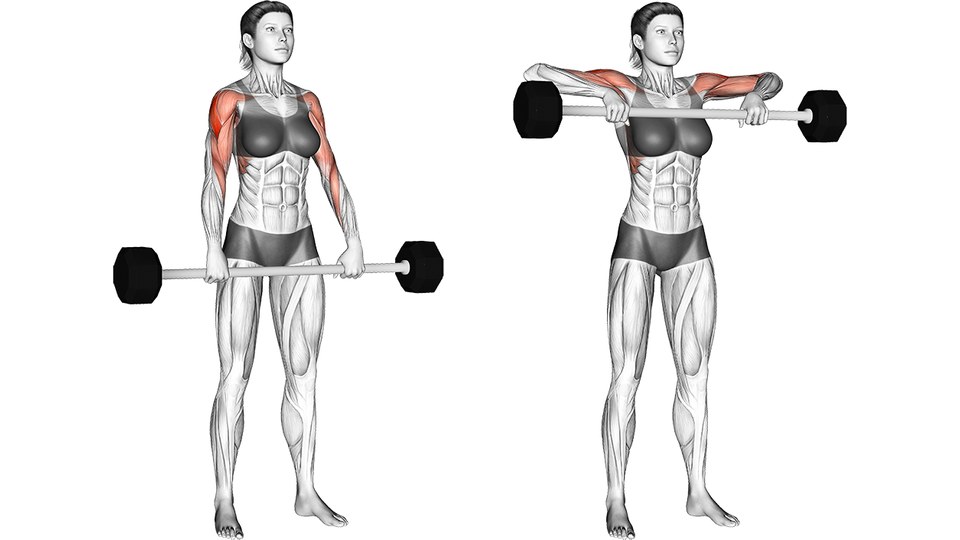
- Dumbbell upright row — Lets each hand follow an independent path.
- Rope upright row — Uses a rope attachment so the hands can separate near the top.
Frequently asked questions
What muscles does the cable upright row work?
The lateral deltoid and trapezius are the main targets. The anterior deltoid and the elbow flexors assist.
How high should you pull?
Lower-chest to shoulder height is enough. Stop sooner if the shoulder feels pinched or painful rather than forcing the attachment toward the chin.
Is it different from a barbell upright row?
The joint action is the same, but the cable keeps pulling through the whole range and fixes the line of resistance to the pulley.
Can you use a rope?
Yes. A rope lets the hands separate near the top; keep the elbows leading and use the same comfortable stopping point.