Cable upright row alternatives

A barbell upright row retains an elbows-out pull close to the body. Dumbbell lateral raises and barbell shrugs provide broader shoulder or shoulder-blade tasks.

The original pulls an overhand bar upward from a low pulley, leading with the elbows. Free-bar resistance changes the setup; lateral raises and shrugs change the movement. Keep the chosen range comfortable rather than forcing a chin-high finish.

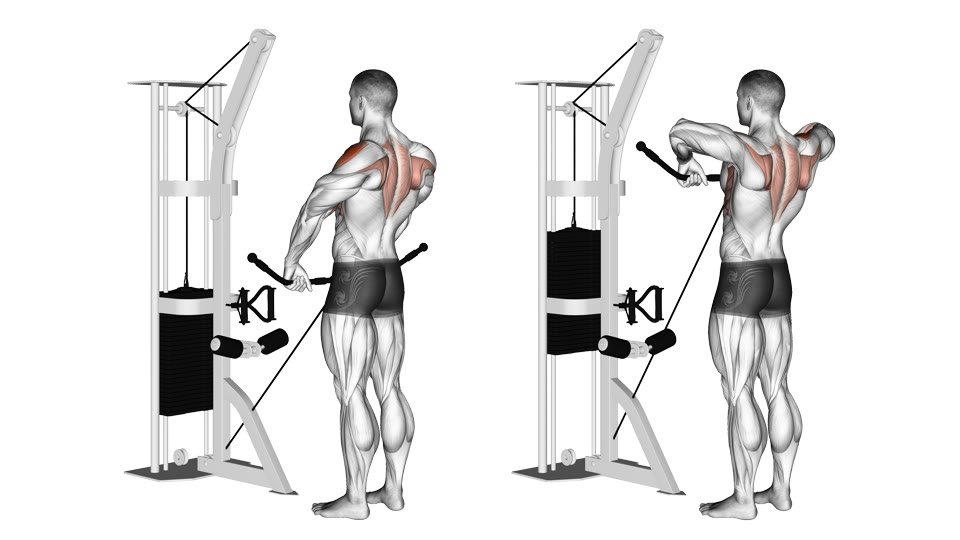
Two rear three-quarter anatomical frames of a man performing an upright row at a low cable station with a curved bar, from straight arms at the thighs to elbows raised near shoulder height, with the shoulders and upper back highlighted.
What equipment can you use?

Choose everything you have. Some exercises need two items, such as dumbbells and a flat bench. Choose floor space for options without equipment.

Your replacements

Choose your equipment above to see replacements.

Compare all alternatives

These options need different equipment. Use the finder above to show only the setups you can use.

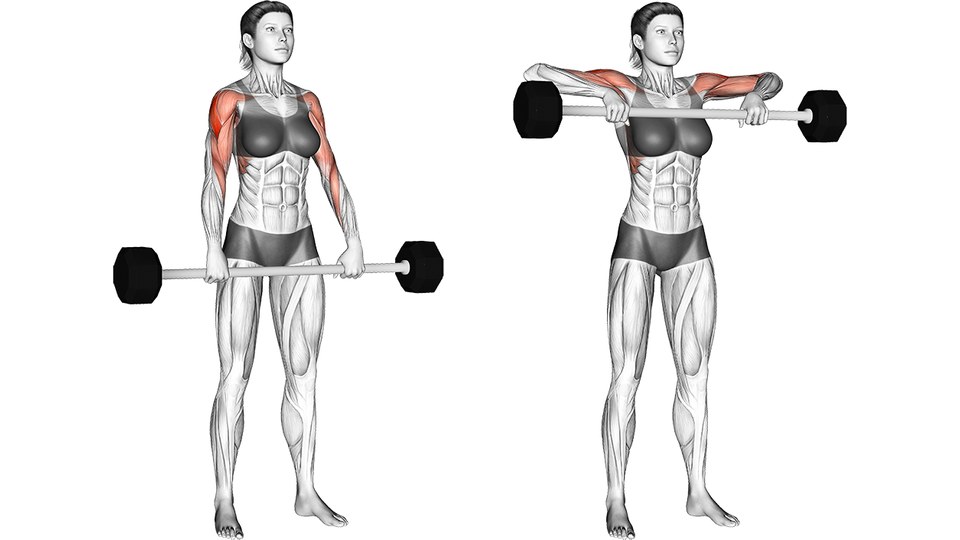
  • Two front-view anatomical illustrations of a woman performing a barbell upright row on a white background. In the left frame she stands upright with straight arms and an overhand shoulder-width grip, holding a short fixed-weight barbell against her thighs. In the right frame the bar is at her upper chest, her elbows point out to the sides near shoulder height, and her wrists bend as the hands remain below the elbows. The shoulders and front of the upper arms are highlighted red; the trapezius and the rest of the body are not highlighted.

    Similar movement

    Upright row

    You need: Barbell and plates

    Why it fits
    Keeps an elbows-out upright pull close to the body.
    What changes
    Use an overhand barbell instead of a low-cable attachment. Gravity replaces cable resistance; stop at a comfortable lower-chest to shoulder height, without assuming the original load transfers.
    See exercise guide
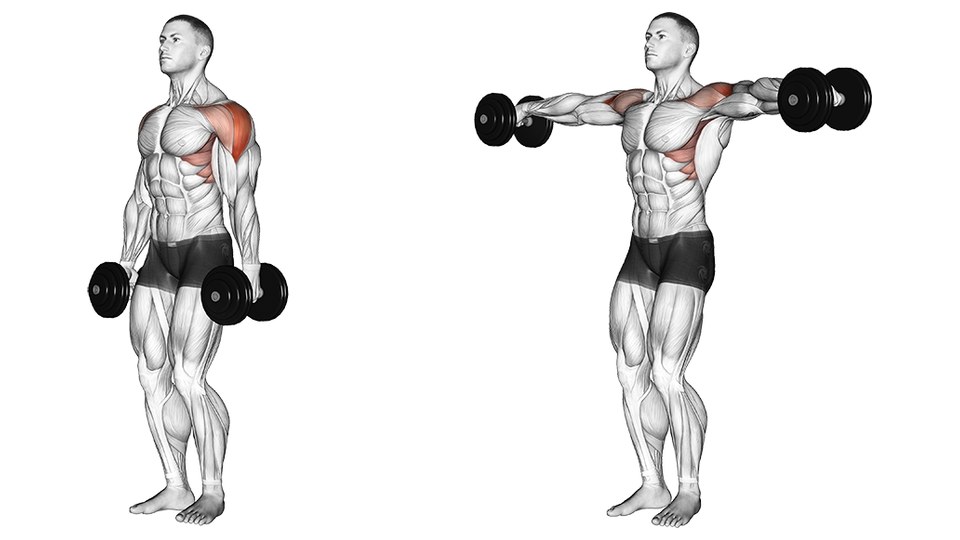
  • Anatomical illustration of a standing dumbbell lateral raise. On the left, a muscular male figure in shorts stands upright with a dumbbell hanging in each hand beside the thighs. On the right, the same figure has both arms raised out to the sides to roughly shoulder height, elbows almost straight, the dumbbells level with the shoulders. In the raised frame both shoulders are shaded red across their outer and upper surfaces; in the starting frame only the figure's left one is, the other left plain. In each frame the shading continues down over the outer chest below that shoulder. The rest of the body is drawn in plain grey muscle anatomy.

    Different movement

    Dumbbell lateral raise

    You need: Dumbbells

    Why it fits
    Offers a broader upper-arm raise to the sides.
    What changes
    Lift separate dumbbells out to the sides with a slight, steady elbow bend. Shoulder abduction replaces the combined elbows-out cable pull; the hands do not share a bar.
    See exercise guide
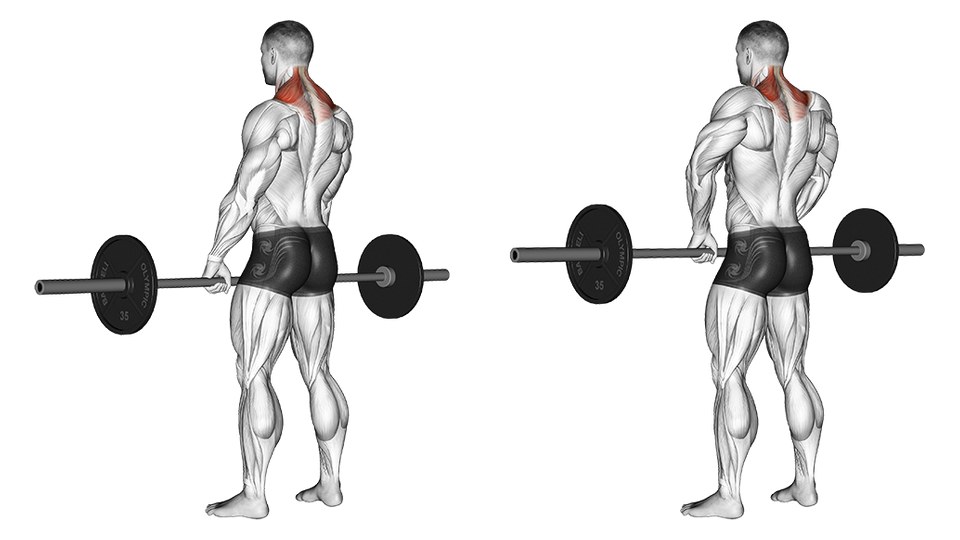
  • Anatomical illustration of a man performing a standing barbell shrug, with the upper trapezius highlighted.

    Different movement

    Shrugs

    You need: Barbell and plates

    Why it fits
    Offers a broader shoulder-blade elevation task.
    What changes
    Hold the bar in front of the thighs with straight arms and raise the shoulders vertically. This removes the elbow bend and upper-arm lift of the upright row; do not roll the shoulders.
    See exercise guide
See the original exercise guide

How we choose replacements

These are curated alternatives, chosen for the movement and the job the exercise does in a workout. A shared muscle group is not enough. Read what changes before choosing: support, range of motion, balance and resistance can all differ. If your goal is to improve a specific lift, alternatives do not replace practice of that lift.

Explore alternatives by exercise