Captain's chair knee raise
Also called vertical knee raise, captain chair knee raise.
What is a captain's chair knee raise?
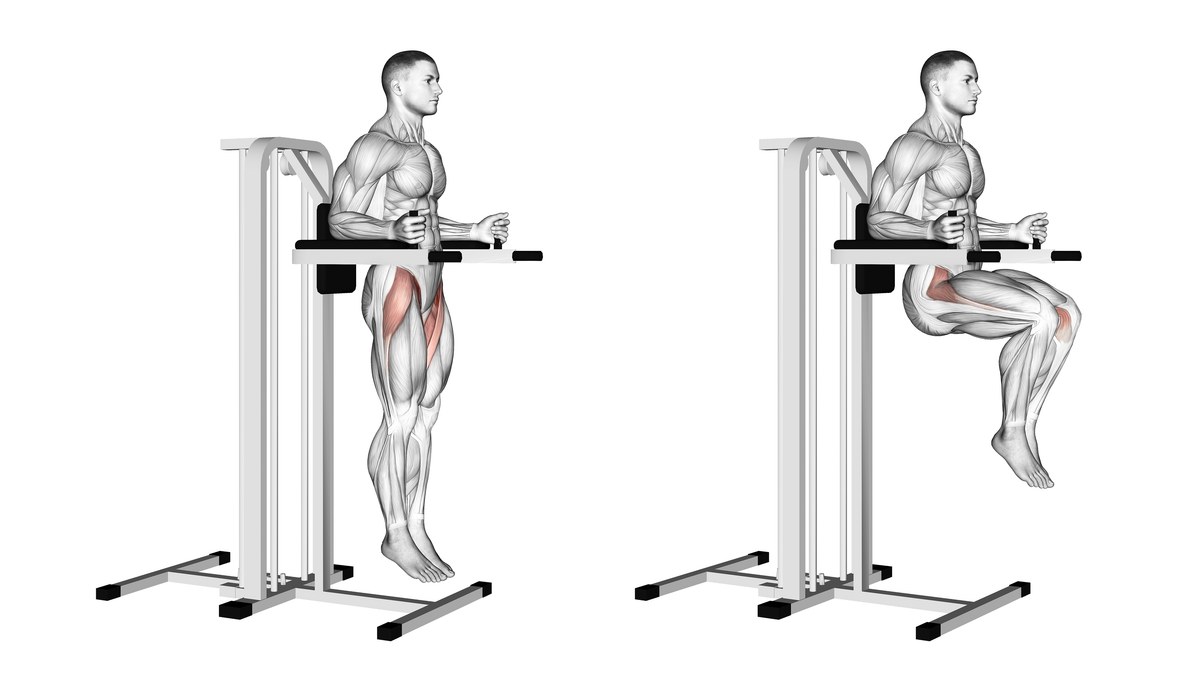
A captain's chair knee raise lifts bent knees in front of you while your forearms rest on pads and your back rests against the station. It works the hip flexors and abs without hanging from a bar. The same supported movement is also called a vertical knee raise.
How to do a captain's chair knee raise
Set up
- Use the station's foot supports to climb into position. Lay your forearms along the pads, hold the handles and place your back against the rest.
- Press into the pads, brace your abdomen and keep your shoulders away from your ears. Lift your feet off the supports and let your legs settle beneath you.
Execution
- Bring both knees forward and up together, bending them as they rise until your thighs are about level with your hips.
- Pause with your back supported, without throwing your chest backward to lift the knees higher.
- Lower slowly until your legs hang beneath your hips again. Let any swinging stop before starting the next rep.
- At the end of the set, place your feet back on the station's steps before taking your arms off the pads.
Common mistakes
Rocking back to lift the knees
Keep your back supported and use a smaller lift if the top of each rep needs a backward throw of the chest.
Starting the next rep from a swing
Finish the lowering before lifting again. If your feet travel behind the station, pause and reset beneath your hips.
Sinking between the arm pads
Press your forearms into the pads to keep your shoulders away from your ears. End the set if you can no longer hold that position.
Where it fits in a session
Use it as direct core work after the main lifts, when you can still hold a steady support position.
Start with a repeatable range and stop the set before you need to rock backward. Add controlled reps first. To make the movement harder later, gradually straighten the knees while keeping the same chair support; record that straight-leg version separately. If support itself is the limiting step, use floor-supported practice instead.
Muscles worked
Primary
Secondary
Schematic surface view. Some muscles are partly visible or not shown.
The hip flexors lift your thighs. The rectus abdominis helps keep your pelvis steady as the legs move; it does not lift the thighs across the hip joint. The rectus femoris, at the front of the thigh, also assists hip flexion.
Variations
- Shorter-range captain's chair knee raise — Keep the same supported setup and lift the knees only as high as you can without rocking. Build toward hip height before adding more reps.
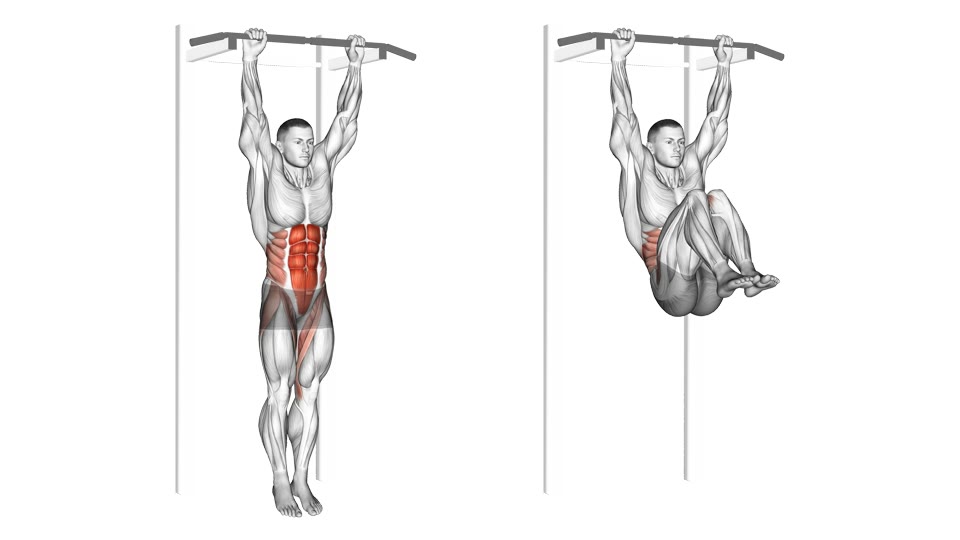
- Hanging knee raiseUses a bar and a straight-arm hang instead of forearm and back support. It is a different support task, so treat it as a separate exercise.
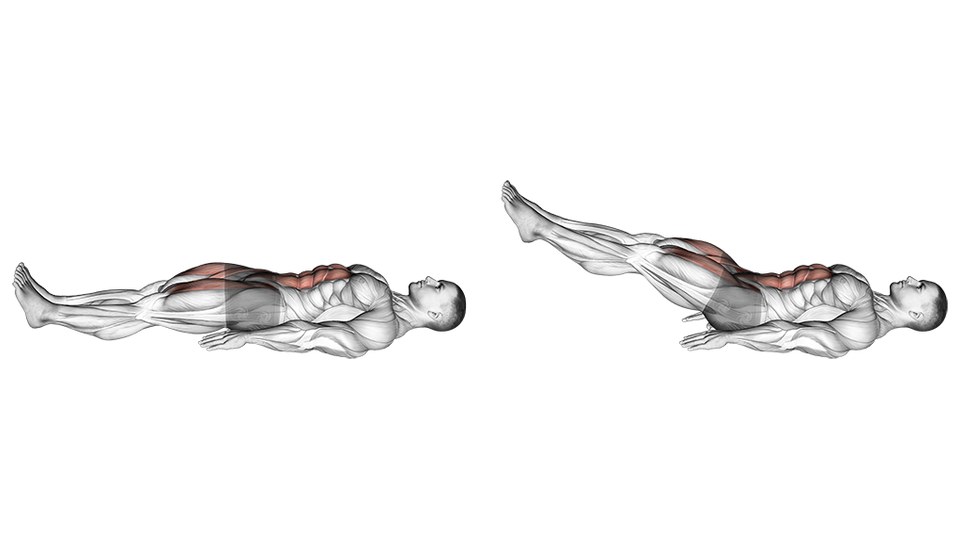
- Lying leg raiseUses the floor for back support. Choose it when you want leg-raise practice without supporting your body on the chair.
Frequently asked questions
Is a vertical knee raise the same exercise?
Yes, when the name refers to bent-knee raises with your forearms on pads and your back against a captain's chair. A knee raise hanging from a bar uses different support and has its own guide.
What muscles do captain's chair knee raises work?
The iliopsoas and other hip flexors, including the rectus femoris, lift the thighs. The rectus abdominis helps control the pelvis while the legs move. Holding the handles is part of the setup; you are supported through the forearm pads rather than hanging by your hands.
How high should I raise my knees?
Aim to bring your thighs about level with your hips while keeping your back supported. Start lower if that is the range you can control. You do not need to throw your knees toward your chest or pull your back away from the pad to complete this version.
How can I make it easier or harder?
For an easier start, lift through a smaller range with bent knees, or practice leg raises on the floor if holding the chair position is too difficult. Progress to more controlled reps at hip height, then try the chair's straight-leg version. A bar hang changes the support as well, so it is a separate option rather than a required next step.
Sources
- Bordoni B, Varacallo MA. Anatomy, Bony Pelvis and Lower Limb: Iliopsoas Muscle. StatPearls; updated June 8, 2026. https://www.ncbi.nlm.nih.gov/sites/books/NBK531508/
- Jelinek LA, Scharbach S, Kashyap S, Ferguson T. Anatomy, Abdomen and Pelvis: Anterolateral Abdominal Wall Fascia. StatPearls; updated October 17, 2022. https://www.ncbi.nlm.nih.gov/sites/books/NBK459392/?report=printable
- Bordoni B, Varacallo MA. Anatomy, Bony Pelvis and Lower Limb: Thigh Quadriceps Muscle. StatPearls; updated May 8, 2023. https://www.ncbi.nlm.nih.gov/sites/books/NBK513334/