Hanging knee raise
Variation of Hanging leg raise
Also called hanging bent-knee raise, knee raise from bar.
What is a hanging knee raise?
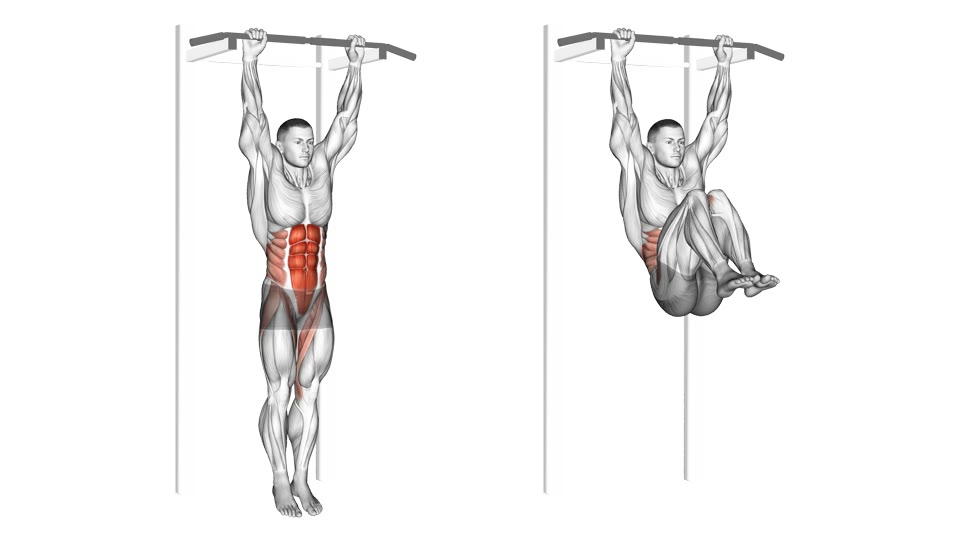
A hanging knee raise starts from a straight-arm hang and lifts bent knees toward the chest, finishing with a controlled upward curl of the pelvis. It trains the hip flexors and abdominal wall while the grip and shoulders support the hang.
How do you perform a hanging knee raise?
Set up
- Take an overhand grip on a bar high enough that your feet clear the floor, then settle into a straight-arm hang.
- Bring the legs together, bend the knees and let any initial swinging stop before the first repetition.
Execution
- Raise the bent knees toward your chest without kicking or leaning far behind the bar.
- At the top, curl the pelvis toward the ribs instead of stopping with only the hips flexed.
- Lower slowly to a quiet hang and let any movement settle before the next repetition.
Common mistakes
Swinging the knees upward
Reset in a still hang so momentum does not start the repetition for the hip flexors and abdominals.
Stopping at hip flexion
Finish the controlled range by bringing the pelvis toward the ribs rather than only lifting the thighs.
Dropping into the bottom
Lower slowly and regain a quiet hang so the descent does not feed the next swing.
Where it fits in a session
Use it as direct abdominal work after lifts for which grip and hanging strength need to stay fresh.
Build a quiet, controlled bent-knee range before progressing to the longer lever of straight-leg raises.
Muscles worked
Primary
Secondary
Schematic surface view. Some muscles are partly visible or not shown.
The hip flexors raise the bent legs, while the abdominals control and curl the pelvis. The forearms work isometrically to maintain the hang.
Variations
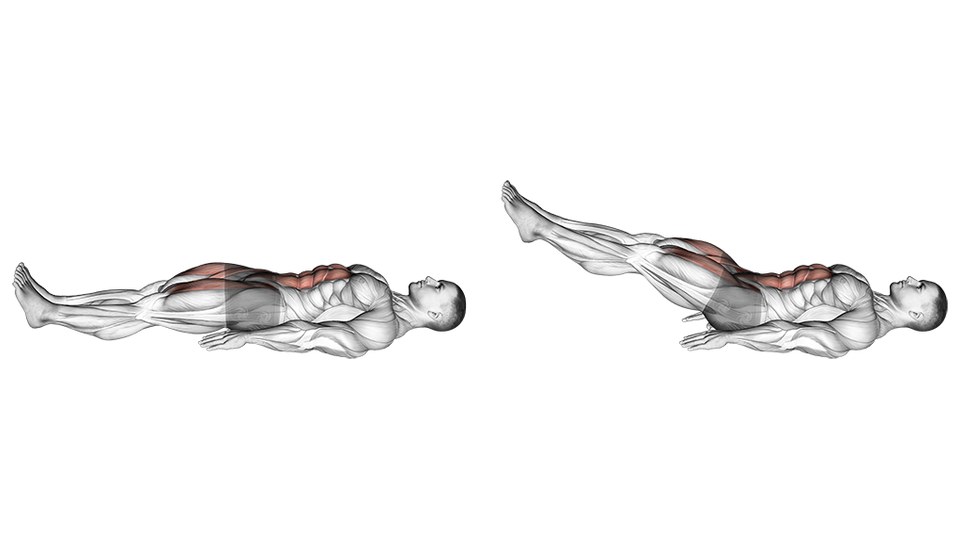
- Hanging leg raiseKeeps the legs straighter, creating a longer lever and harder-to-control repetition.
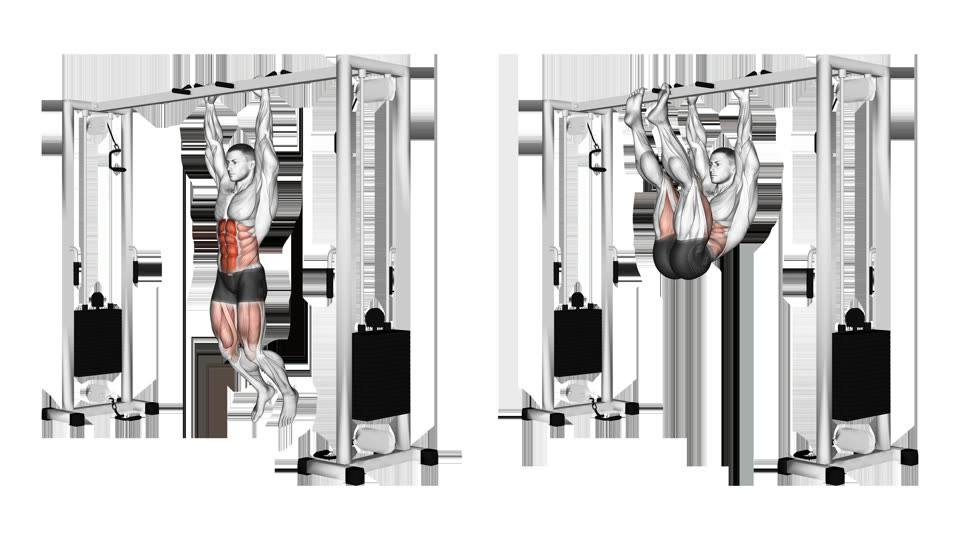
- Captain's chair knee raise — Supports the forearms and back instead of hanging from the hands.
Frequently asked questions
What muscles do hanging knee raises work?
The iliopsoas and other hip flexors raise the thighs. The rectus abdominis and obliques control and curl the pelvis, while the forearms hold the bar.
How high should your knees go?
Raise them as high as you can without kicking, then curl the pelvis upward within the range you can control.
How is it different from a hanging leg raise?
Bending the knees shortens the lever and usually makes swinging easier to control. The straight-leg version keeps a longer lever and is commonly logged separately.
How do you stop swinging?
Begin from a still hang, lift without leaning back, lower slowly and pause until movement settles before the next repetition.
Sources
- Anatomy, Abdomen and Pelvis, Rectus Abdominis. StatPearls, NCBI Bookshelf. https://www.ncbi.nlm.nih.gov/books/NBK519044/
- Bordoni B, Varacallo M. Anatomy, Bony Pelvis and Lower Limb, Iliopsoas Muscle. StatPearls, NCBI Bookshelf. https://www.ncbi.nlm.nih.gov/books/NBK531508/