Chest press
Also called machine chest press, seated chest press, chest press machine.
What is a machine chest press?
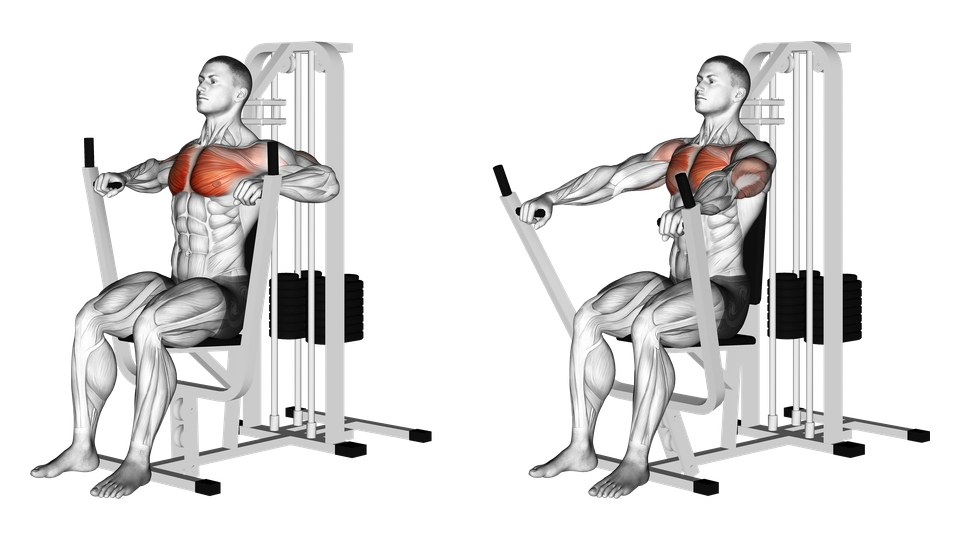
The chest press is a seated machine exercise that presses handles forward on a guided path. It mainly trains the pectoralis major, with the anterior deltoids and triceps assisting.
How do you perform a machine chest press?
Set up
- Adjust the seat so the handles begin around mid-chest height, then sit with your back and head supported.
- Plant your feet, take an even grip and use the start lever if the machine provides one to bring the handles within reach.
Execution
- Press the handles forward until your arms are straight without forcing the elbows into a hard lock.
- Keep your shoulders, back and hips against the pads while the levers move.
- Return under control to a comfortable chest stretch, then use the start lever before releasing the handles if available.
Common mistakes
Setting the seat too high or low
The handles then start above or below the intended chest-level path. Adjust the seat before loading the set.
Letting the shoulders roll forward
Stay against the backrest and stop the return where the shoulders remain comfortably supported.
Ignoring the start lever
When the machine provides one, it reduces the awkward reach needed to take or release the handles.
Where it fits in a session
Use it as a main horizontal press or after a free-weight bench press for additional chest work.
Record seat height and handle choice so the start position stays consistent between sessions.
Muscles worked
Primary
Secondary
Schematic surface view. Some muscles are partly visible or not shown.
The pectoralis major is the main target; the anterior deltoid and triceps assist the guided press.
Variations
- Single-arm machine chest press — Presses one independent lever at a time when the machine permits it.
Related tools
Frequently asked questions
What muscles does the machine chest press work?
It mainly trains the pectoralis major. The anterior deltoids and triceps help press the handles forward.
How high should the seat be on a chest press?
Adjust it until the handles begin around mid-chest height and the elbows sit slightly below shoulder level in a comfortable start.
Is a chest press machine the same as a bench press?
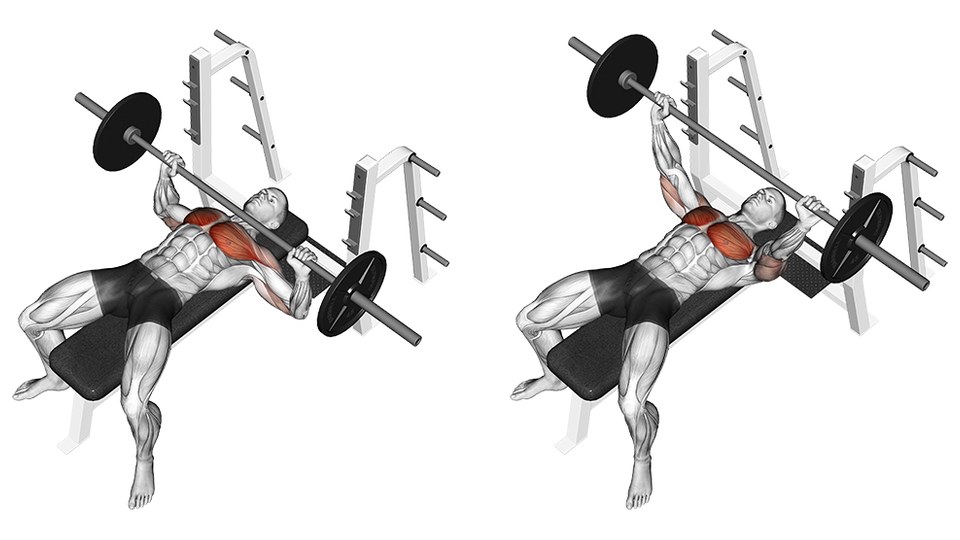
Both are horizontal presses, but the machine supports a seated torso and guides the handles. A bench press uses a free bar that the lifter must balance.
How far back should the handles go?
Return until you feel a comfortable chest stretch while the shoulders, back and hips remain supported. Do not force extra depth by letting the shoulders roll forward.
Sources
- Solari F, Burns B. Anatomy, Thorax, Pectoralis Major. StatPearls. https://www.ncbi.nlm.nih.gov/books/NBK525991/
- Tiwana MS, Sinkler MA, Bordoni B. Anatomy, Shoulder and Upper Limb, Triceps Muscle. StatPearls. https://www.ncbi.nlm.nih.gov/books/NBK536996/
- Elzanie A, Varacallo MA. Anatomy, Shoulder and Upper Limb, Deltoid Muscle. StatPearls. https://www.ncbi.nlm.nih.gov/books/NBK537056/