
Clean high pull
Also called clean high-pull, barbell clean high pull.
What is a clean high pull?
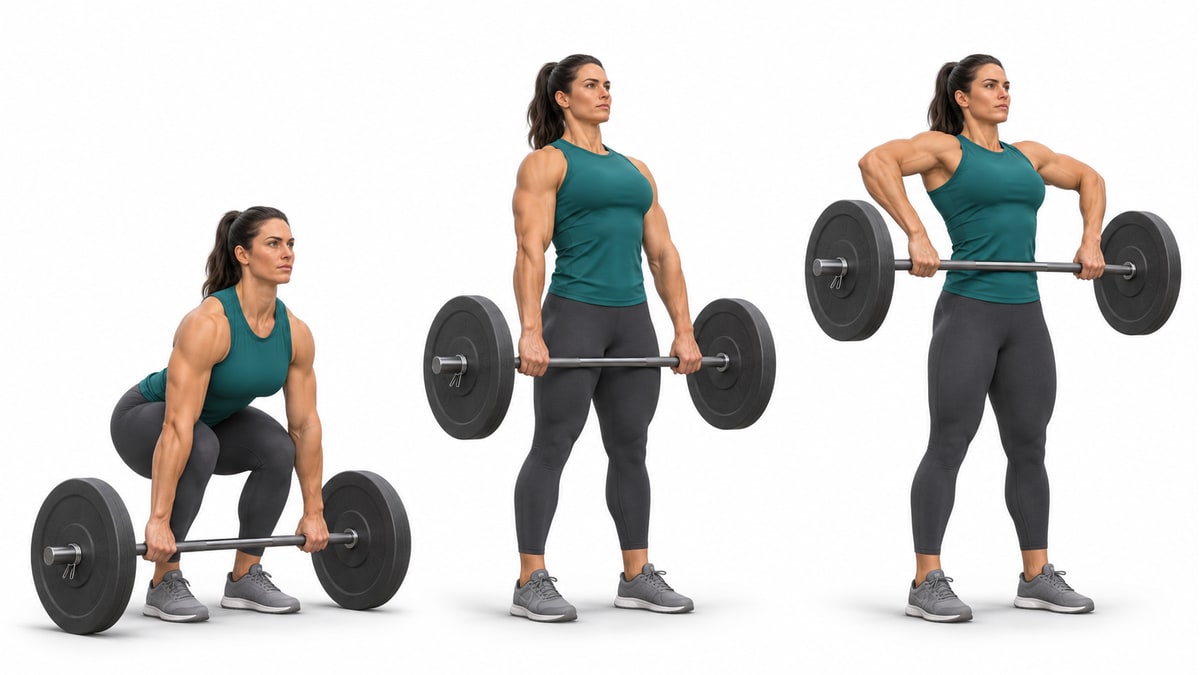
A clean high pull lifts a barbell from the floor with a clean-width grip, then carries the leg-and-hip drive into a deliberate elbow lift. The bar stays in front of you and returns to the floor without a shoulder catch. It combines lower-body extension with a shrug and arm pull.
How do you perform a clean high pull?
Set up
- Use a level lifting area with space around the bar. Load a light barbell with full-size plates so it rests at normal pulling height, and fasten the collars.
- Stand with your feet around hip-width and the bar above the middle of your feet. Bend your knees and hips to grip it overhand just outside your legs, with your shoulders slightly ahead of the bar.
- Brace your middle and hold your back steady with your arms long. Take up the slack while the plates stay grounded, keeping your weight spread across each foot.
Execution
- Push the floor away to bring the bar past your knees, keeping it near your shins. Let your chest and hips rise together rather than shooting your hips upward first.
- As the bar reaches your thighs, accelerate by straightening your legs and hips. Continue into a shrug and lift your elbows outward and upward, keeping the bar near your torso and your wrists below your elbows. Stay tall; do not turn your elbows under for a catch.
- Let your heels settle if they rose, then guide the bar back toward your thighs as your arms straighten. Bend your hips and knees to return both plates to the floor, keeping your back steady. Let the bar settle and rebuild your brace before another repetition.
- To finish, leave both plates on the floor before releasing the bar and standing clear.
Common mistakes
Bending the arms while the bar is still near the floor
The first part of this pull is driven by the legs with long arms. Save the deliberate arm lift for the finish of the leg-and-hip drive.
Chasing height by tipping the chest forward
Keep the trunk tall as the elbows rise. If the bar can only climb farther when you fold over it, stop pursuing that height and reduce the load.
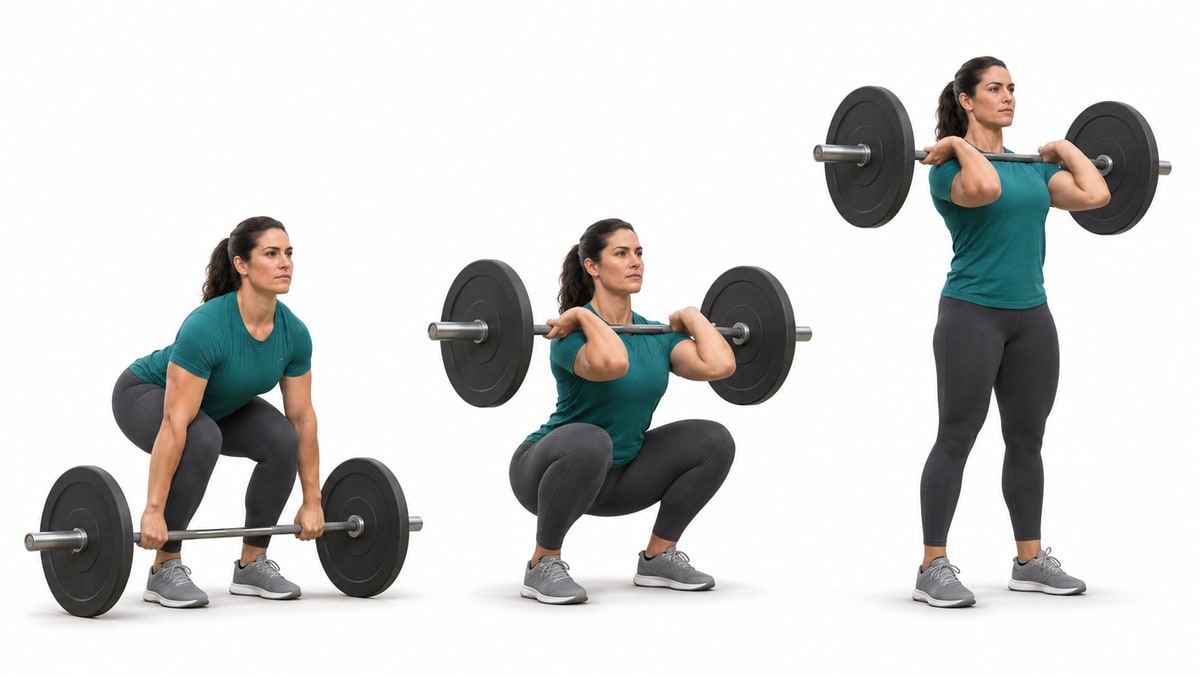
Turning the high pull into a clean
Rotating the elbows underneath to receive the bar on the shoulders changes the repetition. Guide this pull back down in front of you without a rack catch.
Where it fits in a session
Place it where your weightlifting session calls for pulling practice, after a warm-up that rehearses the floor start and finish.
Start with a load you can accelerate and return without losing your position. End the set when the sequence becomes an early arm pull or a forward lean; this guide does not prescribe a percentage of your clean.
Muscles worked
Primary
Secondary
Schematic surface view. Some muscles are partly visible or not shown.
The quadriceps straighten the knees and the gluteus maximus extends the hips. The upper trapezius raises the shoulder blades; the lateral deltoid and elbow flexors help complete the arm pull. These are movement roles, not measured percentages or a muscle-growth ranking.
Variations
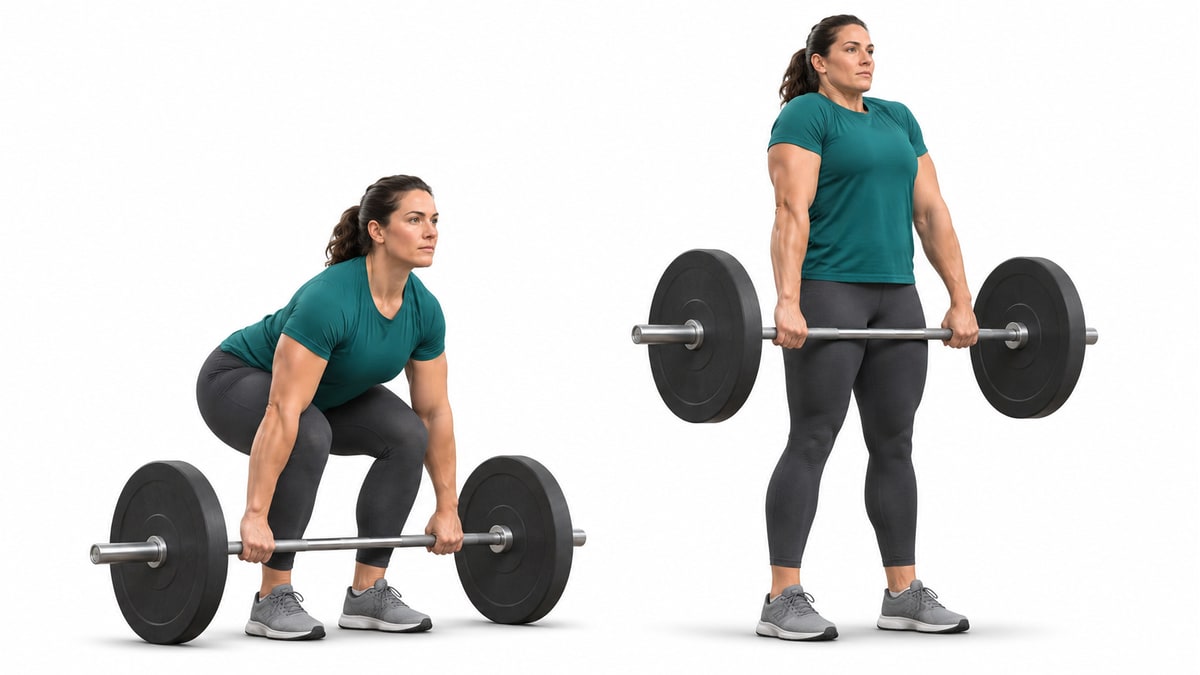
- Clean pullEnds with the lower-body drive and shoulder rise, without the deliberate continued arm lift of this high pull.
Frequently asked questions
How does a clean high pull differ from a clean pull?
Both begin with the clean grip and a drive through the legs and hips. A high pull deliberately continues into bent elbows lifting outward and upward. A clean pull does not add that sustained arm lift, although a small natural bend can occur as the bar stays close. Neither movement includes a shoulder catch.
Is a clean high pull an upright row?
No. An upright row begins from standing and lifts mainly through the shoulders and arms. This guide starts each repetition on the floor and accelerates the bar with the legs and hips before the arms finish the pull. Keep those names separate rather than using one as an alias for the other.
How high should the bar rise?
Keep lifting the elbows while your torso stays upright and the bar stays near you. The height changes with the load; reaching your chest is not a fixed requirement. Choose a light load for learning instead of forcing more height by curling, leaning forward or changing to a catch.
Can I start a clean high pull from the hang?
A hang version begins with the bar held above the floor, so its approach and reset differ. Here, each repetition begins with the plates resting on the floor. If your session prescribes a hang or block start, use instructions for that specific position rather than silently shortening the first part of this repetition.
What muscles does a clean high pull work?
The quadriceps and gluteus maximus contribute to the knee and hip drive, and the upper trapezius contributes to the shrug. The lateral deltoid helps lift the upper arms, while the brachialis, brachioradialis and biceps brachii bend the elbows. The arm pull follows the lower-body drive instead of replacing it.
Sources
- Bruno Bordoni; Matthew A. Varacallo. Anatomy, Bony Pelvis and Lower Limb: Thigh Quadriceps Muscle. StatPearls. https://www.ncbi.nlm.nih.gov/sites/books/NBK513334/
- Adel Elzanie; Judith Borger. Anatomy, Bony Pelvis and Lower Limb, Gluteus Maximus Muscle. StatPearls. https://www.ncbi.nlm.nih.gov/sites/books/NBK538193/
- Mohammed A. Miniato; Prashanth Anand; Matthew A. Varacallo. Anatomy, Shoulder and Upper Limb, Shoulder. StatPearls. https://www.ncbi.nlm.nih.gov/sites/books/NBK536933/
- Manpreet S. Tiwana; Matthew Charlick; Matthew A. Varacallo. Anatomy, Shoulder and Upper Limb, Biceps Muscle. StatPearls. https://www.ncbi.nlm.nih.gov/sites/books/NBK519538/
- Mark A. Plantz; Bruno Bordoni. Anatomy, Shoulder and Upper Limb, Brachialis Muscle. StatPearls. https://www.ncbi.nlm.nih.gov/sites/books/NBK551630/
- Brandon E. Lung; John Ekblad; Mike Bisogno. Anatomy, Shoulder and Upper Limb, Forearm Brachioradialis Muscle. StatPearls. https://www.ncbi.nlm.nih.gov/sites/books/NBK526110/