
Decline bench press
Also called decline barbell bench press, barbell decline press, decline chest press.
What is a decline bench press?
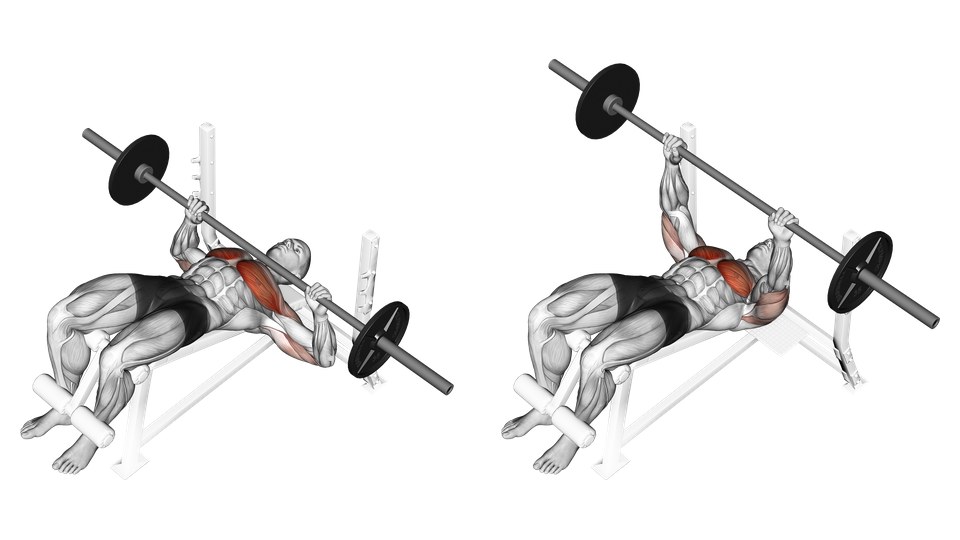
A decline bench press is a barbell press performed with the bench angled so the head is lower than the hips. With the legs secured, you lower the bar toward the lower chest and press it back up while keeping the shoulder blades set against the bench.
How do you perform a decline bench press?
Set up
- Set the decline bench securely in the rack, lock your lower legs under the pads and lie back with your eyes under the bar.
- Draw your shoulder blades back and down, grip the bar a little wider than shoulder width and ask for a hand-off when the rack is difficult to reach safely.
Execution
- Unrack to straight arms and hold the bar over your lower chest.
- Lower under control toward the lower chest with the elbows below the bar and your upper back held against the bench.
- Press the bar up until the elbows are straight, then guide it fully into both rack hooks before releasing your grip.
Common mistakes
Using a bench without secure leg pads
The decline position can make the body slide toward the head. Use the restraint as designed before unracking the bar.
Reaching back for a difficult unrack
A far-behind rack can pull the shoulders out of position before the first rep. Use a spotter for the hand-off when needed.
Touching too high on the chest
The decline angle usually brings the bar toward the lower chest. Forcing a high touch can push the elbows and shoulders into an awkward path.
Where it fits in a session
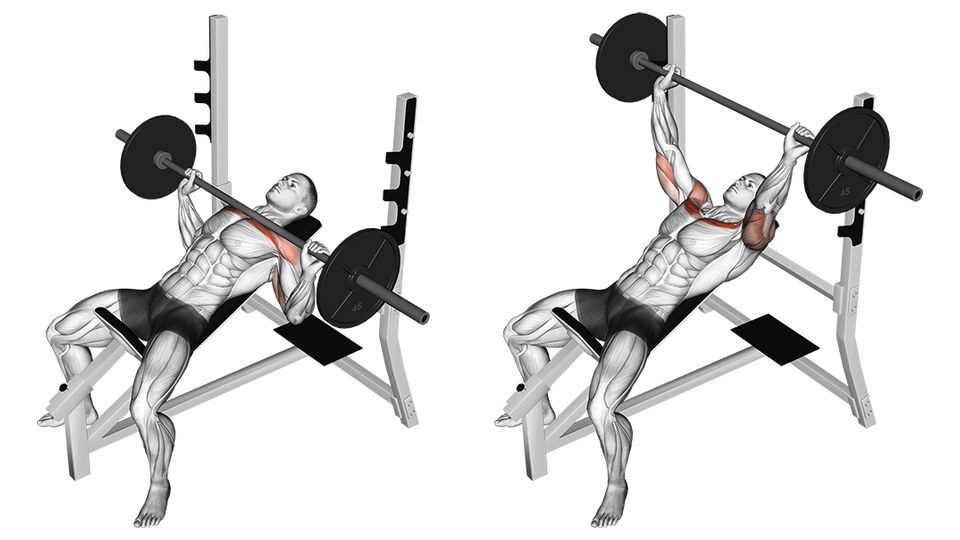
Use it as the main press in a chest session or as an additional barbell angle after flat or incline pressing.
The bench angle and rack position can make solo setup awkward. Use a spotter or a rack with safeties when available, and log the decline setting if the bench is adjustable.
Muscles worked
Primary
Secondary
Schematic surface view. Some muscles are partly visible or not shown.
The pectoralis major presses the bar, while the anterior deltoid and triceps assist. The decline angle changes the path, not the basic pressing action.
Variations
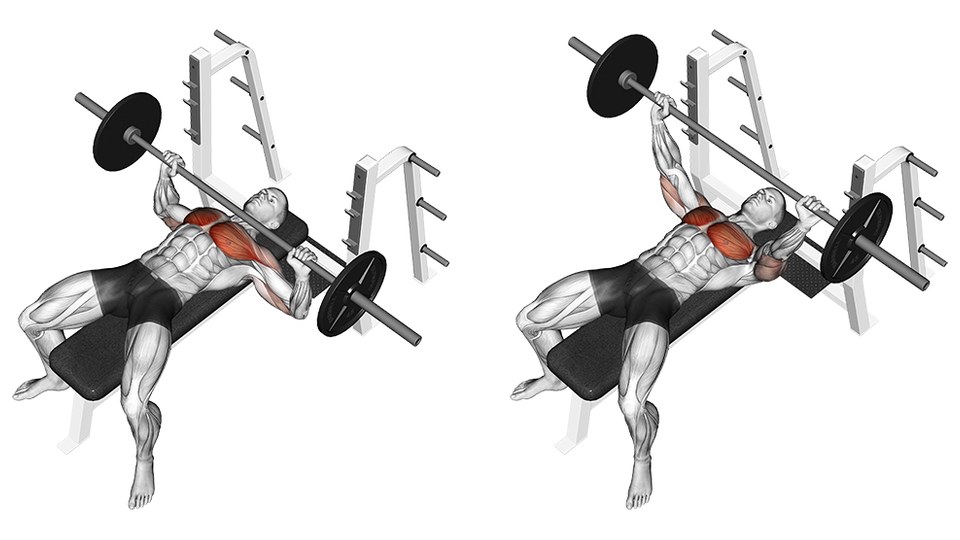
- Dumbbell decline bench press — Uses two independently moving dumbbells on the same declined bench.
Related tools
Frequently asked questions
What muscles does the decline bench press work?
It trains the pectoralis major, with the anterior deltoid and triceps assisting the press.
Where should the bar touch on a decline bench press?
Aim for the lower chest while keeping the forearms under the bar and the shoulders set against the bench.
Do you need a spotter for decline bench press?
A spotter is useful because the decline position can make the unrack and rerack harder to see and reach. At minimum, use secure leg pads and safeties when the rack provides them.
Sources
- Solari F, Burns B. Anatomy, Thorax, Pectoralis Major. StatPearls. https://www.ncbi.nlm.nih.gov/books/NBK525991/
- Elzanie A, Varacallo MA. Anatomy, Shoulder and Upper Limb, Deltoid Muscle. StatPearls. https://www.ncbi.nlm.nih.gov/books/NBK537056/
- Tiwana MS, Sinkler MA, Bordoni B. Anatomy, Shoulder and Upper Limb, Triceps Muscle. StatPearls. https://www.ncbi.nlm.nih.gov/books/NBK536996/