Deficit deadlift
What is a deficit deadlift?
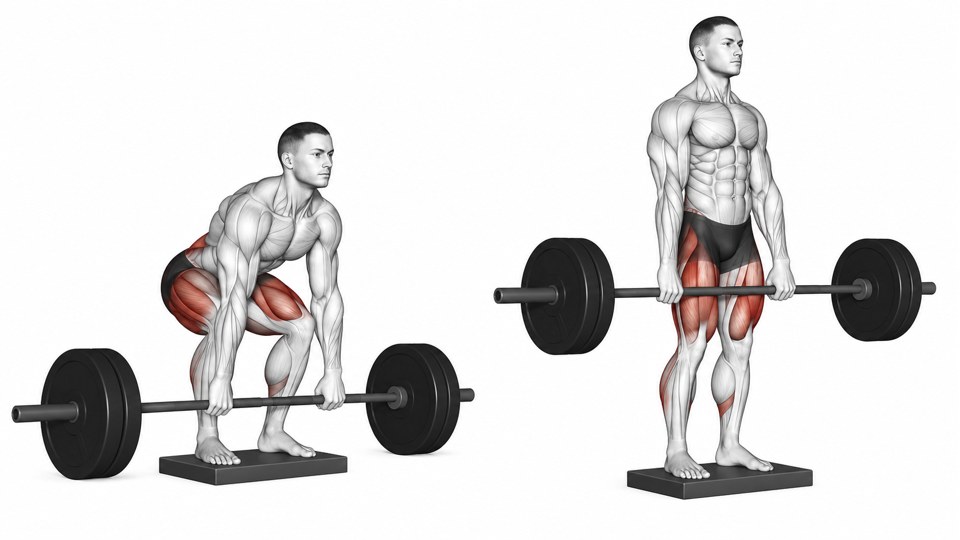
A deficit deadlift is a conventional deadlift performed while standing on a low, stable platform. The bar stays on the floor, so the start is lower relative to your feet than in a normal deadlift.
How do you perform a deficit deadlift?
Set up
- Choose a flat platform that fully supports both feet and cannot rock or slide. Keep the bar and its plates on the surrounding floor.
- Stand on the platform with the bar over the middle of your feet. Grip outside your legs and settle into a braced start with straight arms.
Execution
- Push through your feet to lift the bar, keeping it close as your knees and hips straighten.
- Finish standing tall without leaning back or pulling the bar farther upward.
- Move your hips back to lower the bar, bending the knees when it passes them.
- Let the plates settle on the floor and rebuild the start before the next repetition.
Common mistakes
Choosing a platform that is too high
Lower the deficit if you cannot reach the bar with a stable start.
Standing on an unstable stack
Use a purpose-built platform or a flat, secure surface supporting your whole stance.
Where it fits in a session
Use it as the pulling variation chosen for the session before tiring hinge accessories.
Keep the platform height consistent. Start with a small elevation and a load that lets you keep the same braced position throughout.
Muscles worked
Primary
Secondary
Schematic surface view. Some muscles are partly visible or not shown.
Variations
Frequently asked questions
How high should the platform be?
Start with a small elevation. Increase it only if you can keep a deliberate start and balanced finish; extra height is not a goal by itself.
Is this a rack pull?
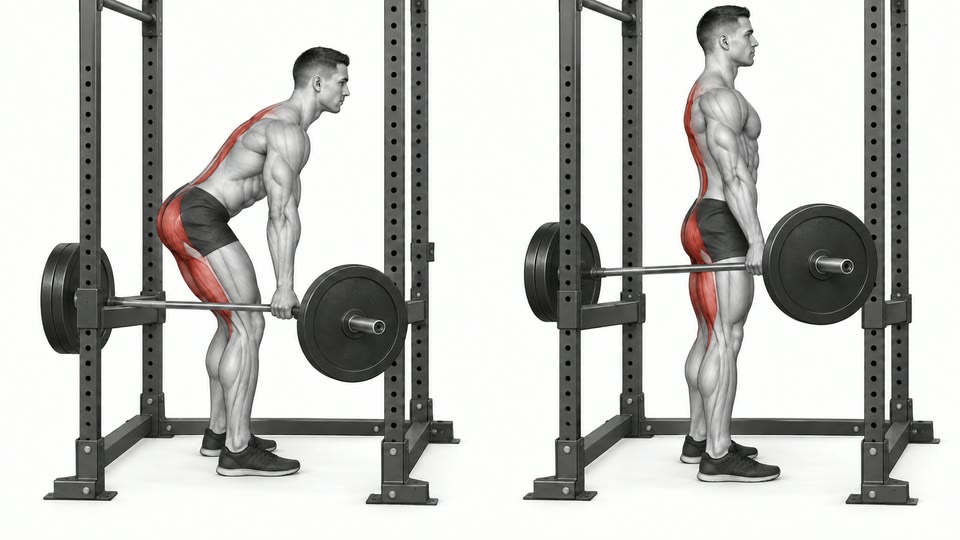
No. A rack pull raises the bar. A deficit deadlift raises the lifter while the bar stays on the floor.