Rack pulls
Also called rack pull, barbell rack pull, rack deadlift.
What are rack pulls?
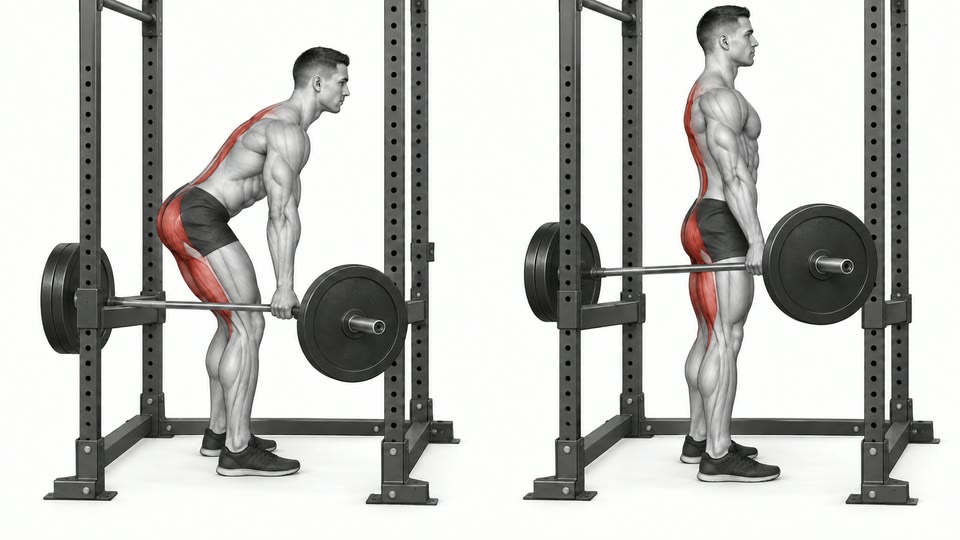
Rack pulls are partial deadlifts that start with a barbell resting on the safety bars or pins of a rack. You stand with the bar, then return it to the same supports. They work the glutes and back, with the starting height defining the range of the lift.
How do you perform rack pulls?
Set up
- Set both rack supports to the same height, initially just below your knees, and check that they and the rack are rated for the load. Place the bar evenly across them.
- Stand close to the bar with your feet around hip width. Hinge back, bend the knees as needed and grip just outside your legs. Keep your arms straight and brace.
Execution
- Take up the slack in your grip, then stand by extending your hips and knees with the bar close to your legs.
- Finish upright with the bar at your thighs. Do not lean backward or add a shrug.
- Hinge back and lower onto both supports with control. Let the bar settle and reset your position before repeating.
Common mistakes
Loading for a shorter range than you actually use
Choose the starting height before the weight. Reduce the load whenever you lower the supports.
Slamming the bar onto the supports
Control the return and make contact on both sides together.
Leaning back at the top
Stop once you are upright. An extra backward lean is not part of the repetition.
Where it fits in a session
Place it with your main hinge work, before grip and back fatigue make the starting position difficult to hold.
Record the support height along with the load. Keep the same range when judging progress and avoid chasing a heavier number by raising the pins.
Muscles worked
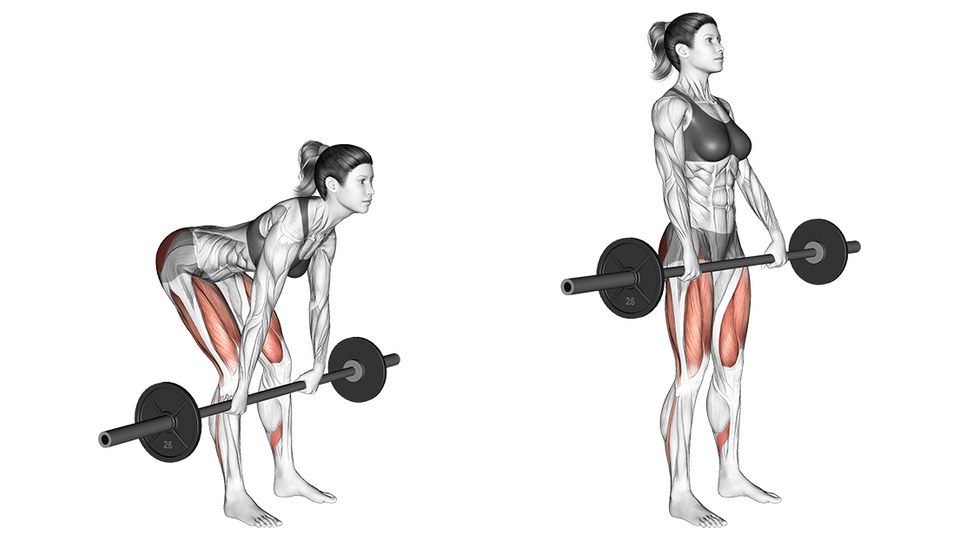
Primary
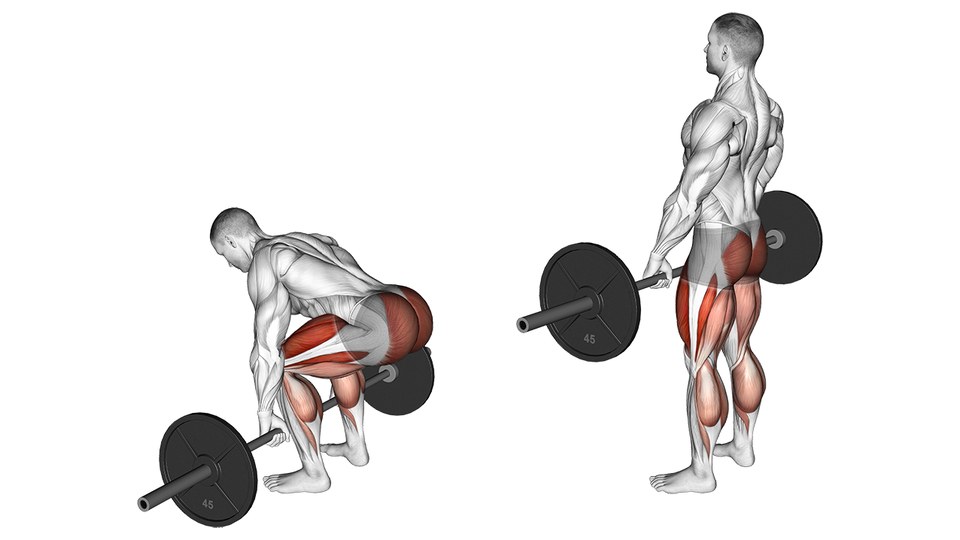
Secondary
Schematic surface view. Some muscles are partly visible or not shown.
Variations
- Block pull — Raises the starting position by supporting the plates on stable blocks.
- Romanian deadliftBegins standing and lowers through a hinge without resting the bar between repetitions.
Frequently asked questions
How high should the bar start?
Just below the knee is one starting option. Use a height you can reach while holding a steady back position, and keep both supports level. Different heights are different ranges to track.
Are rack pulls the same as block pulls?
Both start from a raised position. Rack pulls support the bar shaft on rack pins or safety bars; block pulls support the plates on blocks.
Should you shrug at the top?
Finish by standing upright with straight arms. Do shrugs as a separate exercise if they are part of your session.