
Dumbbell Y raise
Also called incline dumbbell Y raise, incline Y raise, chest-supported dumbbell Y raise.
What is a dumbbell Y raise?
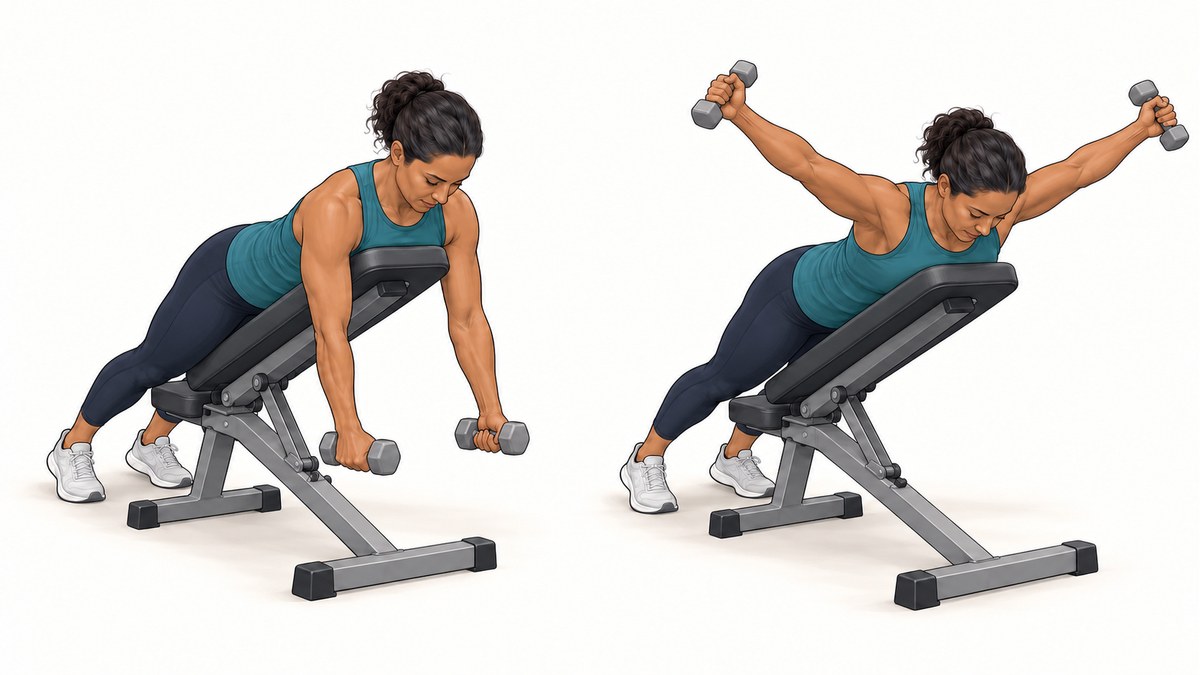
A dumbbell Y raise lifts light dumbbells upward and outward while your chest rests on an incline bench. Viewed from above, your arms and torso form a Y near the top. The chest-supported setup differs from a standing cable or dumbbell raise.
How do you perform a dumbbell Y raise?
Set up
- Set a stable bench to a low incline, about 30–45 degrees, and choose very light dumbbells. Check that the weights have room to move beside the bench.
- Lie chest-down with your feet braced on the floor. Let your arms hang toward the floor, keep your neck in line with your torso and your elbows nearly straight.
Execution
- Lift both arms diagonally forward and outward, keeping your chest on the pad and turning your thumbs toward the ceiling.
- Finish with the arms forming a wide Y near the line of your torso. Stop sooner if reaching that position lifts your chest or feels uncomfortable.
- Lower the weights back beneath your shoulders without changing your body position, then repeat.
Common mistakes
Lifting the chest to raise the weights higher
Keep the pad contact and use lighter dumbbells. Extra trunk movement changes the repetition you are trying to repeat.
Raising straight out to the sides
That makes a T-shaped path. Send the arms diagonally forward as well as outward for the Y taught here.
Bending the elbows into a row
Keep your arms long with only a small elbow bend, rather than pulling the weights toward your ribs.
Where it fits in a session
Use it where your session calls for light upper-back and shoulder accessory work.
Practise the supported Y without weights first if needed. Add only enough load to keep the chest supported and both diagonal paths repeatable.
Muscles worked
Primary
Secondary
- None listed in this guide
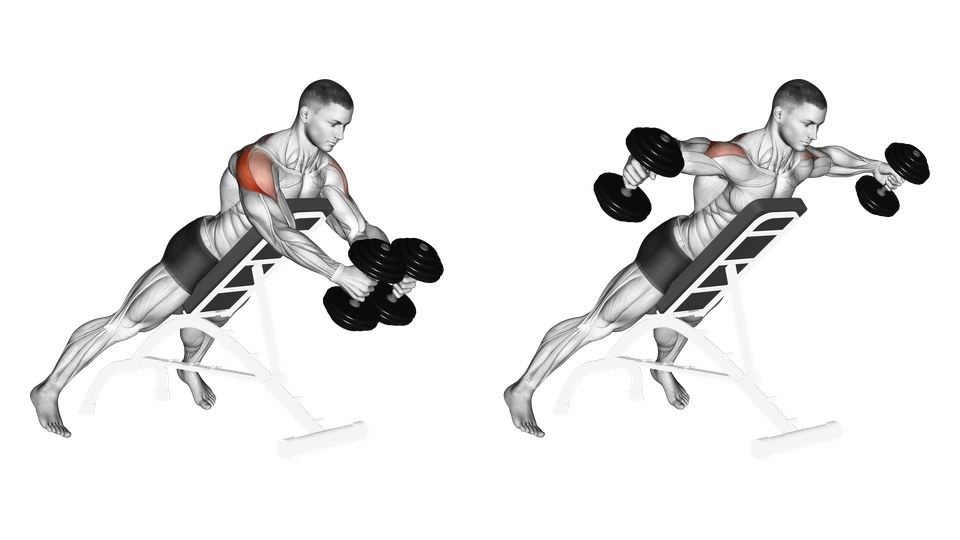
Schematic surface view. Some muscles are partly visible or not shown.
The trapezius helps control the shoulder blades and the deltoids move the arms.
Variations
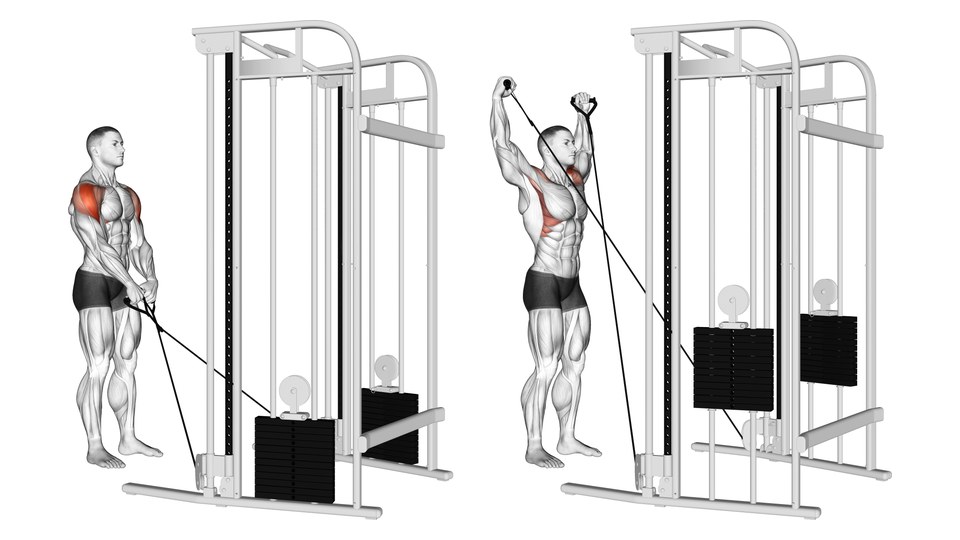
- Cable Y raiseUses a standing position and two low cables; it is a different setup from this prone bench raise.
Frequently asked questions
Is this a standing dumbbell Y raise?
No. This page uses an incline bench with the chest supported. A standing version requires you to hold a hip hinge and is a separate setup.
What makes the arm path a Y?
The arms travel diagonally forward and outward rather than straight forward or straight to the sides. Near the top, your arms and torso form the letter Y when viewed from above.
What bench angle should you use?
Start with a low incline around 30–45 degrees and keep it consistent. Position yourself so your chest stays supported and the dumbbells can hang clear of the bench.
How much weight should you use?
Begin without weights or with very light dumbbells. Use a load that lets you keep the same chest contact, elbow angle and arm path throughout the set.
Sources
- Elzanie A; Varacallo MA. Anatomy, Shoulder and Upper Limb, Deltoid Muscle. StatPearls. https://www.ncbi.nlm.nih.gov/sites/books/NBK537056/
- Ourieff J; Scheckel B; Agarwal A. Anatomy, Back, Trapezius. StatPearls. https://www.ncbi.nlm.nih.gov/sites/books/NBK518994/