
Glute bridge march
Also called marching glute bridge, marching bridge, bridge with alternate march.
What is a glute bridge march?
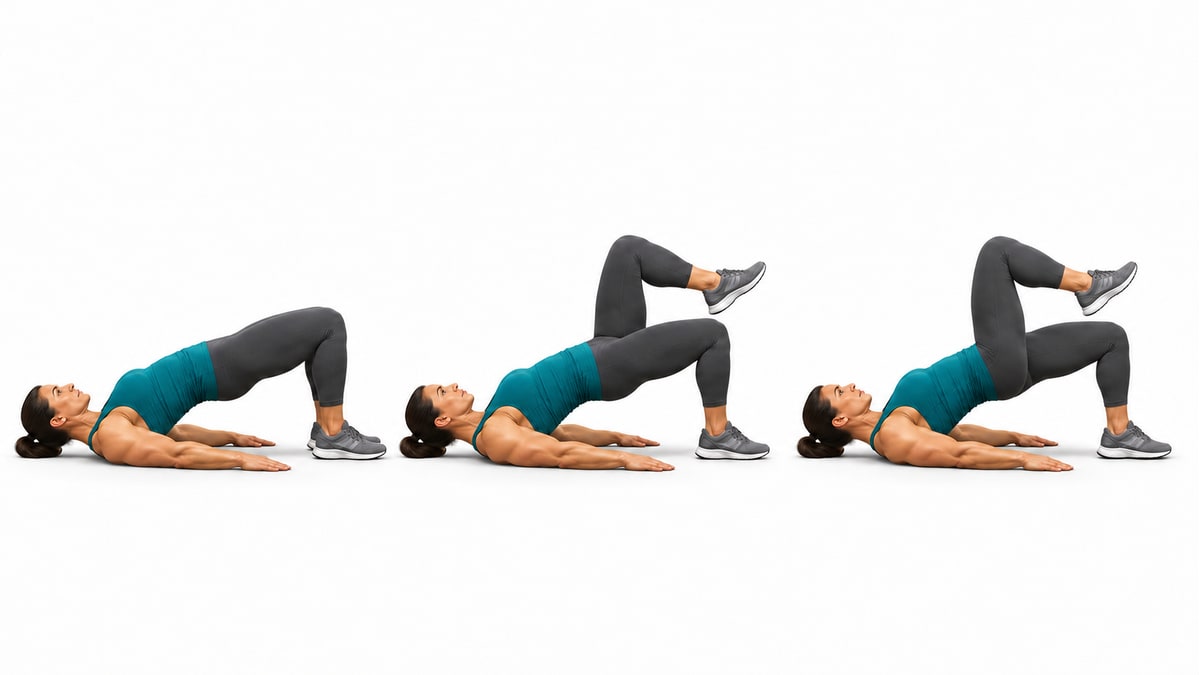
A glute bridge march holds the hips above the floor while you lift and replace one bent leg, then the other. Your head and shoulders stay down as each foot takes a turn supporting the bridge. Unlike single-leg bridge repetitions, the hips stay raised between sides.
How do you perform a glute bridge march?
Set up
- Lie on your back with your knees bent, feet about hip-width apart and arms resting on the floor beside you.
- Position both feet so you can press down comfortably, then gently brace your abdomen with your head and shoulders resting on the floor.
Execution
- Push through both feet to lift your hips until your shoulders, hips and knees line up, without arching your lower back.
- Keep your pelvis level and lift one foot just clear of the floor, bringing the bent knee toward you without letting your hips sink.
- Place that foot back in its starting spot before lifting the other foot. Alternate sides while holding the same bridge height.
- To finish, plant both feet and lower your hips slowly onto the floor.
Common mistakes
Rocking from one hip to the other
A big weight shift turns the march into a side-to-side roll. Make the foot lift smaller and settle both feet before switching.
Chasing a high knee lift
Lifting farther is not the goal if the pelvis drops or the back arches. Use only the leg movement you can control with the bridge held still.
Lowering the hips after every foot lift
That changes the exercise into separate bridge repetitions. Keep the hips raised through the alternating sequence, or return to a two-foot hold until you can.
Where it fits in a session
Use it for controlled bodyweight bridge work when you want to practise changing leg support without losing hip position.
Begin with a two-foot bridge hold. Add small, alternating foot lifts once you can keep that position; end the set when the hips repeatedly sag or rotate. Count each foot lift consistently rather than rushing to add more.
Muscles worked
Primary
Secondary
Schematic surface view. Some muscles are partly visible or not shown.
The supporting leg uses the gluteus maximus to hold the hip extended, with help from the hip-extending hamstrings. The feet change support while the pelvis stays steady.
Variations
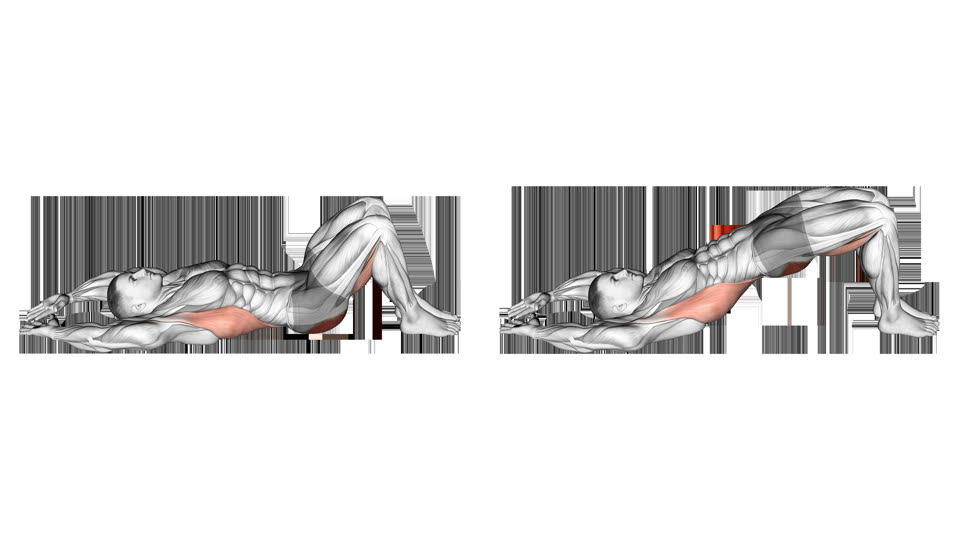
- Glute bridgeBoth feet stay planted as the hips lift and lower; use a two-foot hold to practise the starting position for the march.
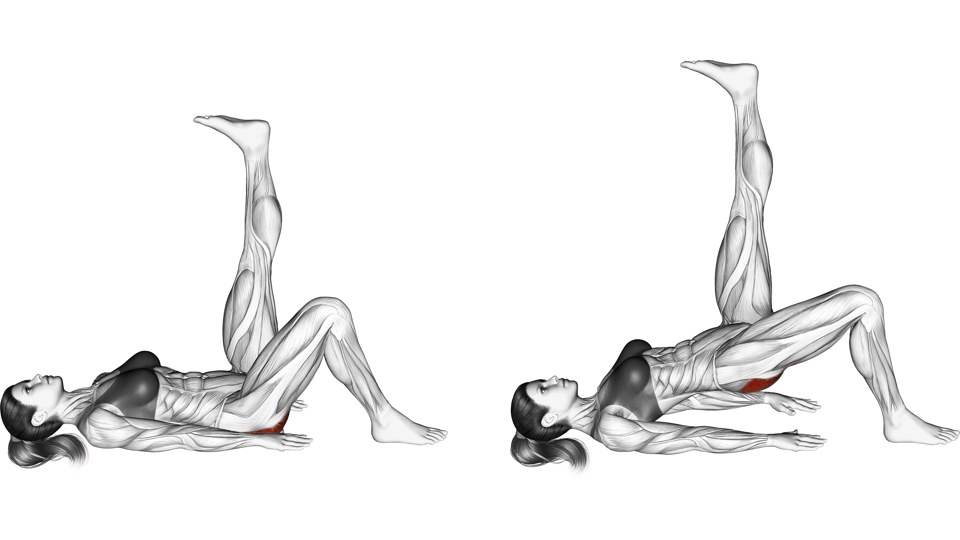
- Single-leg glute bridgeKeeps one foot off the floor through repeated hip lifts instead of changing supporting legs with the hips held up.
Frequently asked questions
What muscles does a glute bridge march work?
The main target is the gluteus maximus. The hip-extending hamstrings assist the supporting leg in keeping the hips raised. Holding the trunk and pelvis steady is also part of performing the march.
Is a glute bridge march the same as a single-leg bridge?
No. A march alternates the supporting foot while the hips remain raised. Single-leg bridge repetitions keep one foot lifted as the hips move down and up, then change sides for another set of repetitions.
How high should I lift my foot?
Only high enough to take it clear of the floor while your hips stay level. Keep the knee bent. A larger knee lift is an option once you can hold the bridge, rather than a requirement for every repetition.
What if my hips drop when I march?
Put both feet down and re-establish the bridge. Try a smaller foot lift, or practise holding the bridge with both feet planted before alternating again.
Do I need a band or a bench?
No. This guide uses bodyweight with the head and shoulders on the floor. Banded or bench-supported marches change the setup and are not the version taught here.
Sources
- Betts JG et al. Anatomy and Physiology 2e, section 11.6: Appendicular muscles of the pelvic girdle and lower limbs. OpenStax, 2022. https://openstax.org/books/anatomy-and-physiology-2e/pages/11-6-appendicular-muscles-of-the-pelvic-girdle-and-lower-limbs