
High cable curl
Also called standing high pulley cable curl, crucifix curl, overhead cable curl.
What is a high cable curl?
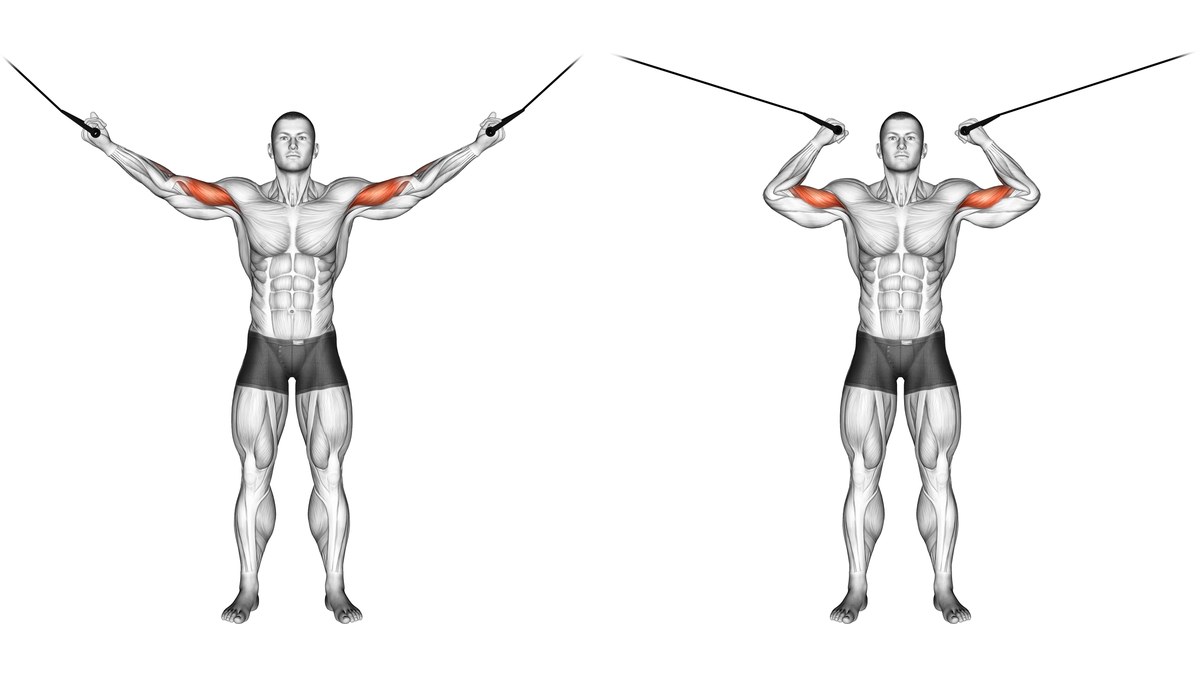
The high cable curl is a biceps exercise done between two high pulleys. With your upper arms held out to the sides around shoulder level, bend your elbows to bring the handles toward either side of your head. The brachialis and brachioradialis help the biceps bend the elbows.
How do you perform a high cable curl?
Set up
- Fit a single handle to each high pulley, check the height locks and select the same light load on both stacks.
- Take one handle in each hand with your palms up and stand midway between the towers, feet planted about hip-width apart.
- Raise your upper arms out around shoulder level, then straighten your arms almost fully with both cables taut.
Execution
- Bring the handles toward your ears by bending your elbows, keeping your upper arms in place and your torso upright.
- Stop when you have curled as far as you can without moving your elbows forward or bending your wrists.
- Straighten your arms outward under control to the starting position, without letting the cables pull your arms back suddenly.
Common mistakes
Drawing the elbows forward as the handles come in
Your upper arms then move with the handles. Reduce the load until you can keep the curl at the elbows.
Bending the wrists to reach closer to the head
The extra handle movement comes from the wrists. Keep the hands in line with the forearms and finish the curl sooner.
Letting one cable pull you sideways
You lose the centered stance and the two arms no longer follow the same path. Check both loads and restart with less weight.
Where it fits in a session
Use it as an arm accessory after your main pulling exercises, or alongside other arm work.
Begin light enough to hold the upper arms steady for every rep. Add load only while you can keep the same arm height and controlled return.
Muscles worked
Primary
Secondary
Schematic surface view. Some muscles are partly visible or not shown.
The biceps are the focus of this curl. The brachialis and brachioradialis also help bend the elbows.
Variations
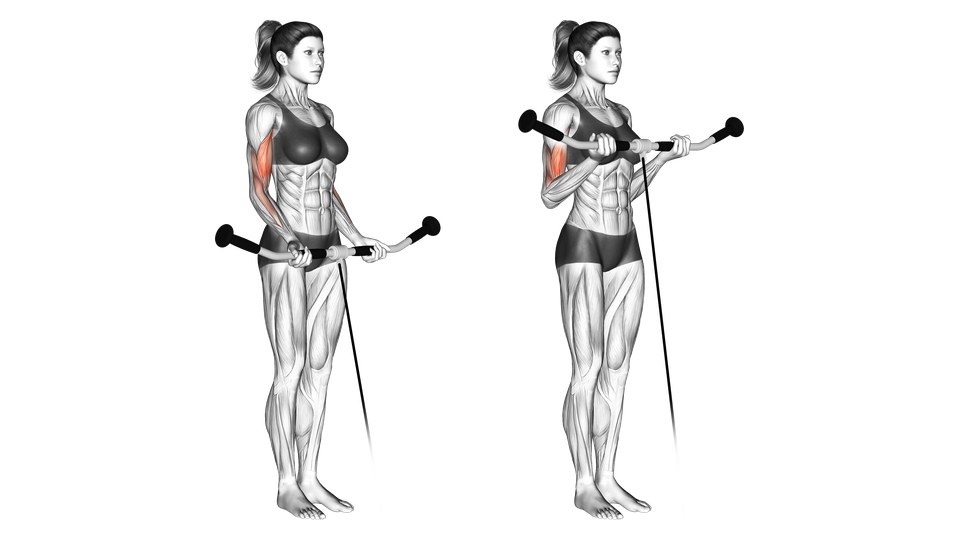
- Cable curlUses a low pulley with the upper arms beside the torso. Keep a separate training history from the raised-arm version.
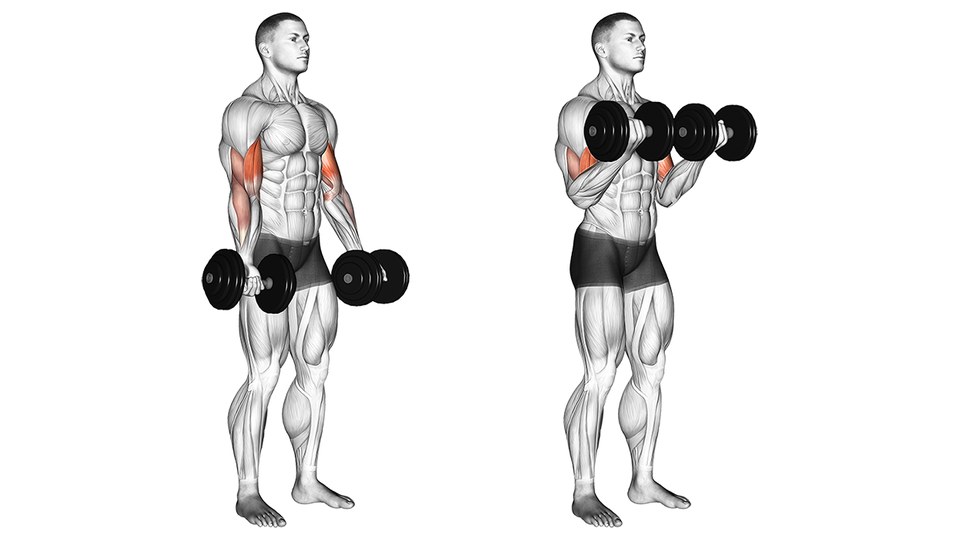
- Dumbbell biceps curlUses free weights with the upper arms down, rather than two cables pulling from above and to the sides.
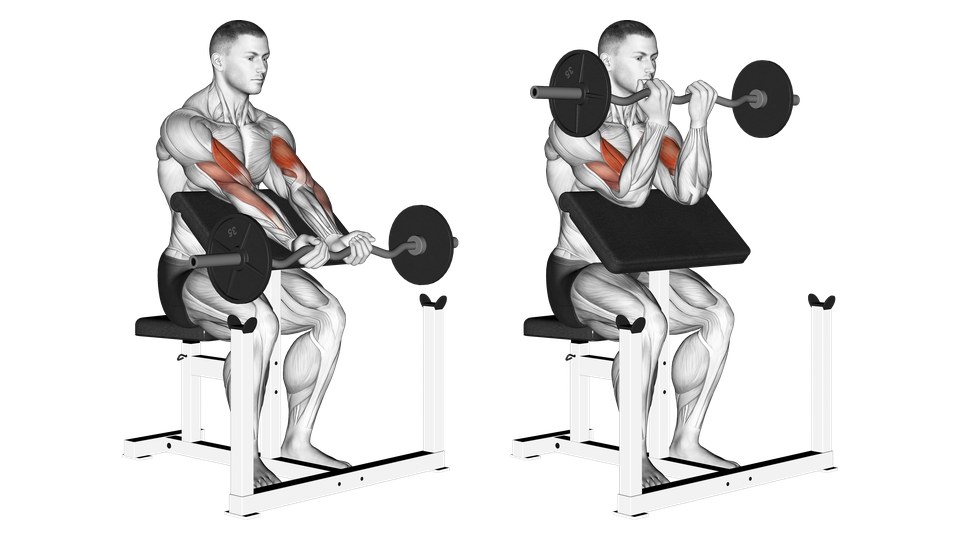
Related tools
Frequently asked questions
What muscles does the high cable curl work?
It focuses on the biceps brachii. The brachialis and brachioradialis also contribute to bending the elbows.
Is the high cable curl the same as an overhead cable curl?
The names can overlap. This guide uses overhead cable curl and crucifix curl for the standing version between two high pulleys, with the arms out to the sides. A curl with the arms reaching above the head uses a different setup.
How high should your elbows be?
Keep your upper arms around shoulder level, as shown. They can angle slightly upward; do not chase a higher position by shrugging. Use the low cable curl if you cannot hold the raised position comfortably.
How is it different from a low cable curl?
Here you stand between two high pulleys and curl toward your head with your upper arms raised. In a low cable curl, the attachment starts near your thighs and your upper arms stay beside your torso. Record them separately.
Sources
- Tiwana MS, Charlick M, Varacallo MA. Anatomy, Shoulder and Upper Limb, Biceps Muscle. StatPearls, NCBI Bookshelf. https://www.ncbi.nlm.nih.gov/books/NBK519538/
- Plantz MA, Bordoni B. Anatomy, Shoulder and Upper Limb, Brachialis Muscle. StatPearls, NCBI Bookshelf. https://www.ncbi.nlm.nih.gov/books/NBK551630/
- Lung BE, Ekblad J, Bisogno M. Anatomy, Shoulder and Upper Limb, Forearm Brachioradialis Muscle. StatPearls, NCBI Bookshelf. https://www.ncbi.nlm.nih.gov/books/NBK526110/