
Jump squats
Also called jump squat, squat jumps, squat jump, jumping squats.
What are jump squats?
Jump squats are bodyweight squats that finish with a vertical jump and a landing back on the floor. You bend the hips and knees for takeoff, jump from both feet and land with a soft bend. They train the quadriceps and glutes.
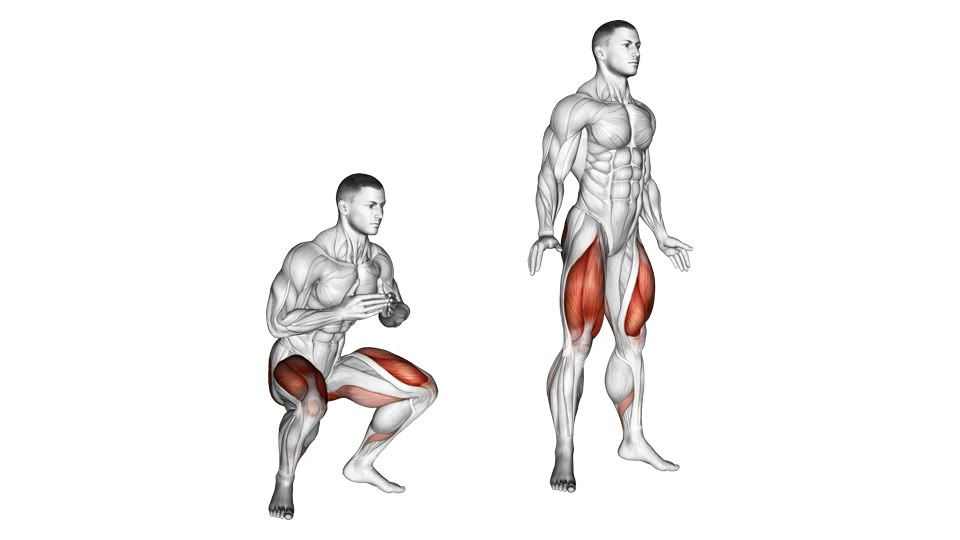
How do you perform jump squats?
Set up
- Choose a firm, non-slip surface with clear space overhead and around you. Stand with your feet about shoulder width.
- Before jumping, practice a small squat and return to standing with your knees following your toes and your feet planted.
Execution
- Bend into a comfortable squat and swing your arms behind you.
- Drive upward through both feet and swing your arms forward to jump vertically.
- Land on both feet with your hips and knees bending to cushion contact. Let your heels settle and regain balance.
- Reset before the next jump. Finish the set if you cannot land in control.
Common mistakes
Landing with stiff knees
Use a smaller jump and allow the hips and knees to bend as you meet the floor.
Taking another jump before recovering balance
Pause between repetitions instead of rebounding immediately.
Adding weight before the landing is consistent
Practice with bodyweight until the takeoff and landing remain controlled through the set.
Where it fits in a session
Use them while you are fresh enough to repeat controlled takeoffs and landings.
Start with short sets and reset between jumps. Add repetitions only while your landing stays quiet and balanced; you do not need to add external weight.
Muscles worked
Primary
Secondary
- None listed in this guide
Schematic surface view. Some muscles are partly visible or not shown.
Variations
- Repeated squat jumps — Moves directly from a landing into the next jump instead of resetting each time.
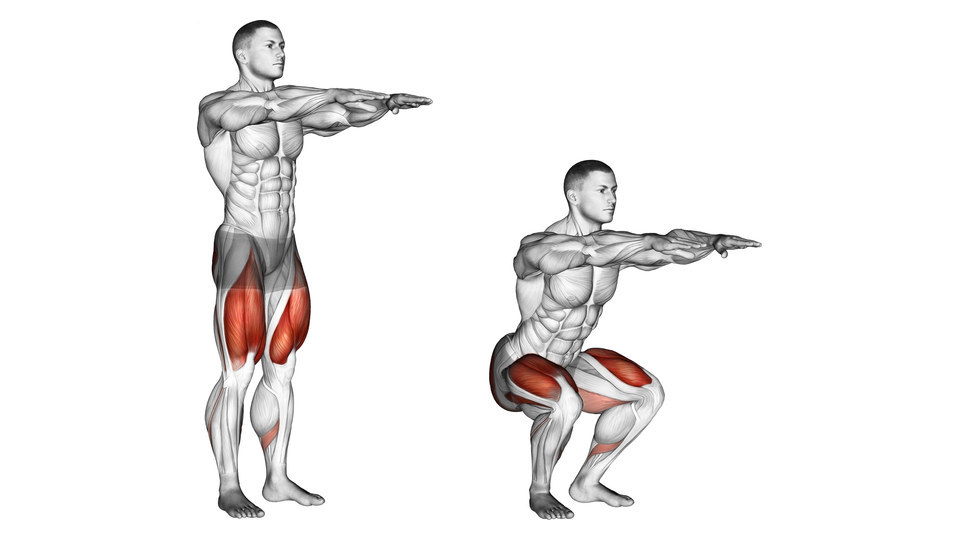
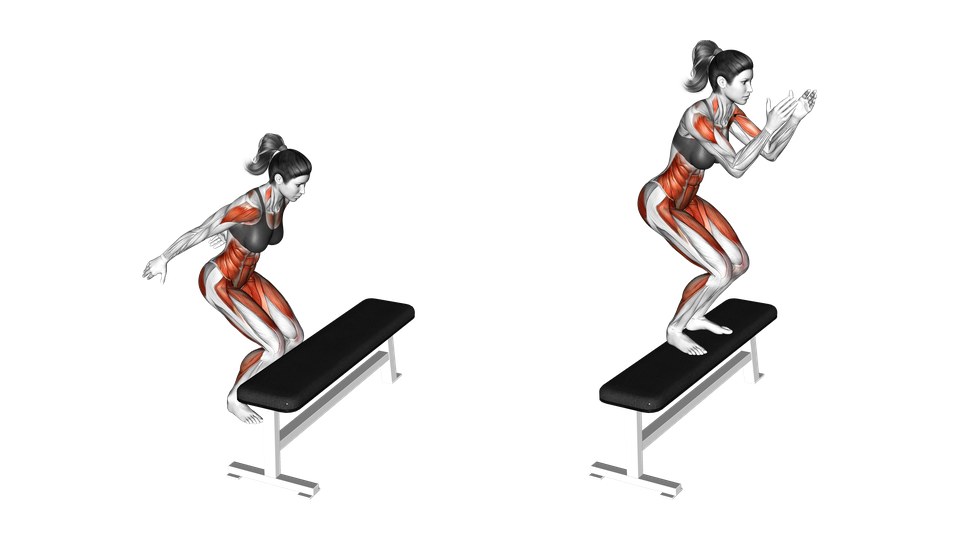
Frequently asked questions
How low should you squat before jumping?
Use a depth you can reverse smoothly without losing balance. Start with a modest dip and avoid forcing a deep squat just to make the jump look bigger.
Should you jump again immediately after landing?
Begin by resetting between jumps. Continuous rebounds are a separate progression once the landing remains controlled.
Do you need dumbbells?
No. Bodyweight is enough for learning the jump and landing. Adding weight changes the task and is not needed for the basic movement.