Kettlebell windmill
Also called KB windmill, overhead kettlebell windmill.
What is a kettlebell windmill?
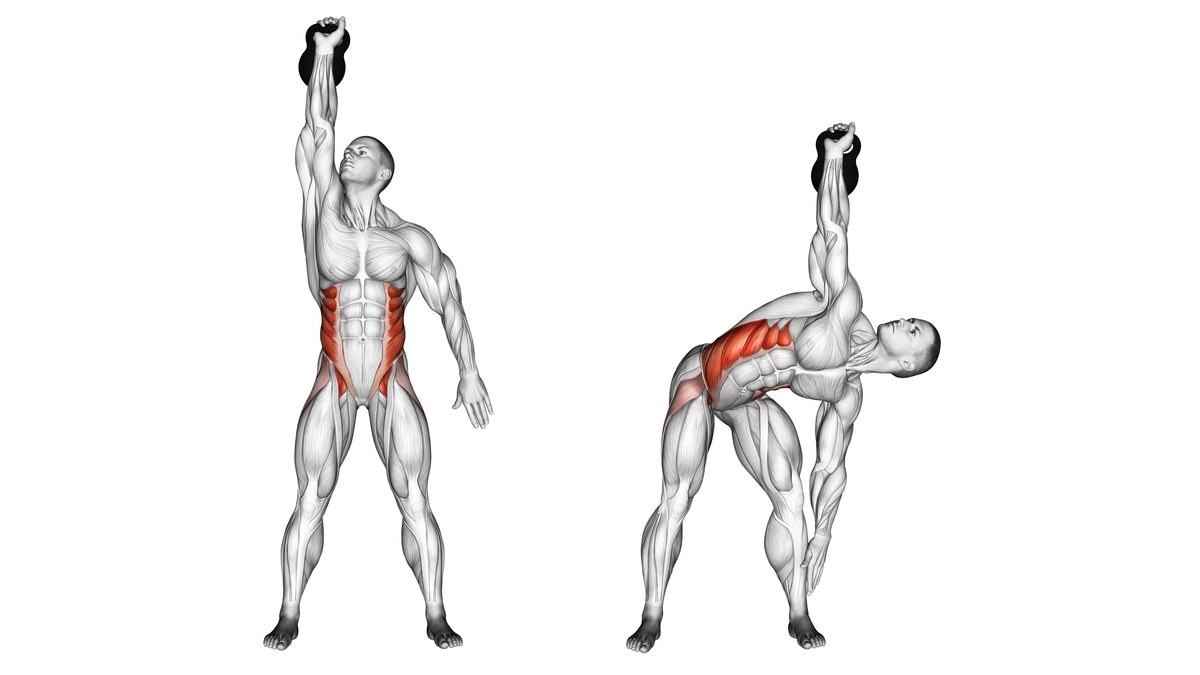
A kettlebell windmill is a controlled diagonal hip hinge beneath a kettlebell held overhead in one hand. Your chest turns upward as your free hand follows the opposite leg, then you stand again while keeping the bell steady. This guide uses one overhead bell throughout the repetition.
How do you perform a kettlebell windmill?
Set up
- Rehearse without weight first. To load the movement, stand upright and bring a light kettlebell to your right shoulder with both hands, resting the bell outside your right forearm.
- With the bell still at your shoulder, place your feet around shoulder-width apart or slightly wider and turn both toes a little left. Keep your right leg long, your left knee soft and more weight over your right foot.
- Press the bell above your right shoulder, helping with your left hand if needed. Keep the loaded elbow straight and wrist nearly straight; settle the bell before moving.
Execution
- Watch the bell as you move your right hip back and right. Hinge toward your left leg, letting your chest turn upward and your left hand slide down that leg's inside.
- Stop at a depth you can control with the right arm vertical and both feet planted. Keep your trunk long rather than folding sideways at the waist.
- Push through your right foot to bring your hips beneath you and stand tall again. Keep the bell above your shoulder throughout the return; that completes one repetition.
- After the set, lower the bell to your right shoulder, helping with your left hand. Hold it with both hands, square your feet, and hinge to set it down before changing sides.
Common mistakes
Reaching for the floor by collapsing the waist
The reach is the result of the hinge. Stop higher if the last few inches come from rounding or sharply bending your lower back sideways.
Letting the bell wander away from the shoulder
Shorten the range or use less weight if your loaded arm tips forward or behind you. Regain a steady overhead position before the next repetition.
Rocking onto the reaching-side foot
Keep the loaded-side foot firmly planted as the hip moves back. If you tip toward the other leg to reach lower, reset the stance and use a smaller hinge.
Where it fits in a session
Practise it while you are fresh enough to manage the overhead hold and the hinge together.
Begin empty-handed, then use a light bell for deliberate repetitions. End the set when the bell or your balance becomes difficult to control. Record the bell's weight and repetitions on each side, keeping the stance and reach comparable between sessions before adding load.
Muscles worked
Primary
Secondary
Schematic surface view. Some muscles are partly visible or not shown.
The obliques help control your trunk, the gluteus maximus contributes to straightening the hip, and the rotator cuff helps support the shoulder. These roles do not rank muscle activity or make the windmill an isolation exercise.
Variations
- Shorter-range kettlebell windmill — Use the same overhead hold with a smaller hinge. Increase depth only while the movement stays controlled; floor contact is optional.
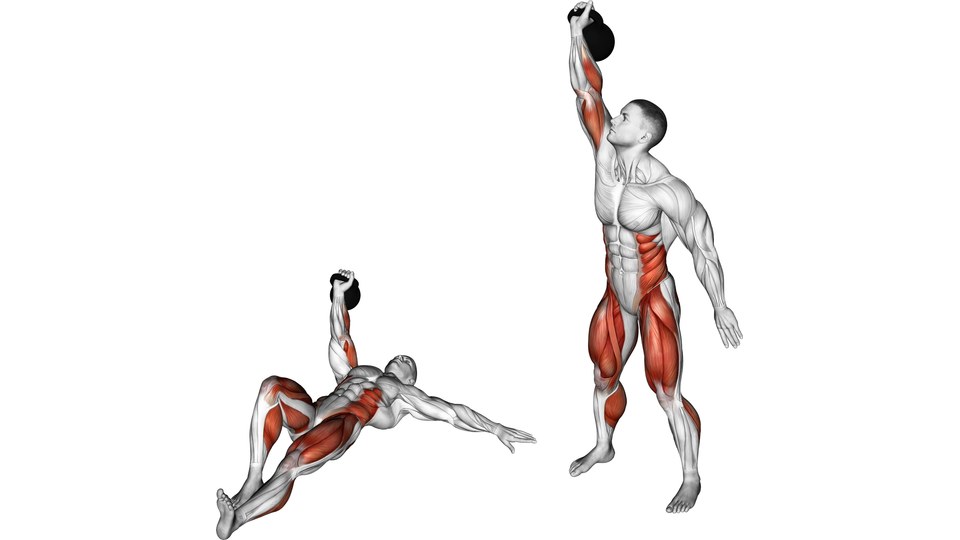
- Turkish get-upAn alternative overhead kettlebell exercise that moves from the floor to standing and back through several support positions. It is a separate movement to log.
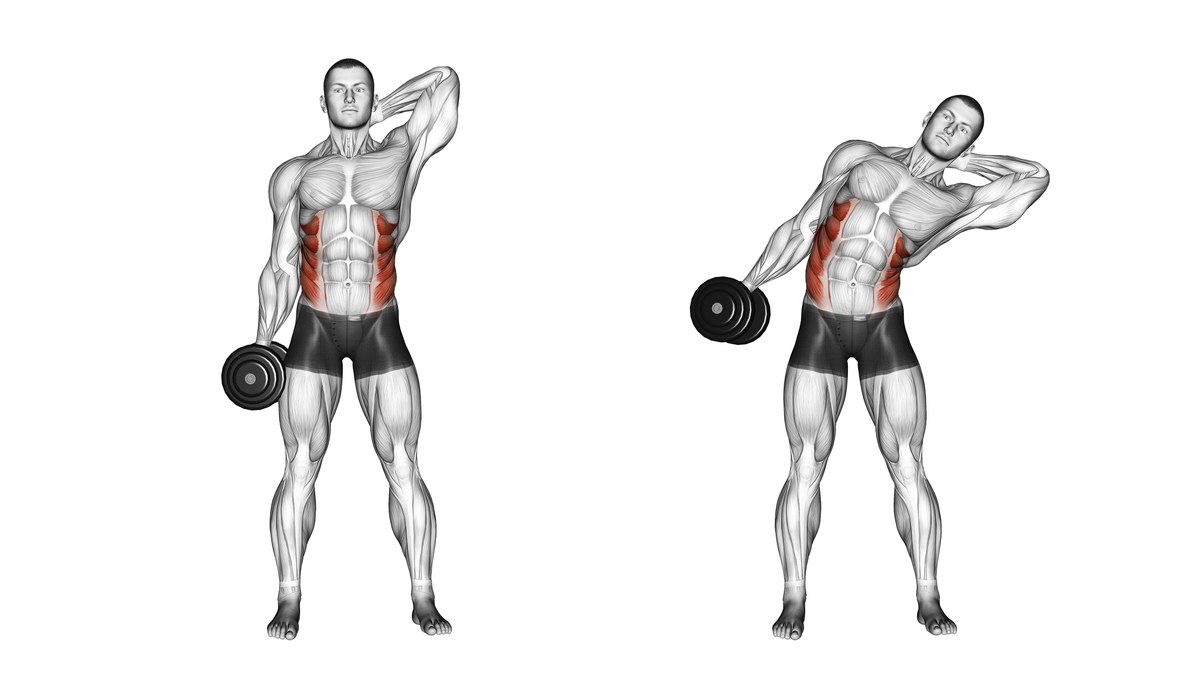
- Dumbbell side bendUses a dumbbell beside the thigh and deliberately bends the trunk sideways. It differs from keeping a bell overhead while hinging at the hip.
Frequently asked questions
What muscles does a kettlebell windmill work?
The obliques help manage the trunk as you hinge and turn. The gluteus maximus helps you straighten the hip, while the rotator cuff supports the shoulder holding the bell. The movement combines these jobs rather than isolating one muscle.
Do I need to touch the floor?
No. Your lower hand might finish at the thigh, shin or farther down. Reverse the hinge while you can keep the bell steady and the trunk long; reaching the floor is not the measure of a completed repetition.
How wide should my stance be, and how much should I turn my feet?
The demonstration uses a fairly wide stance and a modest foot turn. A narrower stance and a larger turn away from the loaded arm are also used. Adjust the position during unloaded practice so your loaded-side hip can move back without a heel lifting; do not twist your feet under the overhead load.
Is a windmill the same as a side bend?
No. Here the hip moves diagonally back and the chest turns while a straight arm supports the bell overhead. A side bend deliberately moves the trunk sideways with the weight hanging beside you. Keep the two exercises separate in your log.
Should I learn it with a kettlebell overhead straight away?
Start with an empty hand raised overhead and learn the hinge, turn and return first. Add a light bell only when you can repeat that sequence and hold the arm steady. Have a qualified coach check the movement if the overhead position or hip path remains unclear.
Sources
- Flynn W, Vickerton P. Anatomy, Abdomen and Pelvis: Abdominal Wall. StatPearls. Updated July 24, 2023. https://www.ncbi.nlm.nih.gov/books/NBK551649/
- Elzanie A, Borger J. Anatomy, Bony Pelvis and Lower Limb, Gluteus Maximus Muscle. StatPearls. Updated April 1, 2023. https://www.ncbi.nlm.nih.gov/books/NBK538193/
- McCausland C, Sawyer E, Eovaldi BJ, Varacallo MA. Anatomy, Shoulder and Upper Limb, Shoulder Muscles. StatPearls. Updated August 8, 2023. https://www.ncbi.nlm.nih.gov/books/NBK534836/