
Kipping pull-up
What is a kipping pull-up?
A kipping pull-up uses a coordinated swing and hip action to assist the pull until your chin clears the bar. The kip is an intentional part of this exercise, and its repetitions should be tracked separately from strict pull-ups.
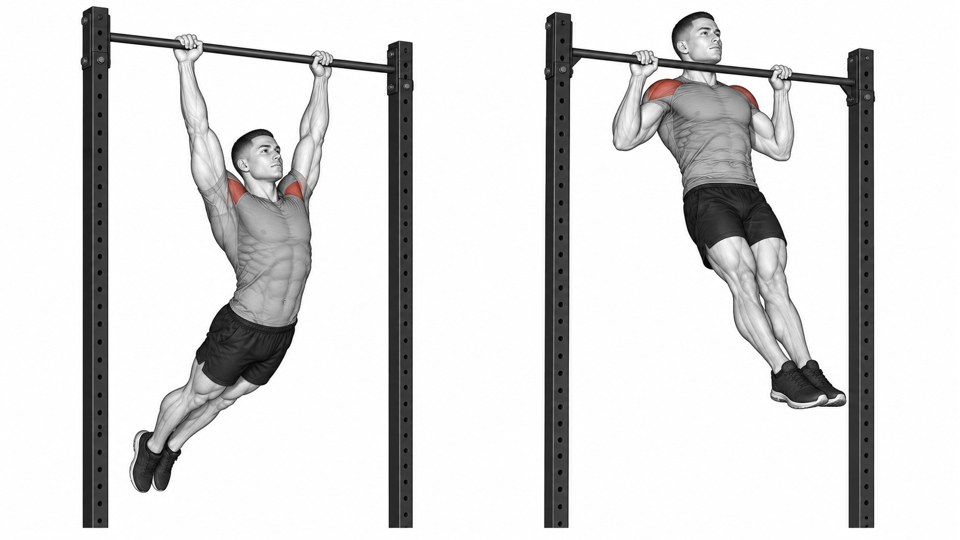
How do you perform a kipping pull-up?
Set up
- Use a secure bar with clearance in front, behind and below you. Choose a height you can reach and leave safely.
- Grip overhand slightly outside shoulder width with thumbs around the bar. Begin with straight arms and shoulders engaged.
Execution
- Move through a small arch and hollow swing at the shoulders, keeping the legs together.
- As the body moves into the hollow shape, bring the hips forward and pull the elbows down to lift your chin above the bar.
- At the top, push away enough to return into the swing rather than dropping straight down beneath the bar.
- Keep the next swing small, or slow it down and land after the final repetition.
Common mistakes
Kicking wildly from the knees
Reduce the swing and practise moving through arch and hollow shapes.
Adding a kip to a failed strict repetition
Choose the movement before the set. A kip is a distinct skill rather than an emergency way to finish a strict rep.
Where it fits in a session
Practice this movement while you can control the required positions and finish each repetition deliberately.
Practise the swing and return as skills. Stop when you cannot control the top or the next swing; do not use fatigue as the cue to start kipping.
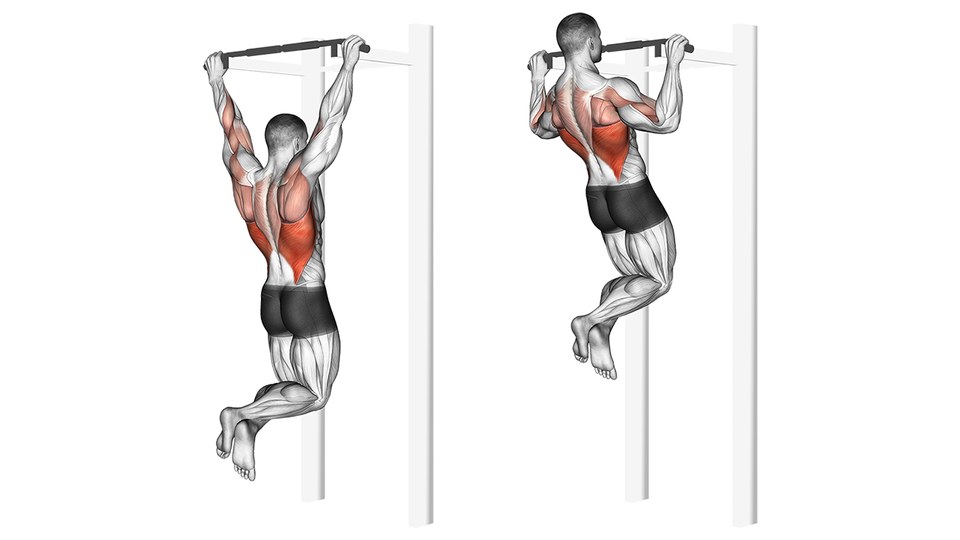
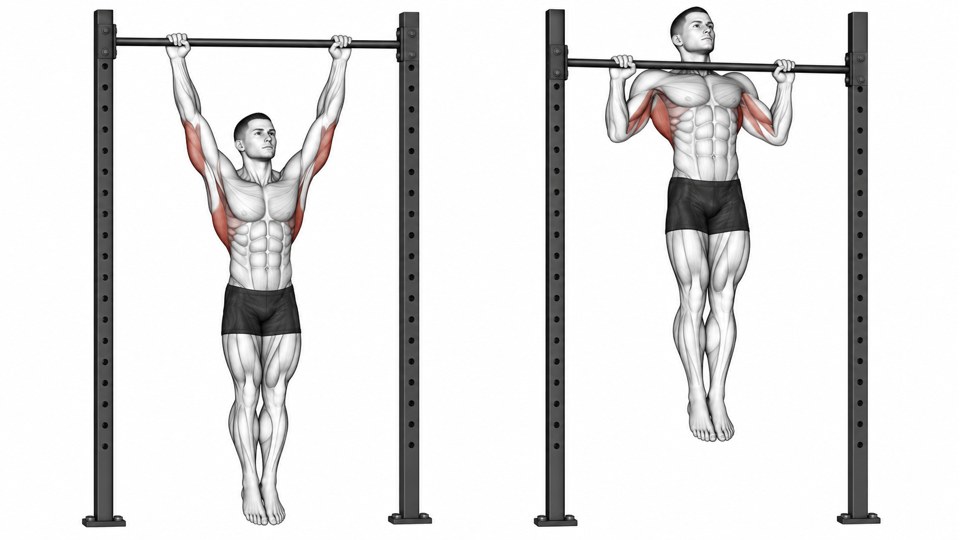
Muscles worked
Primary
Secondary
- None listed in this guide
Schematic surface view. Some muscles are partly visible or not shown.
Variations
Frequently asked questions
Should I learn a strict pull-up first?
Establish controlled hanging, pulling and lowering before learning to link kipping repetitions. If those positions are not yet manageable, use assisted strict pulls and get coaching for the swing.
Is a butterfly pull-up the same movement?
No. Butterfly pull-ups use a different continuous path. This guide covers an arch-to-hollow kip and a deliberate return.
Sources
- Betts et al. Anatomy and Physiology 2e. OpenStax, 2022. https://openstax.org/books/anatomy-and-physiology-2e/pages/11-5-muscles-of-the-pectoral-girdle-and-upper-limbs