
Meadows row
What is a meadows row?
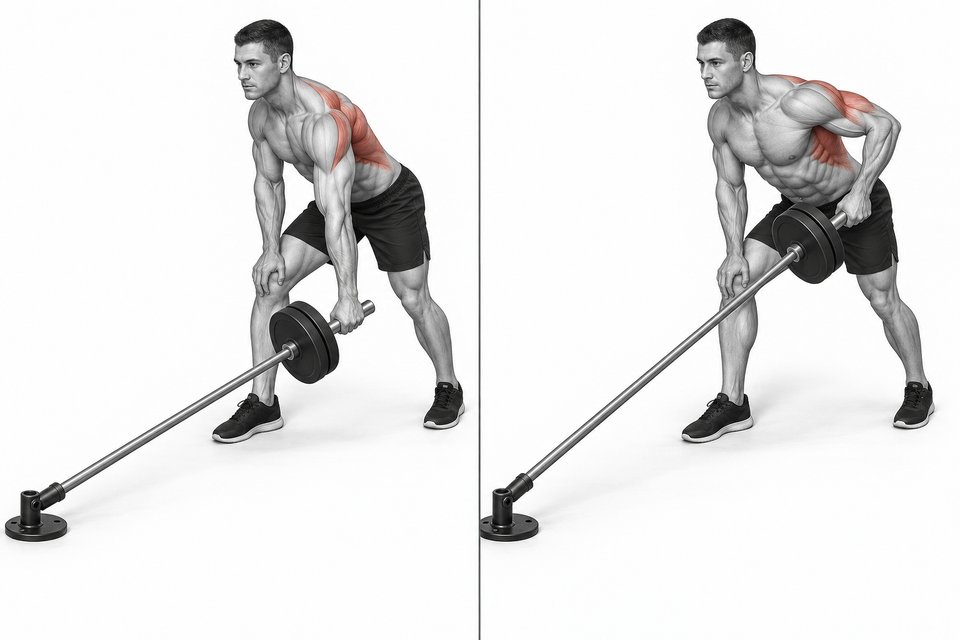
A one-arm landmine row performed side-on to the bar, gripping its thick sleeve.
How do you perform a meadows row?
Set up
- Secure one bar end in a landmine and stand side-on beside the loaded sleeve.
- Hinge forward, brace your free hand or forearm on your thigh and grasp the sleeve overhand.
Execution
- Pull the sleeve toward your side while keeping your trunk steady.
- Let the elbow move behind you without turning your chest toward the ceiling.
- Lower the sleeve to a straight arm, then repeat and change sides.
Common mistakes
Twisting to lift the weight
Use a load you can row without rotating your torso.
Where it fits in a session
Use as a unilateral row in a back session and train both sides from the same setup.
Use a load you can row without rotating your torso.
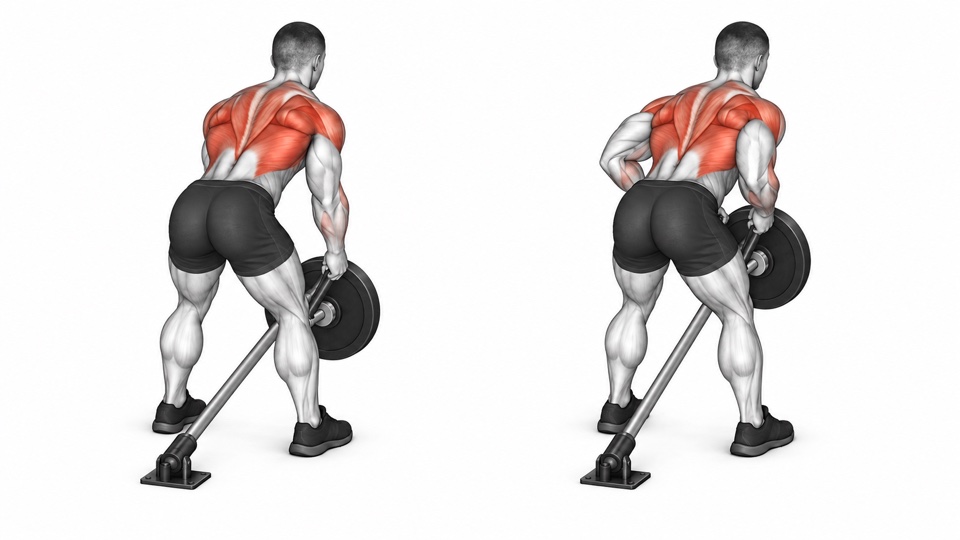
Muscles worked
Primary
Secondary
Schematic surface view. Some muscles are partly visible or not shown.
Variations
Related tools
Frequently asked questions
Where do I hold the bar?
Secure one bar end in a landmine and stand side-on beside the loaded sleeve. Hinge forward, brace your free hand or forearm on your thigh and grasp the sleeve overhand.
Should I turn my torso as I pull?
No. Let the elbow move behind you without turning your chest toward the ceiling. Use a load you can row without rotating your torso.