Muscle clean
Also called barbell muscle clean, muscle cleans.
What is a muscle clean?
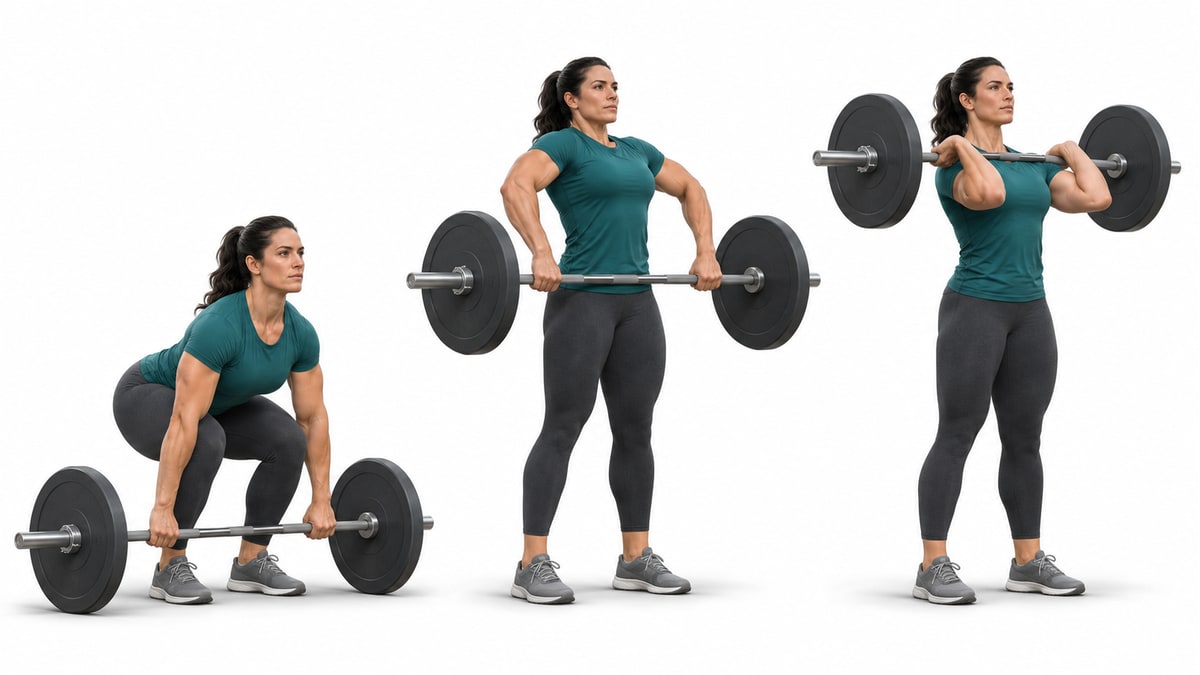
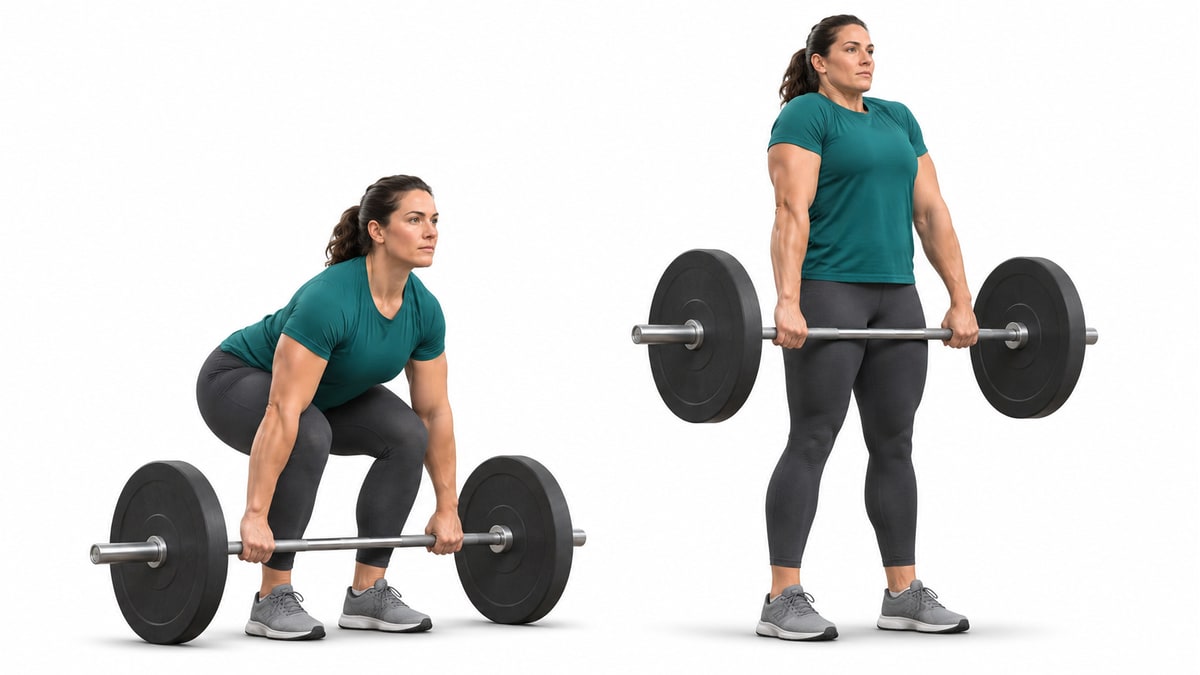
A muscle clean brings a barbell to your shoulders without dipping underneath it. Start from the floor, drive upward with your legs and hips, then turn your elbows forward while staying tall. The bar finishes on the fronts of your shoulders, with your knees and hips still extended.
How do you perform a muscle clean?
Set up
- Use a clear lifting platform and a light bar with secured, full-size technique plates.
- Before lifting from the floor, rehearse a front rack with a technique bar: the bar rests on the fronts of your shoulders and your elbows point forward. Learn a suitable way to release a missed lift with a qualified coach.
- Stand about hip-width apart with the bar over your midfoot. Take an overhand grip just outside your legs, bend your hips and knees, and brace your trunk with your shoulders slightly ahead of the bar.
Execution
- Push the floor away to raise the bar, keeping your arms straight and the bar near your shins. Let your hips and shoulders rise together until the bar clears your knees.
- Continue driving through your legs and hips as the bar travels along your thighs. Finish upright, allowing the bar to brush the upper thighs without knocking it away from you.
- As the lower-body drive finishes, lift your elbows outward and upward, then turn them forward around the bar. Guide it onto your shoulders and pause upright with your feet flat. Keep your legs extended; do not dip to meet the bar.
- To return, regain your grip, lower your elbows and guide the bar to your thighs, softening your knees as it comes down. Bend your hips and knees to place it on the platform, let it settle and reset before repeating. After the set, leave the bar settled before releasing your grip.
Common mistakes
Dipping under the bar during the turnover
A receiving dip adds a catch underneath the bar. Use less weight so you can bring the bar to the standing rack without a second knee bend.
Curling the bar forward with the elbows held low
Start its rise with your legs, then let your elbows travel up and outward before turning them through. An arcing reverse curl does not follow the same turnover.
Letting the bar land on the hands
Bring your elbows forward so the shoulders support the bar. Rehearse the rack with a lighter bar if the weight stays in your hands or crashes down onto your shoulders.
Where it fits in a session
Practice after your warm-up, while you can pay attention to the bar path and front rack.
Use a light technique load and finish the set when you begin dipping under the bar or lose the supported rack. A qualified weightlifting coach can help you learn the turnover and a suitable way to release a missed lift.
Muscles worked
Primary
Secondary
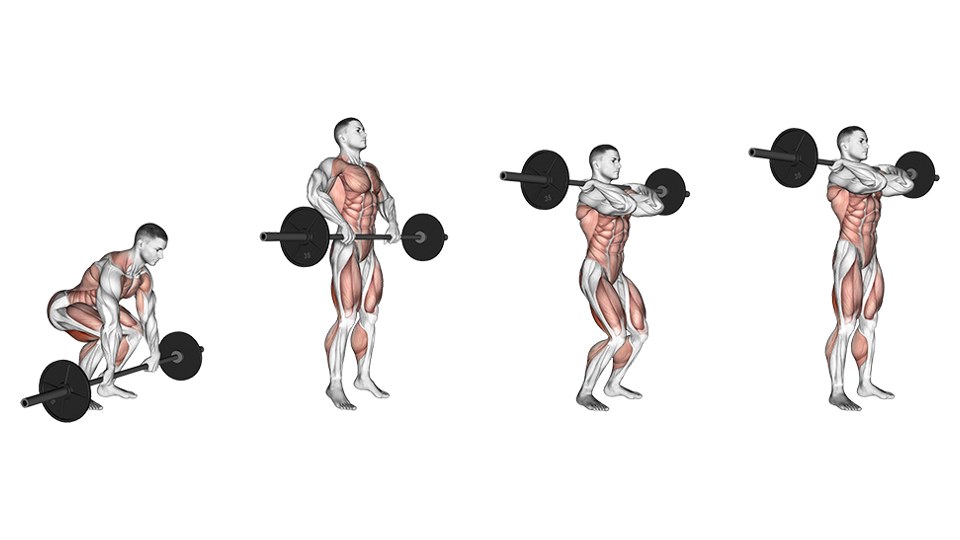
Schematic surface view. Some muscles are partly visible or not shown.
The quadriceps straighten the knees and the gluteus maximus extends the hips during the drive. The trapezius helps lift the shoulders, while the elbow flexors assist the upper-body pull. These roles describe the action rather than a muscle-growth ranking.
Variations
Frequently asked questions
How is a muscle clean different from a power clean?
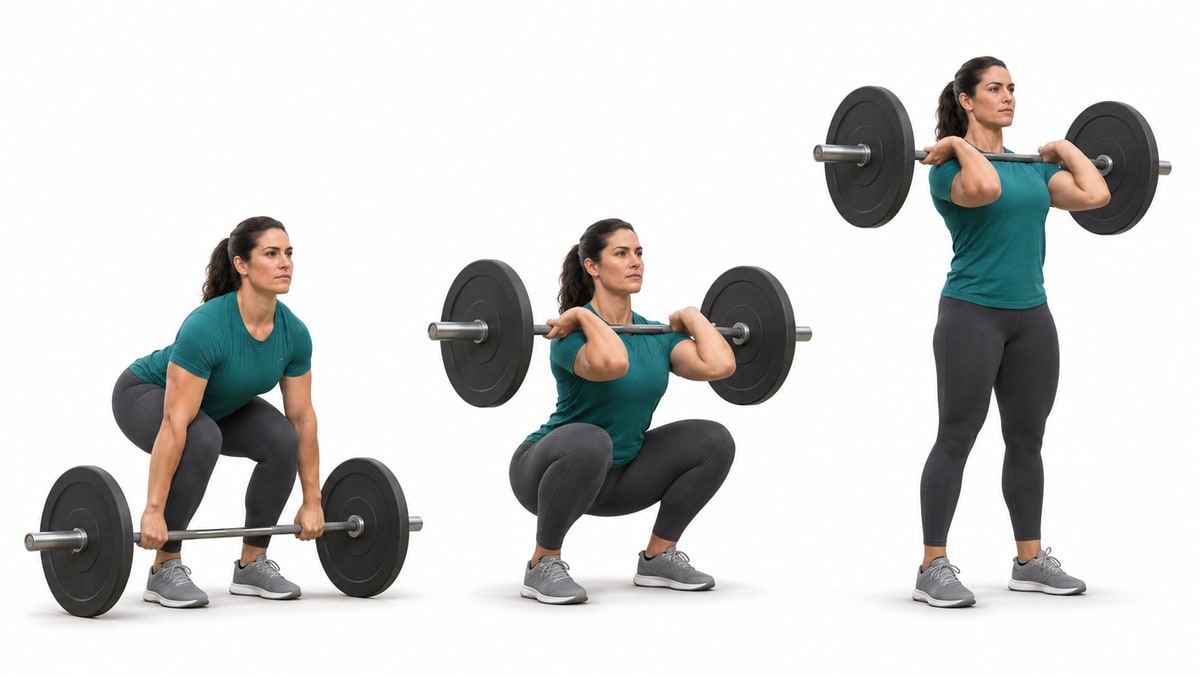
A power clean includes a second knee bend to receive the bar. In a muscle clean, your legs stay extended after the upward drive while your elbows turn through. Both finish with the bar supported across the shoulders.
Is a muscle clean just a reverse curl?
No. Your legs and hips begin the upward drive, then the elbows rise outward before turning forward into a front rack. A reverse curl keeps the elbows closer to the sides and ends with the bar held in the hands rather than supported by the shoulders.
Does the bar have to touch my thighs?
This guide allows a light brush against the upper thighs during the drive. A deliberate no-contact version is also used in weightlifting practice. Keep that choice consistent; neither version uses a knee dip to get underneath the bar.
Can I start a muscle clean from the hang?
Yes. A muscle clean can start from a held hang position or raised blocks. This guide starts each repetition on the floor. State the starting position when describing a hang or block version, while keeping the same standing turnover.
Should the bar finish in my hands or on my shoulders?
On the fronts of your shoulders, with your elbows directed forward. Your hands guide the turnover and keep contact with the bar. If you cannot establish that position comfortably with a light bar, work on the rack with a coach before loading the movement.
Sources
- OpenStax. Anatomy and Physiology 2e,11.6: Appendicular muscles of the pelvic girdle and lower limbs. https://openstax.org/books/anatomy-and-physiology-2e/pages/11-6-appendicular-muscles-of-the-pelvic-girdle-and-lower-limbs
- OpenStax. Anatomy and Physiology 2e,11.5: Muscles of the pectoral girdle and upper limbs. https://openstax.org/books/anatomy-and-physiology-2e/pages/11-5-muscles-of-the-pectoral-girdle-and-upper-limbs