
Neutral-grip pull-up
Also called parallel-grip pull-up, hammer-grip pull-up, neutral grip pull up, neutral grip pullup.
What is a neutral-grip pull-up?
A neutral-grip pull-up is a bodyweight pull-up on parallel handles, with your palms facing each other. Pull from a straight-arm hang until your chin is above your hands, then return to the hang. The lats and elbow flexors do the pulling; this guide covers controlled repetitions without a deliberate swing.
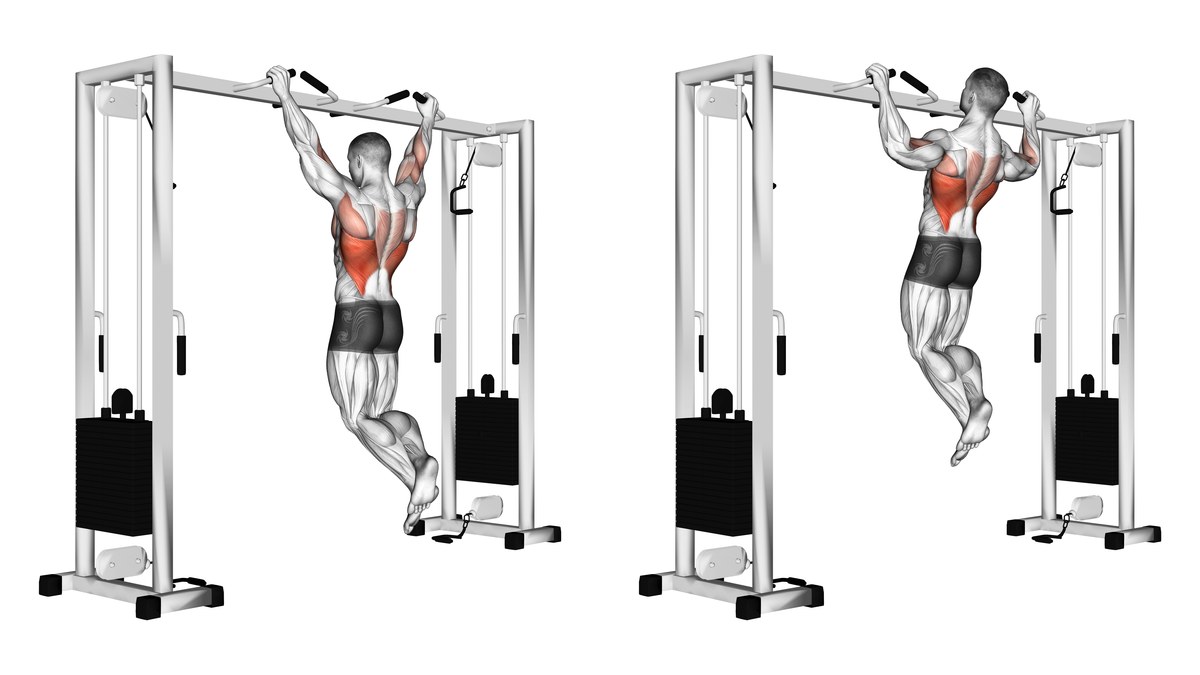
How to do a neutral-grip pull-up
Set up
- Check that the handles are secure and leave enough room to hang clear of the floor. Place a stable box below you if you need it to reach the handles and get down again.
- Wrap a hand around each handle with your palms facing inward. Leave the box and settle into a still hang with straight arms; bend your knees if your feet would otherwise touch the floor.
Execution
- Draw your elbows toward your sides to lift your body, keeping your legs quiet as your elbows bend.
- Continue until your chin rises above hand height without tipping your head back or kicking.
- Lower steadily until your elbows straighten. Let your shoulders follow your arms into the hang instead of holding them pulled down throughout the descent.
- Let any sway settle before pulling again. After your final repetition, return your feet to the box or floor before releasing the handles.
Common mistakes
Reaching with the chin to finish the pull
Keep the head in line with your torso. If you can reach the top only by craning your neck, use assistance or finish the set.
Starting each rep with the elbows still bent
Finish the descent before pulling again. A shorter return changes the repetition you are practising and makes progress harder to compare.
Kicking the knees upward as the pull slows
Reset in the hang and attempt the next repetition without a kick. If that is no longer possible, end the set rather than turning it into a swinging pull-up.
Where it fits in a session
Use it as a vertical pull when parallel handles are available.
Choose a set length that lets you repeat the same hang and top position. Keep the handle spacing and assistance consistent when comparing sessions. If an unassisted repetition is out of reach, practise an assisted version with the same grip.
Muscles worked
Primary
Secondary
Schematic surface view. Some muscles are partly visible or not shown.
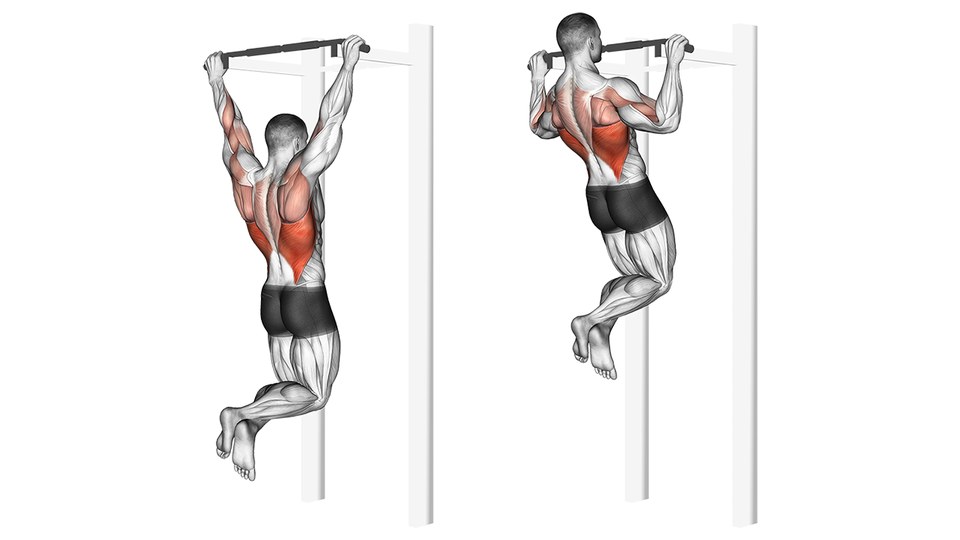
The lats move the upper arms while the elbow flexors bend the elbows. Keeping the palms inward does not turn the movement into an isolation exercise for the arms.
Variations
- Assisted pull-upUses a counterweight platform to support some bodyweight. Select neutral handles if the machine has them.
Frequently asked questions
What muscles do neutral-grip pull-ups work?
They train the lats together with the elbow flexors: biceps brachii, brachialis and brachioradialis. A neutral grip changes your hand position; it does not make this an arm-only exercise.
How are neutral-grip pull-ups different from chin-ups?
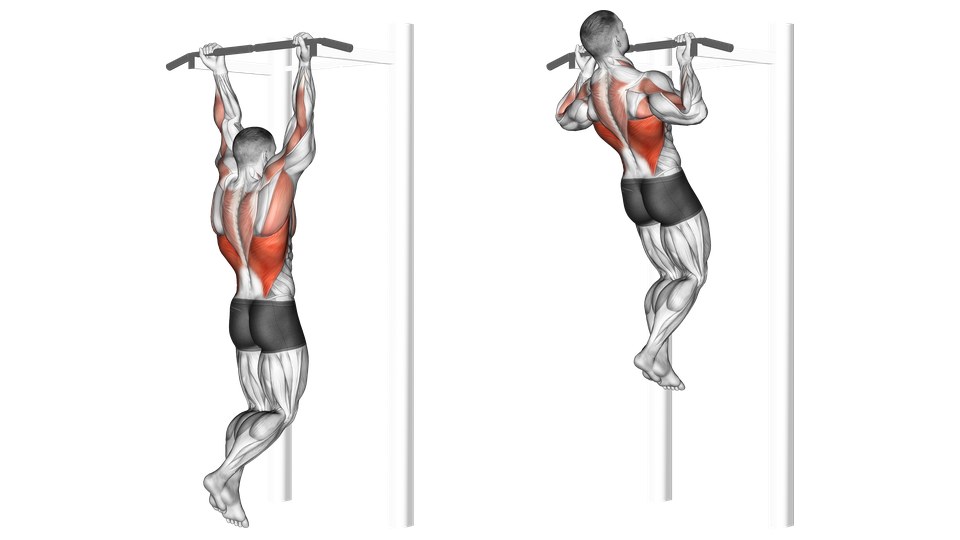
Your palms face each other on parallel handles in a neutral-grip pull-up. In a chin-up, your palms face you on a straight bar. The names sometimes overlap, so check the actual grip when following a workout.
What if you cannot do a full neutral-grip pull-up yet?
Use neutral handles on an assisted pull-up machine, or support your feet on a stable box and use your legs only as much as needed. Practise the same straight-arm start and controlled return. These are assisted repetitions, so keep them separate from unassisted sets.
Do the handles need to be close together?
No. Neutral describes the direction of your palms, not a particular distance between your hands. Use a pair of inward-facing handles that lets you hang and pull comfortably; keep that spacing consistent from set to set.
Sources
- Betts et al. Anatomy and Physiology 2e. OpenStax, 2022. https://openstax.org/books/anatomy-and-physiology-2e/pages/11-5-muscles-of-the-pectoral-girdle-and-upper-limbs
- University of Washington Department of Radiology. Latissimus dorsi — Muscle atlas. https://rad.uw.edu/muscle-atlas/latissimus-dorsi